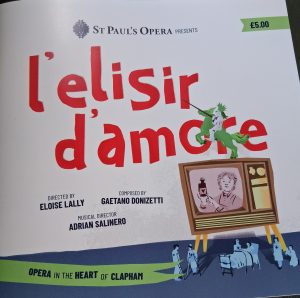
 Earlier this year I was approached by Patricia Ninian of St Paul’s Opera company with the suggestion that I should work with them on their summer production of L’Elisir d’Amore by Donizetti. The director, Eloise Lally (English Touring Opera) wanted to set the production in a hospital after the second world war. Patricia had read my book, The Midnight Man and spotted the synergies immediately, especially as ‘my’ hospital was based on a real, Clapham hospital – the South London Hospital for Women and Children. I was invited to rehearsals and I began to keep a rehearsal diary, a version of which follows.
Saturday 17th May
It’s the first full day of rehearsals and Eloise Lally, the Director, sits in a front pew blocking out stage positions and movement for the chorus. Most members of the chorus are here, taking up their places and moving at the direction of Eloise. Outside the sky is blue. Sunshine makes angular shadows on the deep window embrasures.
It’s obvious that there’s been previous discussions about the setting – in the South London Hospital, Clapham during the period following the end of World War two – and its fruits are evident.
‘Is this where the bed will be?’ asks a chorus member.
‘You’re sitting on it,’ responds Eloise.
The stage is bare.
Yet there is also a television, a relative rarity in late 1940s London, but certainly possible in a hospital common room. Chorus members stare at the invisible item, transfixed by its novelty.
Individual chorus members already have characters. So, I meet Pam, a south London girl, with the accent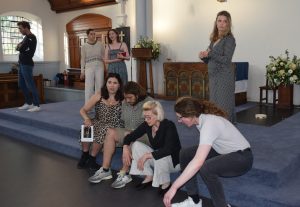 on ‘sarf’. A middle-aged lady with lumbago, she is never seen without a cigarette in her fingers. Many chorus members are halt and lame, patients of the hospital and walking wounded. These ‘characters’ give both variation and verisimilitude to what would otherwise simply be an amorphous group.
Eloise doesn’t only place the chorus physically, but also psychologically. She tells us that all the chorus characters know that Nemorino is hopelessly in love with Adina, who is so far out of his reach. Most of them feel sorry for him. They see, at the beginning of Act 2, that the lovelorn suitor buys something from Dr Dulcamara and are curious about what. Hospitals are places where gossip and rumour often run unchecked and L’Elisir’s South London is no different.
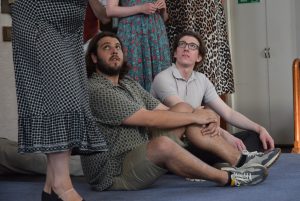 Throughout the pianist plays and replays accompaniment and also sings the soloists parts where necessary sometimes to the amusement of the cast. She is aided in the tenor role by Edvard Adde (the Norwegian tenor, cover for the role of Nemorino).
At two o’clock we break for lunch and many of the singers head towards Clapham Common and the crowds who are enjoying the weekend sunshine, while others remain closer by in the dappled shade of the peaceful churchyard. Back to resume at three!
Saturday 24th May
It is one week and several rehearsals on and there are more singers in a rather chilly church. This time the chorus and three of the principals are here, as is the Director of Music, Adrian Salinero at the piano, as well as Eloise. Outside the sky is grey.
We go ‘from the top’ Act I, Scene I and singers enter from different parts of the church to take their places on stage. Chorus members ‘characters’ do their stage business and eventually settle down to watch the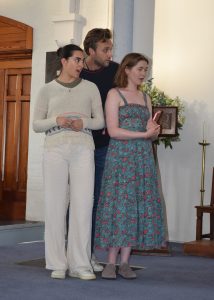 new-fangled television. Matron Adina (Dorset-born soprano, Fiona Hymns) consults with Nurse Gianetta (Isabella Roberts), then it’s straight into her first aria.
The interplay between principals and with other cast members is taking shape. Belcore (baritone, Theodore ‘Ted’ Day) is a delusional patient who imagines he is still fighting the war, he treats everyone as if they’re in his military company and the rest of the cast plays along with tolerant affection. He preens himself in preparation for his declaration of love for Adina. Her exasperated astonishment, when he makes it, is very funny, without being in any way cruel. I laughed aloud.
Dr Dulcamara (Essex-born baritone Ashley Mercer) makes a dramatic entrance and begins his spiel, producing all manner of ‘wonders’ from his capacious bag and offering, at a one-time-only knock-down price, his miracle wonder cure for all ailments.
The chorus is impressed. Matron Adina is not. The rehearsal ends with their mini-confrontation.
 Eloise calls the singers together and gives them notes, about movement, stage business and psychology. The chorus are to remain still and rapt as Matron Adina sings her aria. She is most definitely in charge, but she is also their healer, so they are both overawed and grateful. Belcore is too static, holding his rose for Adina and should make more of his preparation. The relationship between Adina and Dulcamara needs more definition.
Through-out Adrian insists that the singers keep tempo and, occasionally, gives notes of his own, mainly to the chorus.
In the lunch break I meet a few more of the chorus members’ characters; there’s Charles, a professional military man wounded in the war, hitching up his trousers when he sits – ramrod straight despite his damaged leg – to avoid stretching their fabric. Luigi, an Italian wounded in the Great War fighting Britain, who came to Clapham following the Londoner nurse who tended him and who is now a stalwart member of the community. He sells newspapers just outside the hospital.
Then it’s back to the South London Hospital to take it ‘from the top’ again.
Tuesday 10th June
It’s an evening rehearsal at St Paul’s and low sun shines in through windows on the opposite side of the church. Eloise makes tea and Adrian is at the piano, as two soloists, Latvian tenor Martins Smaukstelis (Nemorino) and Ashley Mercer (Dr Dulcamara) arrive. They will concentrate on their duet scene in Act One, in which the crafty doctor sells the naïve Nemorino his ‘elixir of love’.
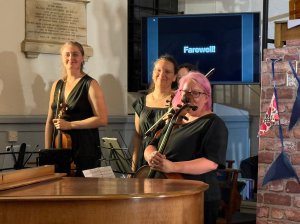 There is a sing through first and male voices echo around the church. Then a quick discussion with Adrian.
‘Shall we?’ says Eloise.
The soloists take up positions.
Nemorino approaches Dulcamara with a mixture of desperate hope, excitement and fear. Can this ‘alchemist’ help him win Adina? Dulcamara cannot believe his luck and quickly rips a label from a bottle of red wine, offering it as the famed elixir for all the money in Nemorino’s pockets. The doctor rolls his eyes at the audience, who are complicit in his ruse. Then he wants to get away before his victim twigs, but Nemorino calls him back. How does he use the elixir?
There follows a very funny scene in which the doctor instructs Nemorino in how to open a bottle of wine. This scene is, as Eloise says, ‘all about the bench’, where the two characters sit and most of their interaction happens.
As I watch another kind of alchemy takes place.
Eloise offers suggestions but allows her soloists room to create. These two are almost affectionate, she suggests, they like each other. The doctor invites Nemorino to sit, his gestures and instructions become fatherly in tone. Nemorino is trusting, child-like. The action emerges, through physical gesture as much as song, the singers acting and interacting spontaneously.
Nemorino’s tigerish enthusiasm bubbles over and he starts to rush away, to share his good fortune. Dulcamara realises that if other learn of this, the game will be up, his trickery exposed, so he calls Nemorino back to persuade him to keep the elixir secret. The scene ends in more subdued fashion, as Nemorino is, as Eloise says ‘looking inward’. The tone changes.
We run through again, this time in full voice. Stage action now fits seamlessly to the music – when Nemorino plucks up courage to approach Dulcamara there is what Eloise describes as ‘walking music’ and that’s exactly what it sounds like. The handshake between the two men comes at the climax of a passage of music, carrying over to signal in sound what Dulcamara signals physically – that he cannot extricate his hand from Nemorino’s grateful grasp.
Doubtless there will be refinement, but a scene, musically and emotionally consistent, dramatic and very funny, has come into being where none existed before.
This is alchemy indeed.
Tuesday 17th June
The church is bathed in soft evening light and the whole of the cast is here. So is David Butt Phillip, international opera star and patron of St Paul’s Opera, so the church pews are dotted with a select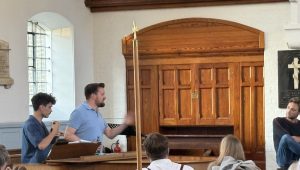 audience, the VIP Friends of SPO. This is the first time David has seen this developing production. Adrian is at the piano and Eloise is in her customary place.
The singers, especially the soloists, are on their mettle in David’s presence and one or two show signs of nervousness. Plus, Eloise will be focusing more on the soloists this evening, she explains, so as to reinforce the emotional story-telling throughout.
We go from Adina’s first aria in Act One. David reminds the chorus that their staccato phrases towards the end of Adina’s aria should be crisp and succinct beneath the rich and soaring soprano voice, ‘half as long and half as loud’. We repeat and transition into Belcore’s ‘proposal’ aria. There is business here for Nemorino, overhearing Belcore’s declaration of love and reacting to the proposal to his beloved Adina. As Eloise and Martins consider some repositioning, David advises Ted on his stance which should be ‘less  elegant, more military, butch, showing Belcore believes that he’s ready for anything’.
We go again. This time Belcore’s marshalling of his ‘troop’ is more militarily done and obviously for Adina’s benefit. The chorus exits in single file, marching. David advises that, without a conductor to cue them, they have to take responsibility for getting on top of the music, thinking about what’s to come several bars in advance and attacking it ‘on point’. Otherwise the sound will be ‘mushy’.
The first duet between the romantic leads follows, but this isn’t a standard lovers’ duet, it is more complex. Eloise wants clarity of emotional story-telling and so, in the break, she discusses the duet, almost line by line with the two singers, asking each, like a therapist, to describe the feelings of their characters at that point in the aria. So, when we begin again we have flirting, devotion, apparent rejection and pleasure in each other.
And on to Dr Dulcamara’s entrance…
30th June 2025
 It is the hottest day of the year so far and the interior of the church feels mercifully cool after the hard sun outside. There are quite a few folk around – a professional photographer, the light and sound technicians, various people unknown to me (donors, critics?) as well as the cast and the musicians.
The stage is, literally, set. It is multi-level in three main blocks and with lots of entrances and exits, perfect for lots of motion in a comedic piece. The red brick walls of the South London Hospital are to the fore, there is a hospital bed, screens, trolley and other ward paraphernalia. On the stage is an old-fashioned, wooden box TV with doors; to either side of the stage are flatscreens to carry surtitles. Strings of lights are hung across the church, they will be illuminated later as darkness falls.
Nurses in 1940/50s uniforms mingle with patients in pyjamas or nightdresses. Ashley (Dr Dulcamara) and Fiona (Adina) wait until the last minute to don their costumes, which are heavy in the heat – especially Dulcamara’s tight fitting leather aviator hat. Musicians arrive one by one and Adrian sits them in their places and begins to talk about the music, while using a bright fan as if to the manner born (he hails from the Basque country, so he probably was). The church begins to feel hotter.
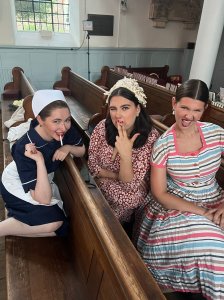 Eloise is everywhere; she’s up in the balcony, checking the sightlines, on stage with Ted (Belcore) discussing how he will enlist Nemorino (by using his own medical chart) and with the cast in the Green Room.
The musicians are all here, so… we begin!
I have heard much of this many times before, but it seems fresh and different now. This is the added element which costumes and staging bring. They also add physical authority to the concept of setting the opera in a post-war Clapham hospital. I knew it would work, but now it seems inspired.
The Adina-Nemorino dynamic is immediate and very strong, as befits the central relationship of the story. The nurses chat and inter-react like workmates. The south Londoners add variety and colour (as well as sound). Music and voices reverberate around the church (it will be interesting to see what sort of impact a full audience will have on the sound).
The spirit of the piece is celebratory and there is a slight carnival aspect, even though it is set in a hospital. It is funny and moving and beautiful. I feel so privileged to have watched this production develop, to talk with the director and soloists and chorus members at various stages. Thank you, all of you.
L’Elisir d’Amore is going to be an enormous success.
N.B. Since this diary was written the St Paul’s Opera Summer production of L’Elisir d’Amore has been given an Assessors Award from the Offie’s which celebrate independent and fringe theatre. Watch this space for a Nomination!
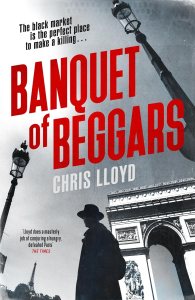 My first book is Banquet of Beggars by Chris Lloyd (Orion, £9.99). This is the third in his Occupation series, the first of which, The Unwanted Dead, won the Historical Writers Association Gold Crown Award for the best historical fiction in 2021. The next two books are just as good. Lloyd’s hero is Inspector Eddie Giral, Parisian cop. Once a First World War veteran and family man, once a nightclub bouncer and cokehead, now a laconic and cynical flic who is dangerously close to self-destruction. In 1940, Eddie, all of Paris, is under the rule of the occupying German forces.
 Inspector Frank Merlin, incorruptible Scotland Yard policeman. Merlin doesn’t quite fit with the establishment, he’s the half Spanish son of an East End chandler and his cockney wife, yet he commands respect amongst the gangland underworld and his fellow coppers (many of whom are corrupt). There are two murders for him and his small team, depleted because of wartime conscription, to solve. First, that of a respected consultant surgeon of Indian extraction, killed in his Kensington flat and, later, the discovery of an unidentified corpse on a bombsite in Limehouse, an apparently well-to-do, young man dressed for a night out ‘up West’.
 Finally, The Cambridge Siren by Jim Kelly (Allison & Busby, £9.99). As the title suggests this is set in war-time Cambridge, a strange city when denuded of its student population, its colleges standing empty or used for war-time research. Kelly, like Lloyd with Paris, or Ellis with London, clearly knows this cityscape like the back of his hand. His ’tec is Detective Inspector Eden Brooke, as with Eddie Giral, a survivor of World War One, albeit with permanently damaged eyesight. So, he must wear heavily tinted spectacles and prefers the hours of darkness. This different way of seeing is a metaphor for Brooke’s investigative thinking as well as requiring him to be a ‘nighthawk’ and the series is called the Nighthawk series.
 This year saw a unique collaboration for me, with St Paul’s Opera Company, on their production of Donizetti’s L’Elisir d’Amore (The Elixir of Love). The Director, Eloise Lally, wanted to set her version of the opera in a hospital immediately post-World War two and Patricia Ninian, SPO founder and Director had read my books The Midnight Man and A Death in the Afternoon, which are set in the South London Hospital for Women and Children. So Tricia approached me to see if using that setting might work. I was sure it would.
 in time when men were returning home from the war to take up the jobs and roles they had left behind, which had, in their absence, been done by women. Not all the women, especially the younger ones, wanted to return to a purely domestic sphere, but they had little choice. At the South London, however, the opposite was happening. Male medics and staff were leaving, to be replaced by women and male patients were also being excluded. This unique point of tension informed my books and would inform the opera.
 small exhibition about the South London, using documents and memorabilia lent to us by Dr Juliet Boyd, former anaesthetist at the hospital and its unofficial archivist. This included everything from an annual report from 1917, showing the medical officers in post (all female – the only male name is that of a chaplain) to protest badges against the closure of the hospital almost seventy years later. The banners (right, with SPO Director, Patricia Ninian) produced by the opera company would be used as information at each of the performances.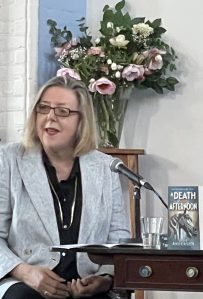
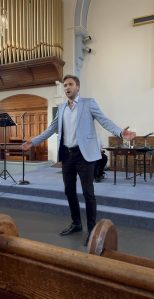

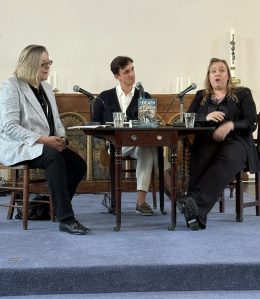
 clubs and libraries to visit where I’ll be talking about ‘The Midnight Man’ and the South London Hospital for Women and Children. Tomorrow I’m off to the Royal College of Nursing for the launch of their Summer exhibition and programme of events ‘Shining a Light’.
 ‘founder’ of the National Health Service. Bevan, played by Michael Sheen, was Minister for Health in the Attlee government and the driving force behind the creation of the NHS, although he had to make compromises to force it through. I was pleased to see that the play represented the opposition of the some of the medical unions, something which is also referred to in ‘The Midnight Man’. We treasure the NHS now ( or should do, though I appreciate that many years of underfunding and ‘reorganisations’ has meant long delays and some deficiencies ) but, at the time it wasn’t a foregone conclusion that it would be set up, let alone survive. Yet, as the post curtain call stats shone on to the back of the stage show, it has saved many lives and alleviated much suffering, which
  would not have been the case had it not existed.
 Only three weeks to go before my next book is published (by Hobeck Books) and I’ve received some very complimentary comments from fellow authors who have read proofs, like Vaseem Khan (award-winning author of the Malabar House series, set in 1950s India), Victoria Dowd (award-winning author of the Smart Woman series) and Elizabeth Buchan (multi-award winner and fellow south Londoner ). This is the enjoyable time, the pleasant anticipation, the dream of a best-seller, unsullied by one star reviews or poor sales numbers.
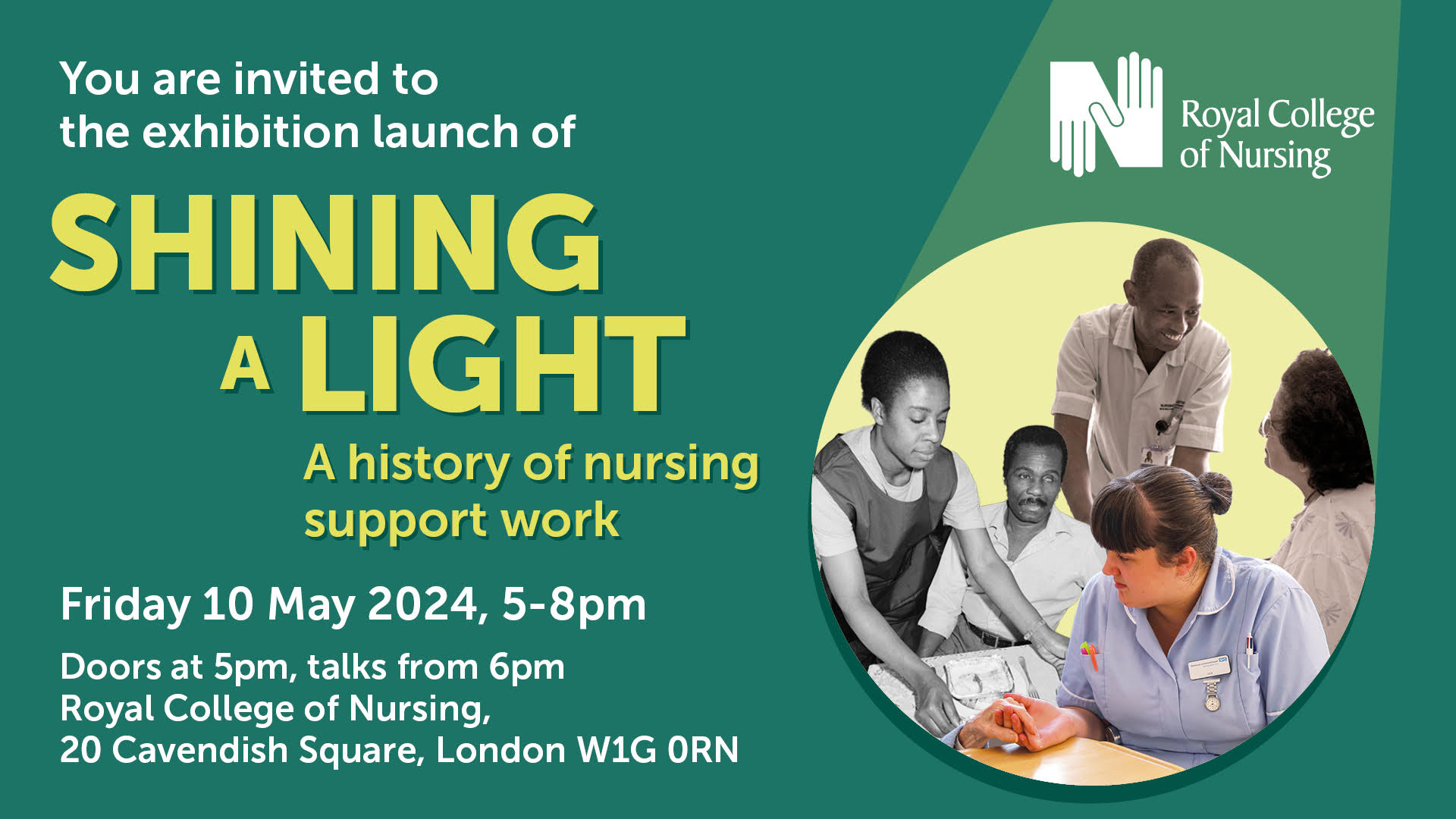 so I’ll be speaking at the Clapham Society and local libraries and book clubs. Some are London wide – the London Transport Museum is carrying the book in its shop and I’ll be working with them to be part of their events calendar. Some are national – so I’ll be part of the Royal College of Nursing’s Summer exhibition and events programme, which is taking place across the country. I’m looking forward to attending its launch on 10th May (see above).
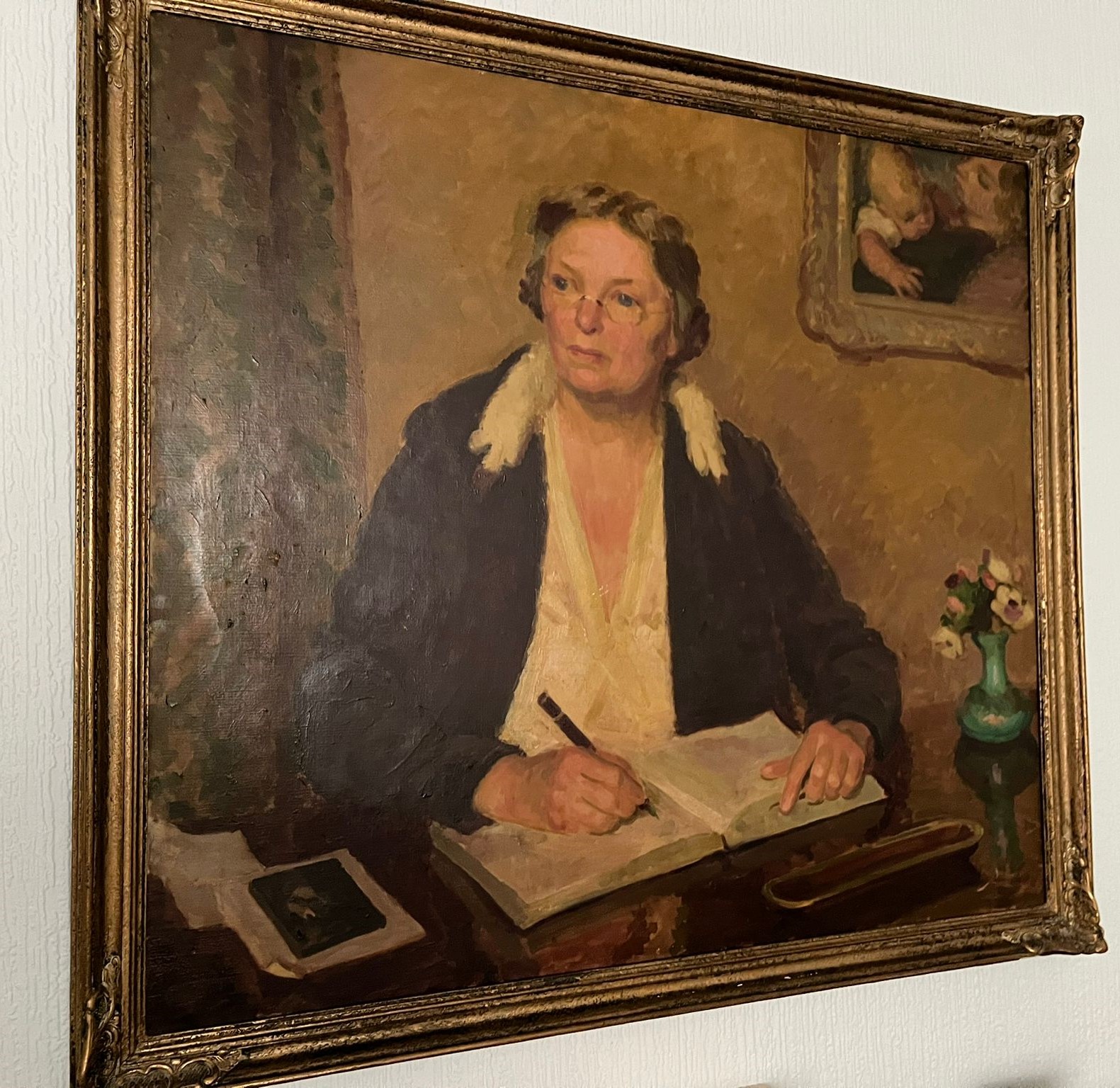 not a medic, though she worked for the RCN; a third generation involvement with nursing and medicine, albeit in a different capacity to her surgeon great grandmother. She told me lots of stories about Maud, known by the family as ‘Aunt Mary’ and sent me a photograph of her portrait, which currently hangs in Antonia’s mother’s house in London.
 I don’t know the answer to that and neither did Antonia. I hope to be able to speak with her father, who has a fund of stories about ‘Aunt Mary’ which might be enlightening. Nonetheless, I like to think that Maud, who had probably developed something of a thick skin by this time – she was denounced from the pulpit by her minister father (he said he would rather she died than became a doctor) when she was younger and had to blaze trails in other ways, decided, rather like Groucho Marx, not to join any club which would have her as a member, especially one which, in years previously, would not admit her.
 This is not the only remarkable coincidence attaching to this book. Early in the writing process, at first draft stage, I received an unanticipated invitation to a birthday celebration for a friend and couldn’t (for reasons too tedious to go into here) buy a birthday gift in time. So my gift was to name a character after my friend in the new book. I duly did so and, just prior to final editing, I sent her a copy of the manuscript. If she hadn’t liked ‘her’ character, or had had second thoughts about my using her name, she could withdraw and I would change the name. She and her partner, who also had a named character, were very happy, though she responded by sending me a copy of the birth certificate of her first born son. He was born at the South London Hospital in the 1970s! She had never mentioned where he was born (he now lives in Canada) so I had no idea. Thus, I found, my friend was a real patient at the real hospital as well as being a ‘character’ in the fictional version. What are the chances of that?
 Two happy accidents; I hope they bode well for the book. ‘The Midnight Man’ is published by Hobeck Books on 30th April. I will be posting further pieces about it as the date approaches. Available for pre-order from Mr Besos’
 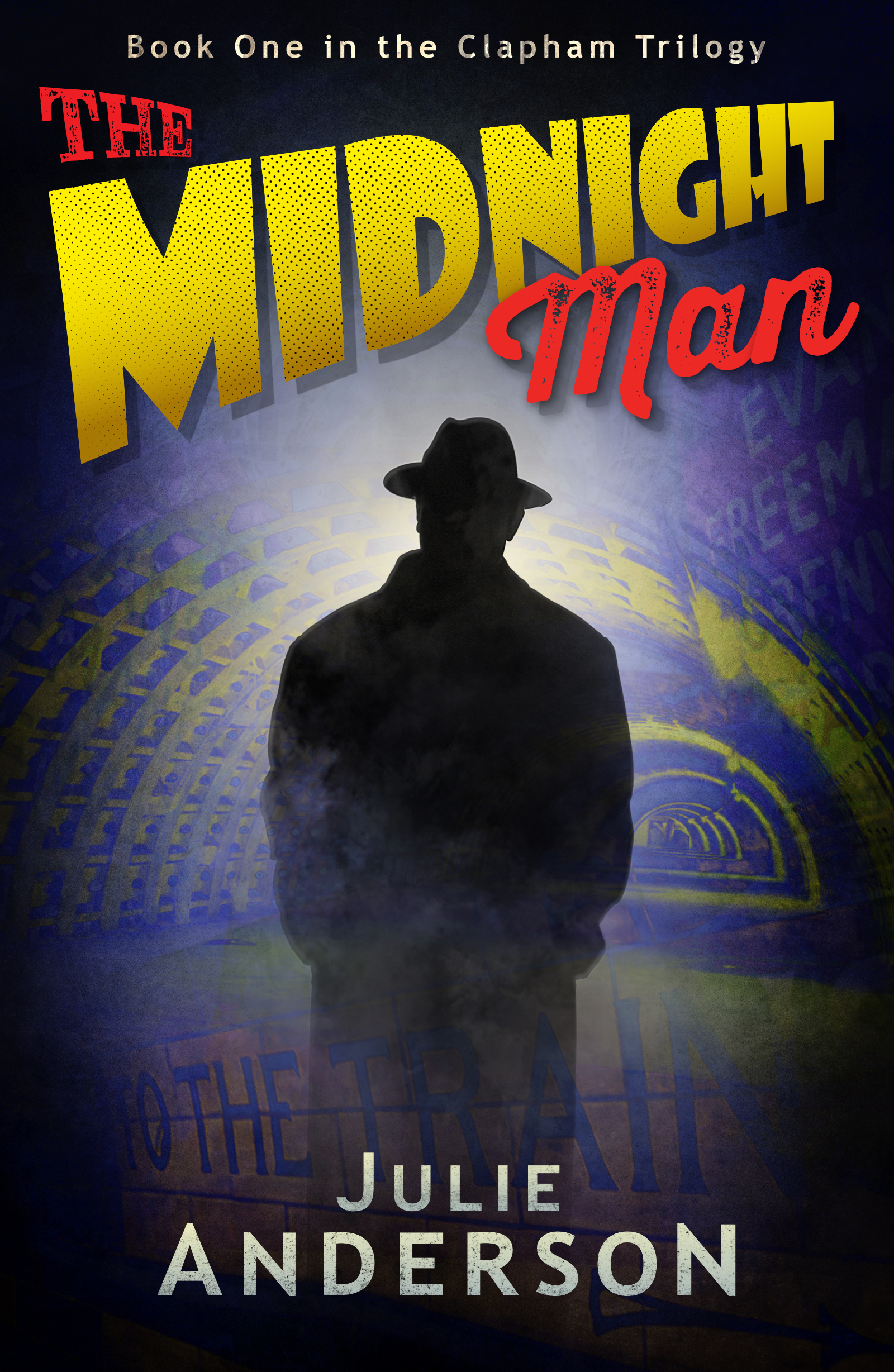 I am very pleased with the cover of my next novel, The Midnight Man. Created by graphic designer,


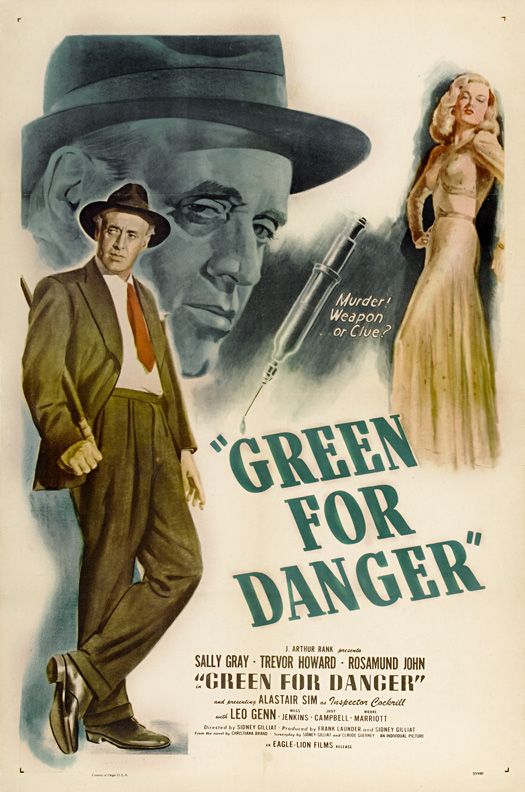 hereby hangs another tale, which I will doubtless return to.
 Clapham Common, clustered around Clapham South Underground station. Some of these places are highly unusual, some still exist (although they have been repurposed) and others can be visited today.
 large donation which, some speculated, came from a female member of the royal family, they collected enough to found the South London Hospital for Women and Children. At first the hospital operated in two large houses near Clapham South tube station, but, in 1916, Queen Mary opened a purpose-built eighty bed hospital, the largest women’s general hospital in the UK.
 fondly remembered the ‘South London’ or ‘SLH’. There is even a Facebook group, to which I now belong, entitled South London Women’s Hospital occupation 1984─85 where those who protested at the time, many of them staff and patients, reminisce and organize the occasional get together. So, there was a certain amount of pressure to get it right.
 good location for my book, enabling me to show changes taking place. Then I found out about the South London Hospital for Women & Children. Clapham has been my home for over thirty years and I used to walk past the empty hospital buildings on my way to and from the tube every day, but I knew little about it. When I began researching, I discovered that it was the largest woman-only hospital in the UK, run exclusively by and for women. This made it both unusual and very apposite for my book.
 the early hospital. I also spoke with a former midwife and former nurses, all of whom fondly remembered the hospital. There is a Facebook group, to which I now belong, called South London Women’s Hospital occupation 1984─85 where those who protested at the hospital’s closure, many of them staff and patients, reminisce and organize the occasional get together.
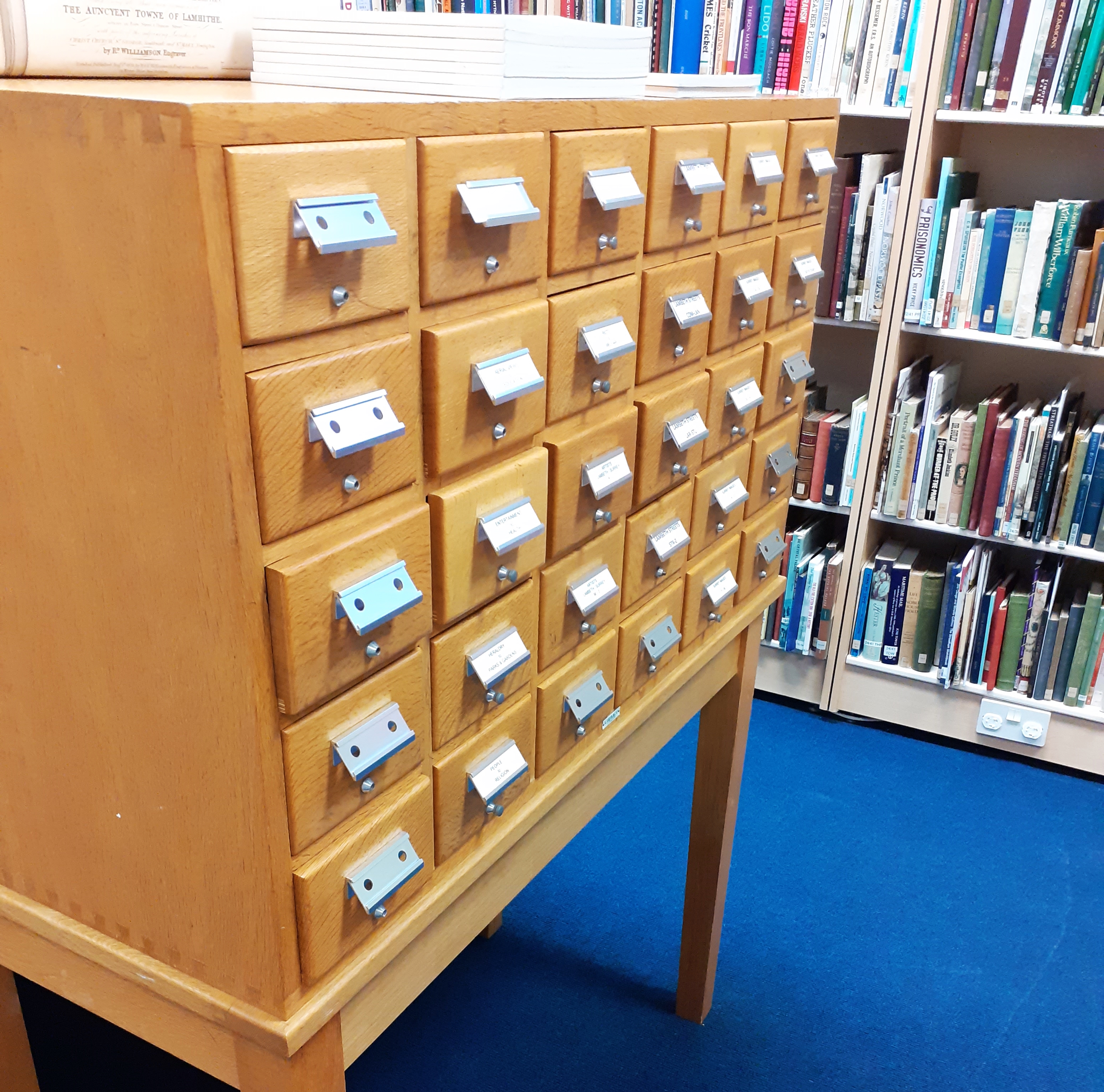 architect’s plans. I also read minutes of meetings of the South London’s management board and similar minutes belonging to other hospitals of the time and this helped to give me an understanding of the context. It is instructive that, despite there being an acute shortage of nurses after the war, the SLH never had a problem attracting nurses; it was a place where women wanted to work.
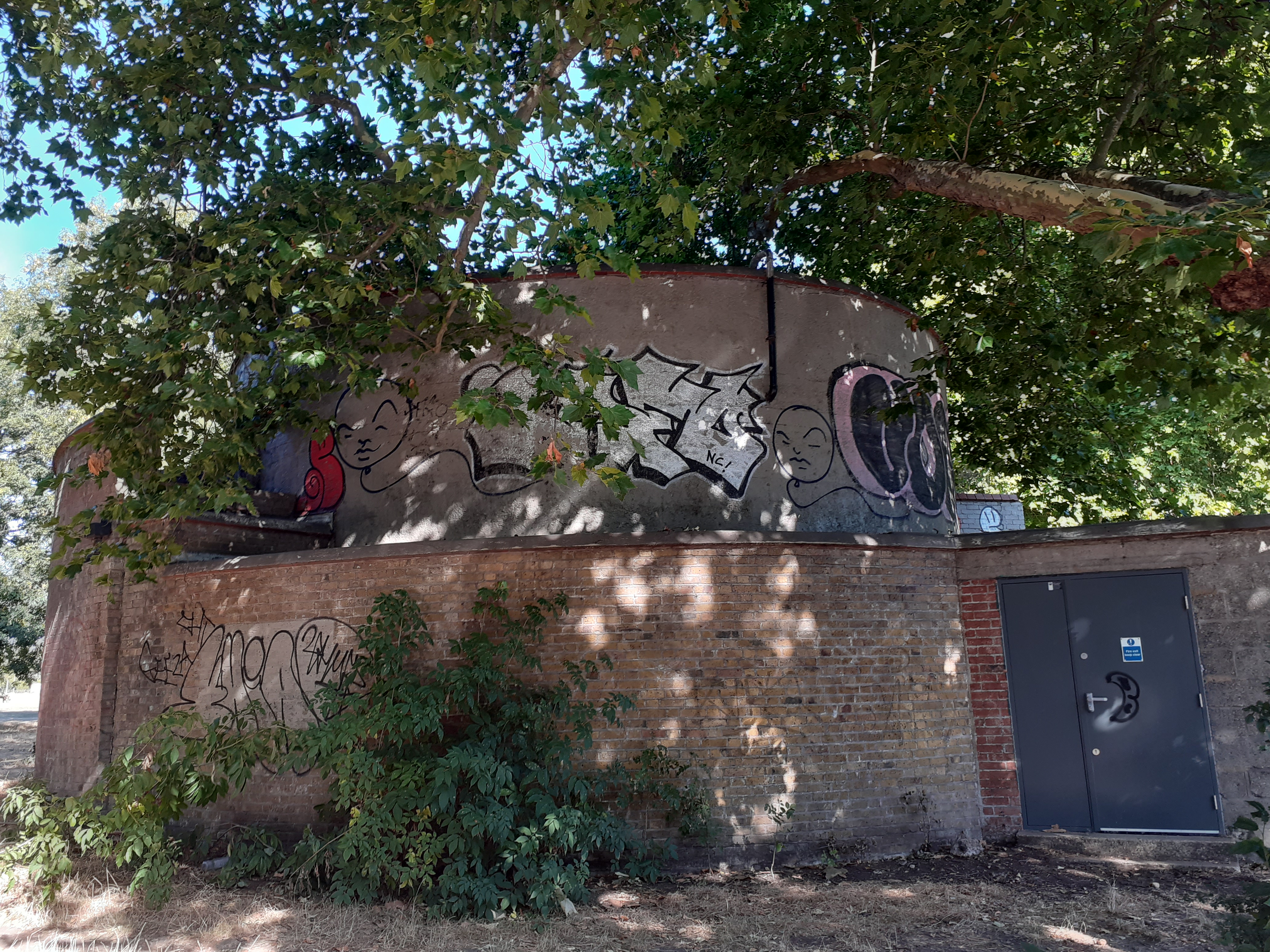 Clapham South underground station onto Clapham Common Southside, about a hundred yards away you’ll see a concrete pillbox of a building, on the common very close to the busy road. Currently graffiti covered, this unlovely and unloved building is the entrance to a fascinating world beneath the ground.
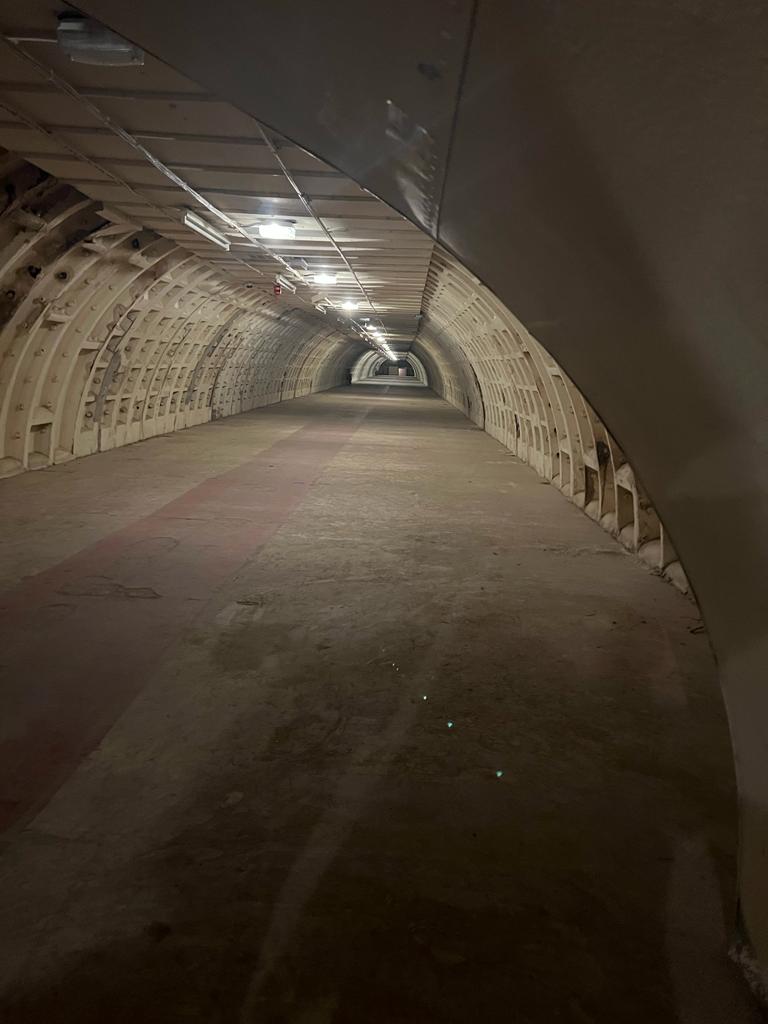 rockets bombarded London. South Londoners descended, nightly, in the lifts, to their bunk space in the shelter, which held canteens, lavatories, washrooms and a medical centre. Apparently, it was quite sociable, people played music, sang songs and played cards and other games as the rockets fell overhead. All this while the underground trains rumbled above them, the shelters being deeper even than the underground lines.
 unusual one ( I’ll be blogging about it as publication day approaches ). Some of its buildings still stand, near Clapham South Underground station as the photograph (right) shows. This was the ‘New Wing’ erected in the 1930s. It is now an apartment building, above a supermarket ( the entrance to which can just be seen on the far left).
 Julie Anderson