 Only three weeks to go before my next book is published (by Hobeck Books) and I’ve received some very complimentary comments from fellow authors who have read proofs, like Vaseem Khan (award-winning author of the Malabar House series, set in 1950s India), Victoria Dowd (award-winning author of the Smart Woman series) and Elizabeth Buchan (multi-award winner and fellow south Londoner ). This is the enjoyable time, the pleasant anticipation, the dream of a best-seller, unsullied by one star reviews or poor sales numbers.
I’m busy making last minute promotional arrangements. Many are local, the book is set in Clapham so I’ll be speaking at the Clapham Society and local libraries and book clubs. Some are London wide – the London Transport Museum is carrying the book in its shop and I’ll be working with them to be part of their events calendar. Some are national – so I’ll be part of the Royal College of Nursing’s Summer exhibition and events programme, which is taking place across the country. I’m looking forward to attending its launch on 10th May (see above).
And thereby hangs a tale. I was contacted by a representative of the RCN Museum and Library, having emailed the College to tell them about the book, largely because of its setting – the South London Hospital for Women and Children. This lady was enthusiastic about my taking part in their programme and we arranged a time to discuss that, but she also mentioned, as an aside, that she was related, by adoption, to one of the original founders of the South London Hospital, Maud Chadburn. Her father is the son of one of the children adopted by Maud and her partner in work and life, Eleanor Davies-Colley (the first woman admitted to the Royal College of Surgeons).
This was, as you can imagine, rather a surprise. Professions run in families, but Antonia was  not a medic, though she worked for the RCN; a third generation involvement with nursing and medicine, albeit in a different capacity to her surgeon great grandmother. She told me lots of stories about Maud, known by the family as ‘Aunt Mary’ and sent me a photograph of her portrait, which currently hangs in Antonia’s mother’s house in London.
The portrait is believed to be by Henry Lamb, one of the Camden Town School of artists. According to the family story, it was offered to the Royal College of Surgeons, but they declined it, Maud never having been a member. There was, Antonia said, much speculation within the family about why Maud didn’t join. Eleanor certainly did and blazed a trail for others. Towards the end of Maud’s life ( she died in 1957 ) there must have been several women members and Maud could have joined too. So why didn’t she?
 I don’t know the answer to that and neither did Antonia. I hope to be able to speak with her father, who has a fund of stories about ‘Aunt Mary’ which might be enlightening. Nonetheless, I like to think that Maud, who had probably developed something of a thick skin by this time – she was denounced from the pulpit by her minister father (he said he would rather she died than became a doctor) when she was younger and had to blaze trails in other ways, decided, rather like Groucho Marx, not to join any club which would have her as a member, especially one which, in years previously, would not admit her.
 This is not the only remarkable coincidence attaching to this book. Early in the writing process, at first draft stage, I received an unanticipated invitation to a birthday celebration for a friend and couldn’t (for reasons too tedious to go into here) buy a birthday gift in time. So my gift was to name a character after my friend in the new book. I duly did so and, just prior to final editing, I sent her a copy of the manuscript. If she hadn’t liked ‘her’ character, or had had second thoughts about my using her name, she could withdraw and I would change the name. She and her partner, who also had a named character, were very happy, though she responded by sending me a copy of the birth certificate of her first born son. He was born at the South London Hospital in the 1970s! She had never mentioned where he was born (he now lives in Canada) so I had no idea. Thus, I found, my friend was a real patient at the real hospital as well as being a ‘character’ in the fictional version. What are the chances of that?
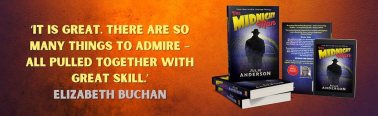 Two happy accidents; I hope they bode well for the book. ‘The Midnight Man’ is published by Hobeck Books on 30th April. I will be posting further pieces about it as the date approaches. Available for pre-order from Mr Besos’ emporium, Waterstones and Hobeck direct. Paperback at £10.99 and ebook £3.99.
N.B. Both Antonia and my old friend, Lesley, have given permission to be included and named in this blog post.
 connected with it.
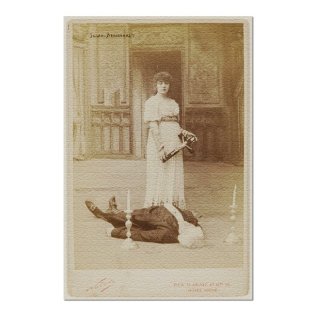
 Puccini’s opera was based. The first performance of the opera was in 1900 in Rome and the poster was by Adolfo Hohenstein who also designed the stage sets. It is very much in the Art Noveau style of Mucha and features the same scene as the Bernhardt postcard, a scene which was to feature again and again in images of the opera. The pious Tosca sets candles at the head of the Baron, whom she has just killed ( in self-defence, as he has just tried to rape her ) and places a crucifix on his chest.
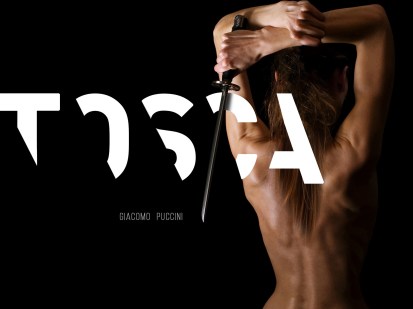 Many of the more modern images are explicit about the subject matter and the link the opera makes between sex and death (see left). The dagger is a recurring motif, as is blood – red is the most popular colour. The Castel Sant’Angelo appears too. Tosca herself, as in Bernhardt’s time, is often the the central image, although other posters prefer to concentrate on Scarpia, like that for Florida State Opera (right). Only a few depict Cavaradossi, the hero. Ordinarily one might say that this is an example of
 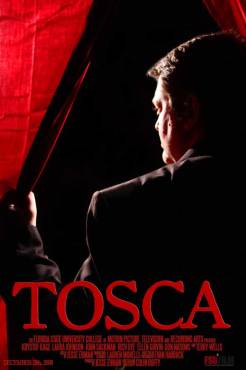 ‘the devil has all the best tunes’, except that in the opera itself, it is the tenor arias, belonging to Cavaradossi, which are most memorable.
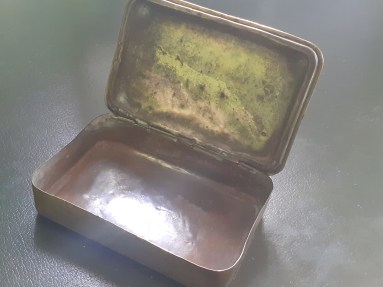
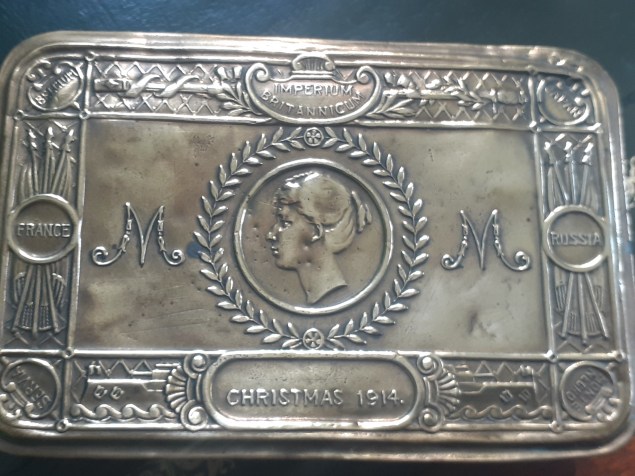 A metal box, that’s all it is. Not precious metal either, probably brass, at least that’s how it looks when polished, though bits are silver in colour, so it could possibly be tin or another alloy. Approximately 130 centimetres across, 85 from front edge to back and 30cm/1 inch deep, it would fit in a uniform pocket.
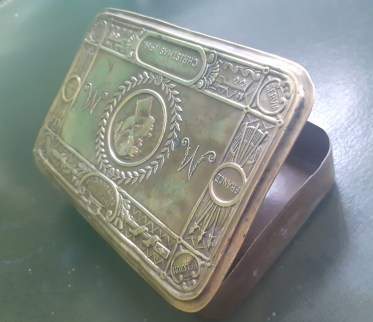 £152, 691 was raised and manufacturing of the boxes began. Although originally meant for ‘every sailor afloat and every soldier at the front’ on Christmas Day 1914, this was widened to include anyone serving, wearing the King’s uniform on Christmas Day. About 400,000 were distributed before or at Christmas, though the tally eventually reached 2.5 million, although many of those weren’t distributed until 1920, after the war was over. ‘Serving’ is appropriate, as I remember, as a child, a ‘christmas box’ was something given to tradespeople, postmen, anyone who had served you well during the year preceding.
 ‘Imperium Britannicus’ and below her a lozenge bearing the inscription ‘Christmas 1914’.
 First at the famed
  fabulous side room wall-papered with posters of previous performers. It’s terrifically nostalgic and much time was spent spotting bands we recognised or knew from more youthful days. Zelda Rhiando, herself a published writer and the organiser of the Jam, was there to calm our nerves and point out the beers in the little fridge and the bottles of wine. I swore not to touch a drop before I went on.
 Brixton Book Jam was not my only interesting night on the town. Only three days later I attended the first meeting of the London chapter of the
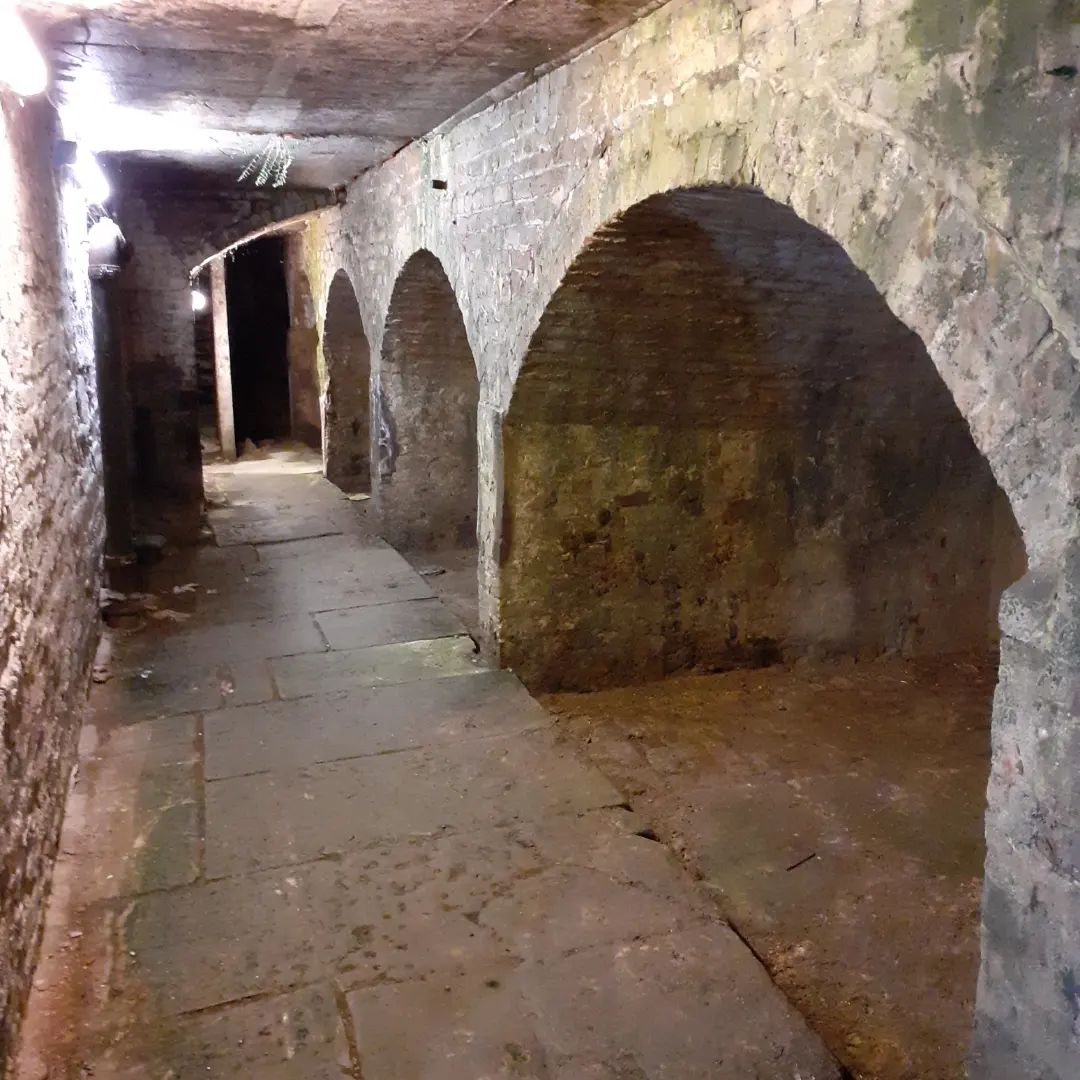
  out of the prison down to the prison hulks moored on the Thames. They would then be removed to the transportation ships bound for Australia. The pub was, Anthony informed us, one of the most haunted in London. But the writers’ imaginations were already hard at work and one of us was already speculating aloud about a crime plot using the tunnels. This is, I guess, the sort of thing that happens when a group of Crime Writers gets together. I’ll be looking forward to the next meeting.
 I hadn’t appreciated the level of sophistication of the dwellers in this land from about 6,000 to 4,000 years ago. The world-view of the earliest, revolving around nature and the seasons, like many hunter-gatherer people, was shared across northern Europe. Of course, until about 6500 BCE and the rising of post Ice Age sea levels, the UK was part of the landmass of that continent. Although subsequently an island archipelago, the peoples who lived here had regular contact with their counterparts on the mainland. This can be seen in their art and craftwork, but also measured by their DNA. One of the most striking examples of this was of the Amesbury Archer. Bones belonging to this man, buried with his bow, were DNA tested. He was originally from the southern Alpine region, though he had lived in southern England for most of his life. Near his grave is that of another, younger man who shares the first’s DNA and is likely to have been his grandson. This man was born and lived most of his life in the Alps, but he was clearly in Amesbury when he met his end. A family visit? Or did the grandson come to live with his grandparents?
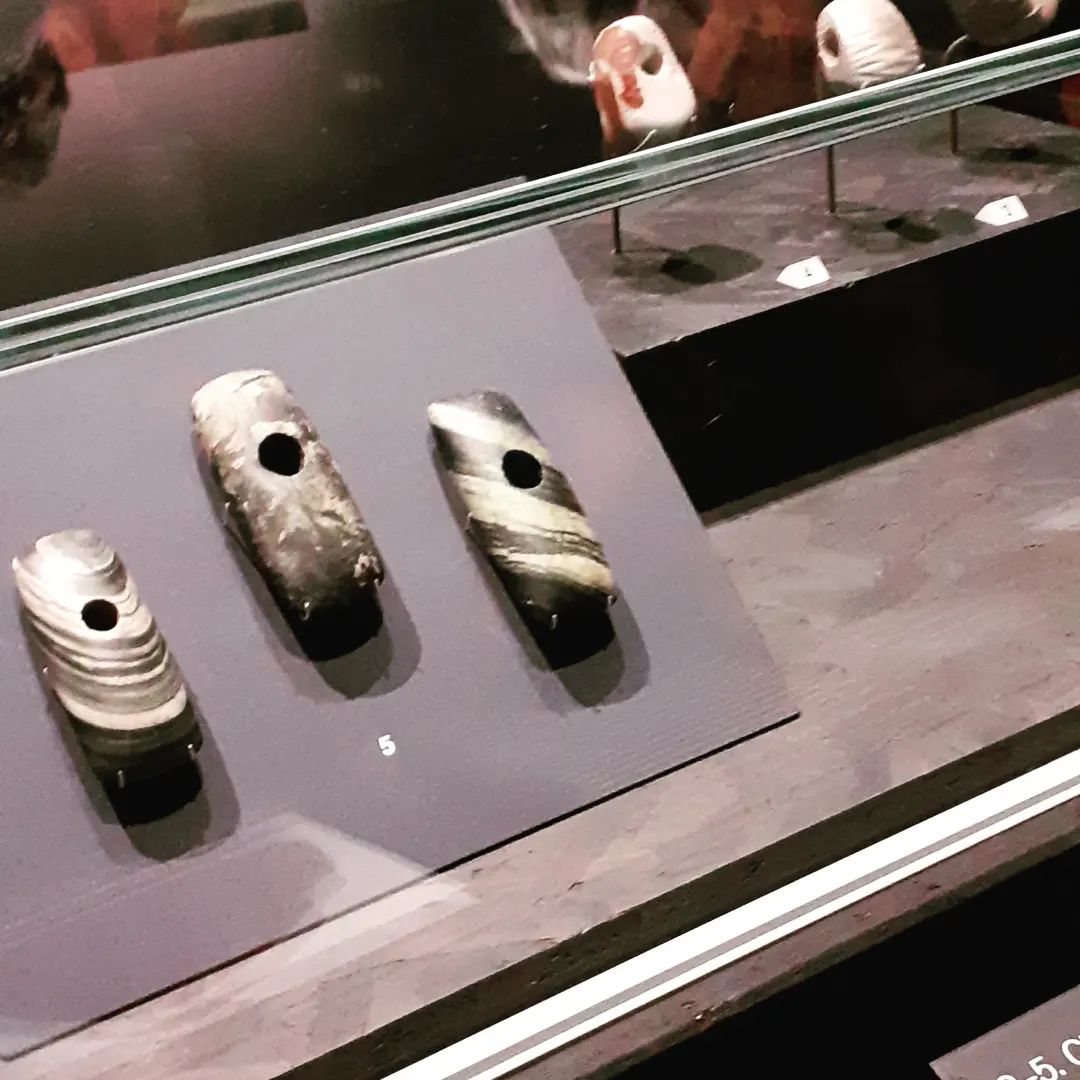 beautiful. Perfectly carved and turned stones, with elaborate patterning, these weren’t to be used for everyday, but were ceremonial and included in burials. I was fascinated by one aspect of that early culture, that ‘art’ lay in the act of creation, not, or not only, in the item produced by it. Thus, things did not have the same value as the ability to create them, which seems an eminently sensible value system to me. There is also a wonderful, finely wrought golden collar from this era. Gold was used, not because it had any intrinsic value, but because it was the colour of and reflected the light from, the sun.
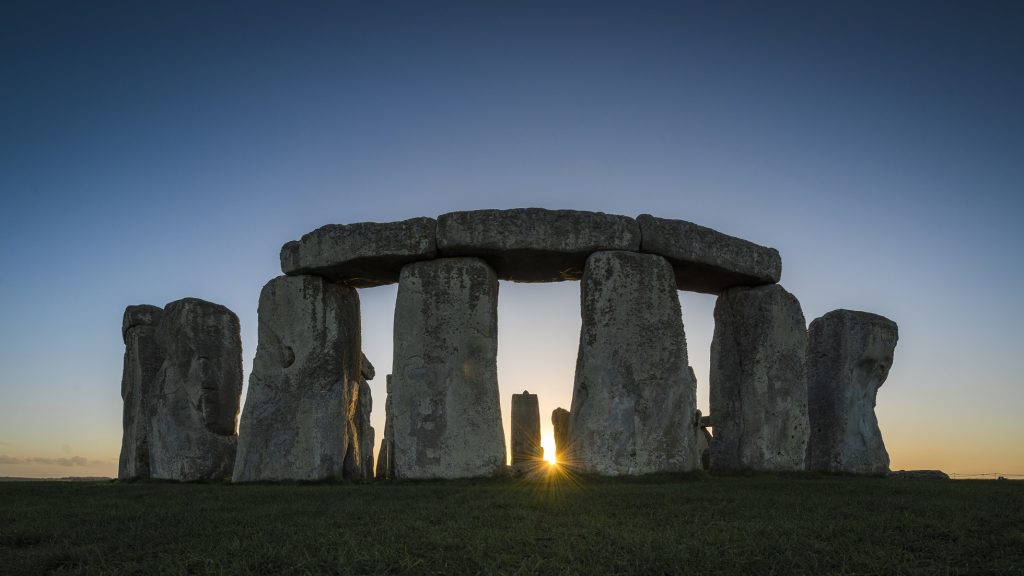
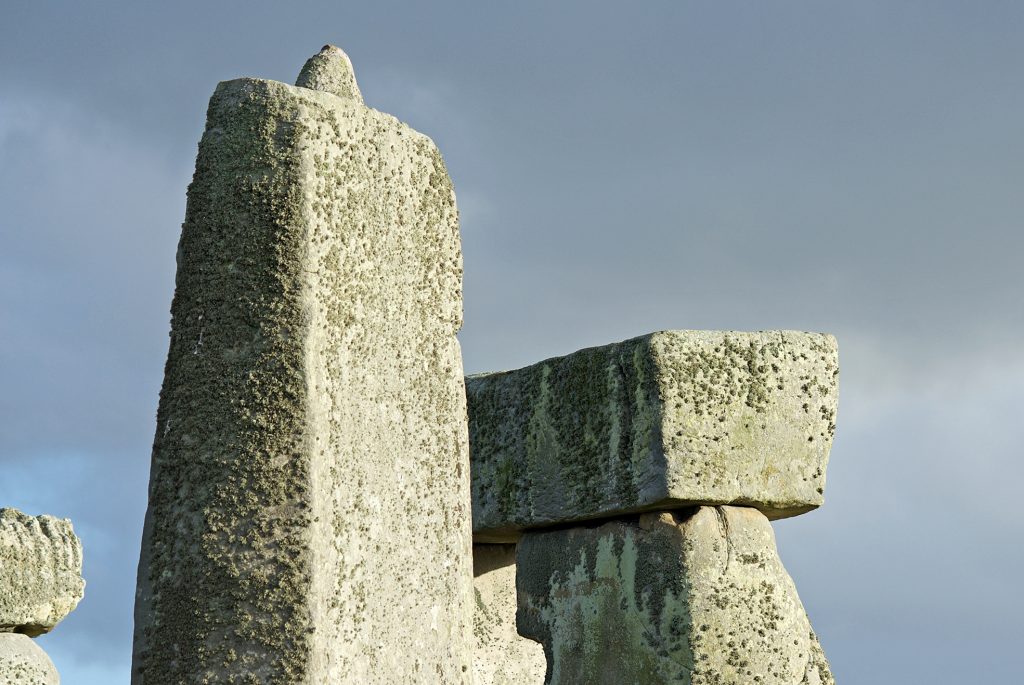 The exhibition explains, through artefacts, how that culture changed, with the introduction of farming and a concentration on animals and other aspects of nature as a commodity. Art was still relatively fluid, in that stone carvings were made outside and weren’t ‘finished’ objects, but people added to them all the time. This is also true of Stonehenge itself. The landscape in which it was built was already crossed by ceremonial ditches and banks and, after the great sarsen stones were raised, carved on mortice and tenon principles ( see photograph, left) it was added to years later with blue stones brought from Wales, over 220 miles away.
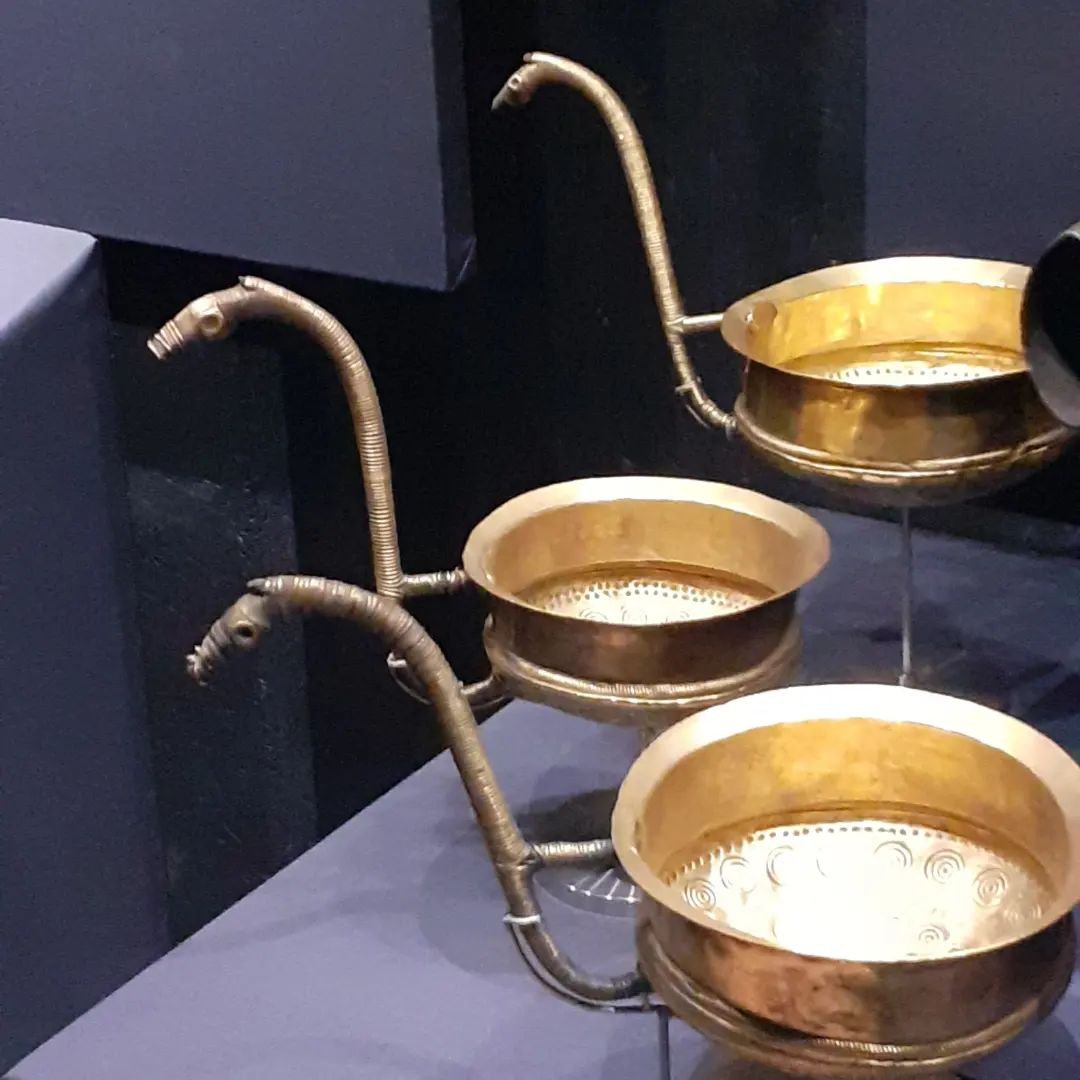 on Troy. This exhibition places the British pieces in that cross-cultural context, with a collection of armour, roughly contemporaneous to the Illiad and not dissimilar to that worn in ancient Greece (though the helmets look more like Janissaries). There were also exquisite golden drinking bowls and fine copper horsehead artefacts (the horse featured strongly as did the snake, the bird and the sun and moon ). This was a culture close to nature, even when that nature was largely tamed.
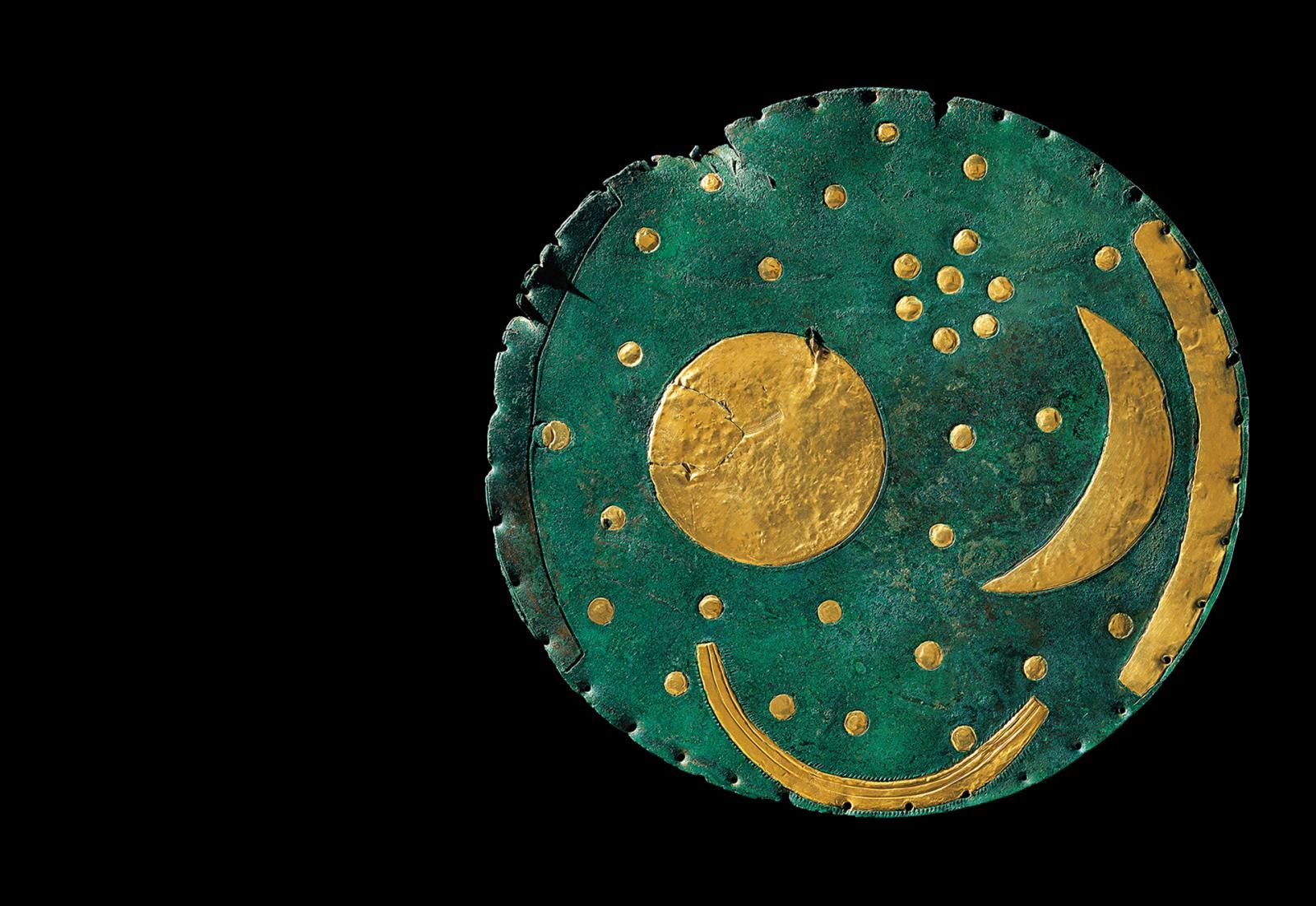 the time of the lunar month. This shows a level of sophistication in understanding of the movement of the stars and planets which is reinforced when one sees how many barrows and henges were aligned with sun and, or, moon. The exhibition ranges across many of these, from Denmark, Ireland, the islands of Scotland as well as Wales, Spain, France and elsewhere in England. It also shows how the sea began to play a greater and greater role in the culture of the people living here, as trading took place and the sea itself became a place to worship. There is a recreation of the remarkable Seahenge discovered in the saltmarsh of the Norfolk coast and which, incidentally, features in the crime fiction of Elly Griffiths’ Ruth Galloway books.
 Yesterday I went to the British Museum to catch the Peru exhibition before it closes on 20th February. This relatively small but very interesting exhibition is in the Great Court Gallery (above the Reading Room) and is organised in conjunction with the Museo de Arte de Lima. It brings together artefacts from the BM’s own collection with those from Peru and elsewhere to reveal the history, beliefs and culture of a series of South American societies and peoples from BCE to the sixteenth century arrival of the conquistadors.
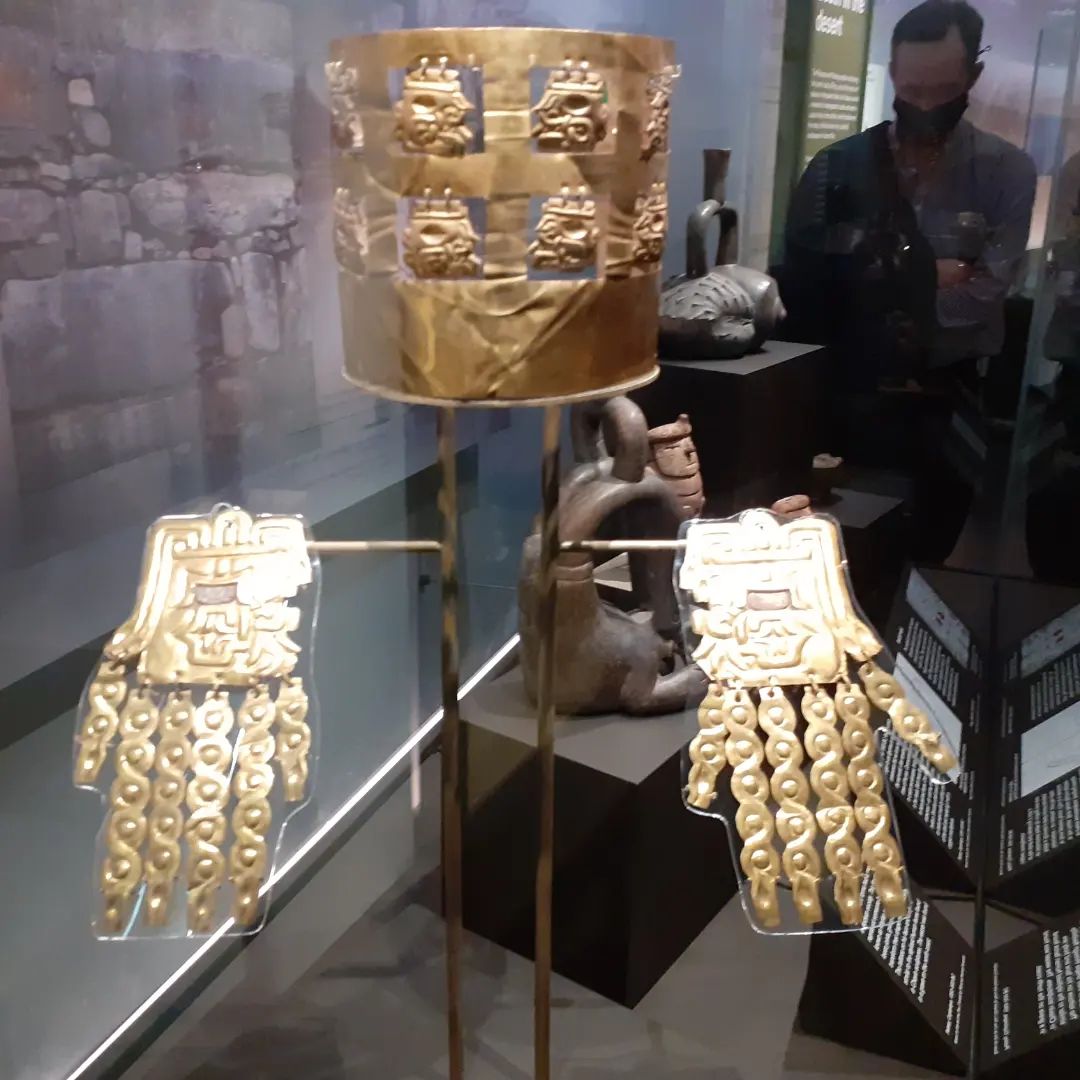 perhaps most personally, the
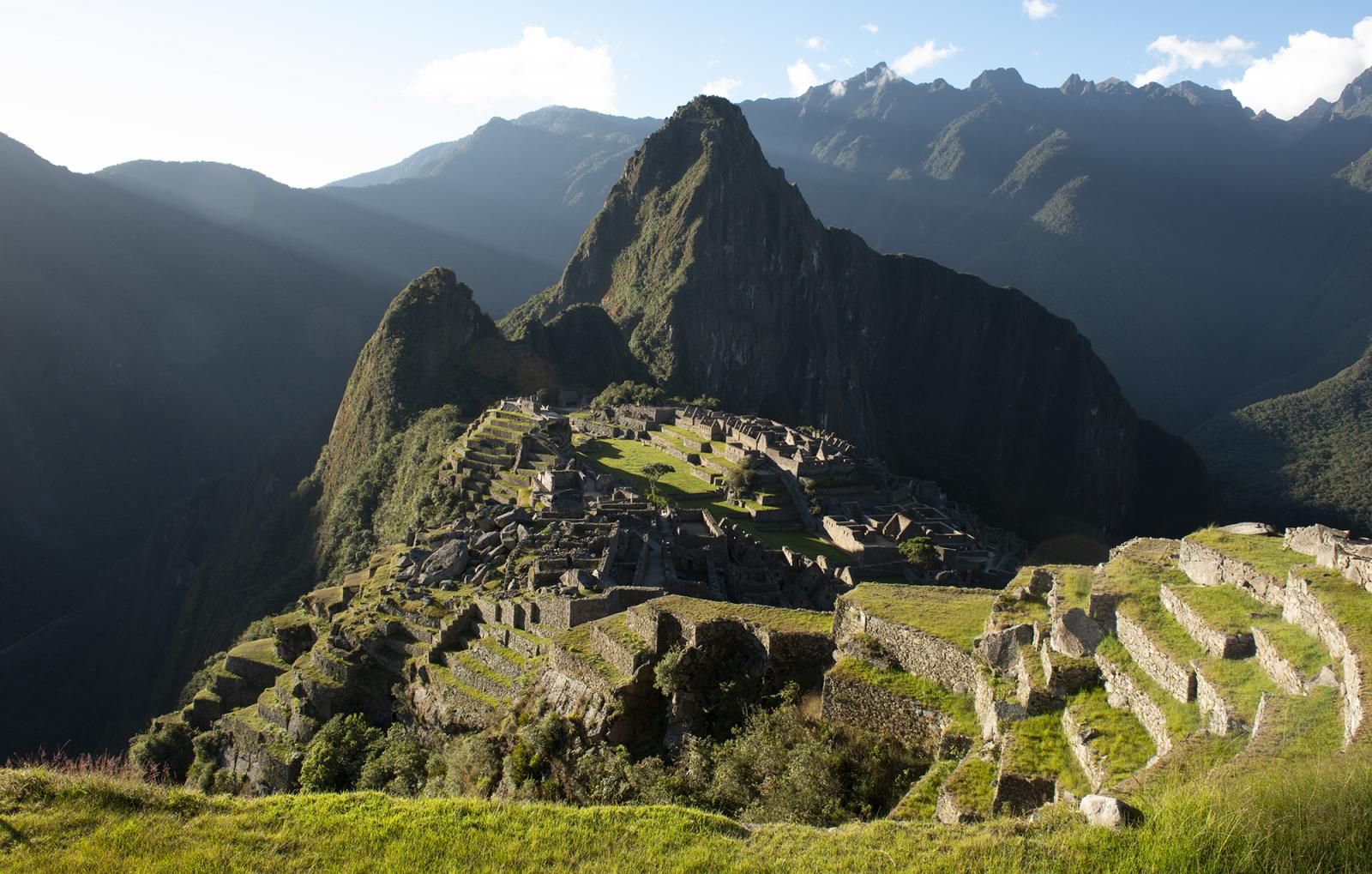
  In northern Peru the Moche people (100-800 CE), fabulous ceramicists (see figure of a Moche warrior, left), concentrated along the coasts and river valleys, while the Wari (600-900CE) developed in the Ayacucho region and expanded to cover the southern highlands and the northern coast. Then, between the 10th and 12th centuries the Kingdom of Chimu dominated, its capital Chan Chan having a population of up to 75,000 people. In the central Andes the Inca empire emerged in about 1400, expanding its territory throughout the region, via a system of roads and waterways between diverse cultures and communities. This included the creation of the mountain fastness which is Machu Pichu, or ‘ancient mountain’, including about 200 polished stone buildings, as well as terraces and pyramids. Though this was not the Inca capital, which was at Cusco.
 ways of life followed. It is Pizarro’s first encounter and subsequent relationship with the Inca Emperor Atahuallpa which features in the aforementioned play (and film). The exhibition included artefacts from the colonial period, though not many of them.
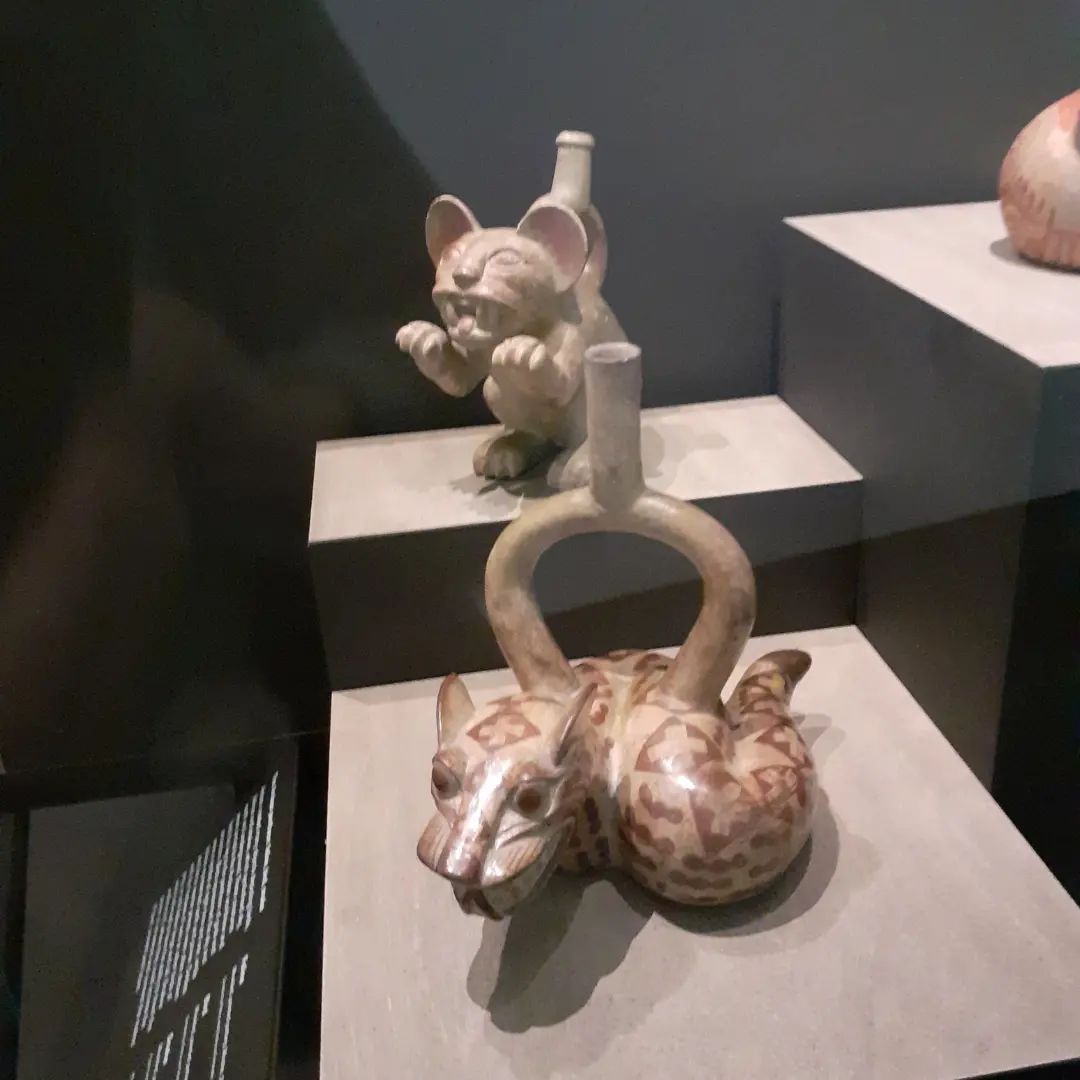 They certainly had complex belief systems, centred on nature and the land, as shown by the exquisite ceramics in the form of felines and serpents (see left). It also included blood sacrifice (back to those childhood bloodthirsty yarns) with any prisoners captured during wars being slain as a sacrifice to the gods of the land. One funerary robe included no fewer than seventy four human figures in its border and central pattern, each of them carrying a severed human head. Ceramics and musical instruments were decorated with similarly gruesome patterns. The exhibition includes a number of sculptures of captured prisoners, roped and awaiting their fate.
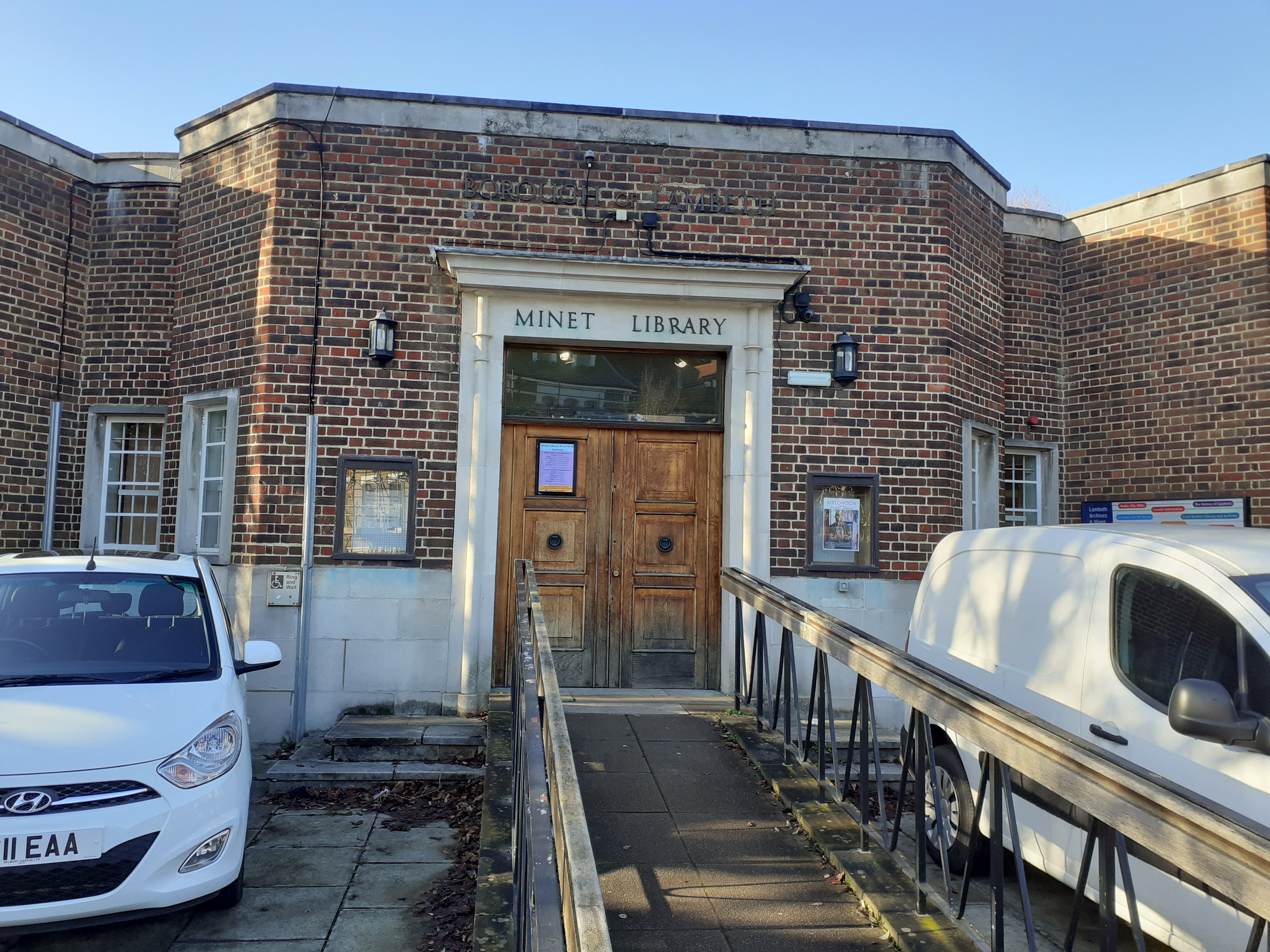 Boring, right?
 there, fronting a Tesco store and apartments. This has been extended to incorporate another ‘wing’ which was in the extension plans for the 1930s but never built, replacing one of the original old houses, Preston House, of which the hospital was comprised.
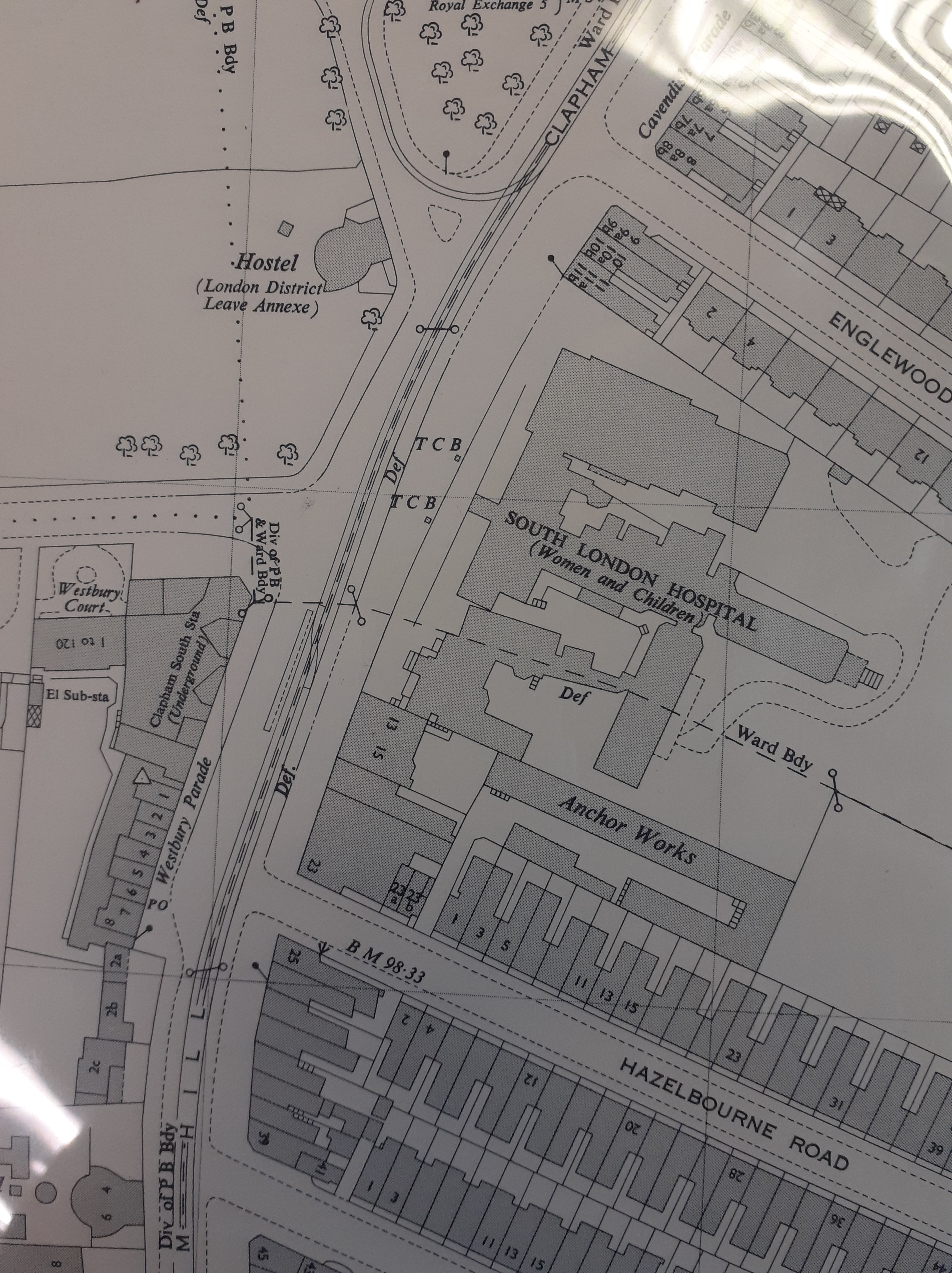 Anderson Hospital, founded 1872) on the Euston Road, the first hospital in the UK to be staffed entirely by women. But by the early years of the century demand hugely outstripped the ability of this hospital to cope and so the South London was proposed. An astonishingly successful fund-raising campaign began and properties at Clapham South were purchased and converted. The hospital opened its doors in 1912.
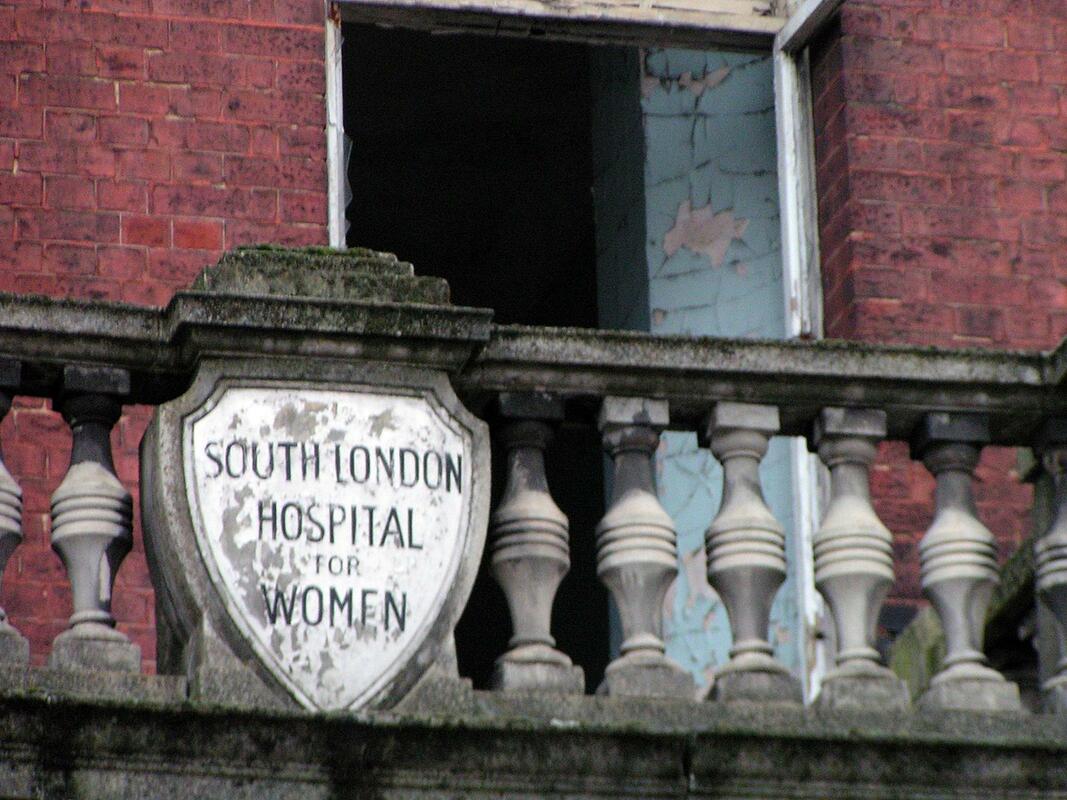 the inside of the buildings altered radically between 1912 and 1935 (when the Cooper building was built). The archivist provided me with an Ordnance Survey map and a large bundle of drainage plans, covering those for the original conversion of private houses to hospital, through various extensions, to the 1930s plans. I had to put them into some sort of order and understand how they fitted together. Fortunately for me they were dated (though what the plans showed, exactly, wasn’t always immediately clear).
 on how the water and waste drained away to the sewers. There was some of that, but there was a lot more as well. There is water throughout a building, especially a hospital and it has to drain away, so the plans covered all the floors, even the fourth, showing all the ‘water features’ sinks, baths, sluices etc.. I was pleased to see that even the servants rooms had hand washing basins, although they didn’t have en suite bathrooms. Those were communal at the end of the corridor.
 There was also a staff dining room or canteen and a School of Nursing. The grounds included gardens, a tennis court and, from the 30s again, a block providing nurses’ accommodation, including sitting rooms and a recreation area. I recall walking past the block along Hazelbourne Road on my way to and from the tube every morning when I first moved to London. How I wish that I had taken photographs, but camera phones weren’t invented then. Nonetheless, the plans gave me lots of information and I’ve begun to build a picture of what life there may have been like.
 still finding interesting places new to me, sometimes close to home. Ten days ago I found myself in Stockwell.
 Leisure Magazine. It was somewhat daunting, to be interviewing the man who had interviewed so many famous, and infamous, people and whose voice had formed part of the backdrop to my mornings for so many years. Stourton was a main presenter on Radio 4’s Today Programme for a decade – as well as The World at One and The World This Weekend, both of which he still does on occasion.
 not to be late, I was ridiculously early. So I wandered towards the address I had been given and discovered, for the first time, Stockwell Park or the Stockwell Conservation Area. It received that designation in 1973 and covers the old Stockwell Green (the 15th century manor house which formerly stood there has links with Thomas Cromwell) and the later 19th century developments of Stockwell Crescent and the roads running from it. Built primarily in the 1830s the surviving buildings are elegant early Victorian villas with gardens. They were built to different designs, which distinguishes them from the smaller, ‘pattern built’ south London Victoriana elsewhere (like some of my beloved Clapham).
 found St Michael’s Church of England church (consecrated 1841) and a blue plaque marking the home of Lillian Bayliss, Director of the Old Vic and Sadlers Wells theatres and founder of the forerunners of the English National Opera, the National Theatre and the Royal Ballet. The whole enclave was a delight and so very near to the busy Stockwell Road which runs directly into the City. I never knew it existed.
 Yesterday to the British Museum during the last week of the exhibition Thomas Becket: murder and the making of a saint which ends on Sunday. It’s an interesting exhibition which follows Becket’s upbringing, fairly meteoric career ( from Cheapside immigrant merchant’s son to the Archbishopric and Lord Chancellorship of England ) to his eventual death and subsequent canonisation. I reread Murder in the Cathedral in preparation and the exhibition ends with lines from that verse play.
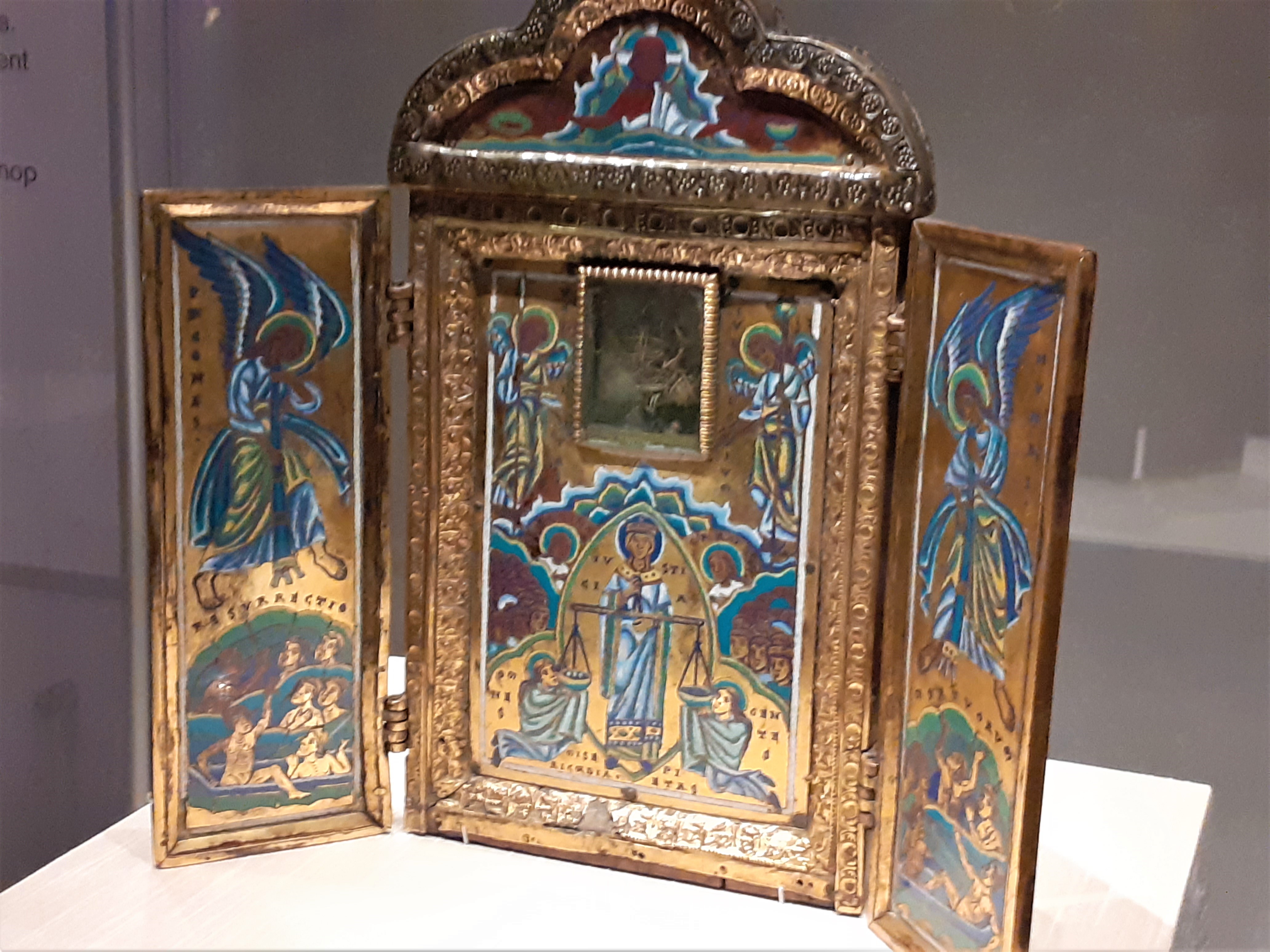 seemed to me and my companion, also sought martyrdom as the ultimate step, a translation into immortality. Everyone knows the story, or has seen the film and recognises the famous quote ‘Who will rid me of this turbulent priest?’, although this is, without explanation, changed to ‘Who will rid me of this troublesome priest?’ in this exhibition.
 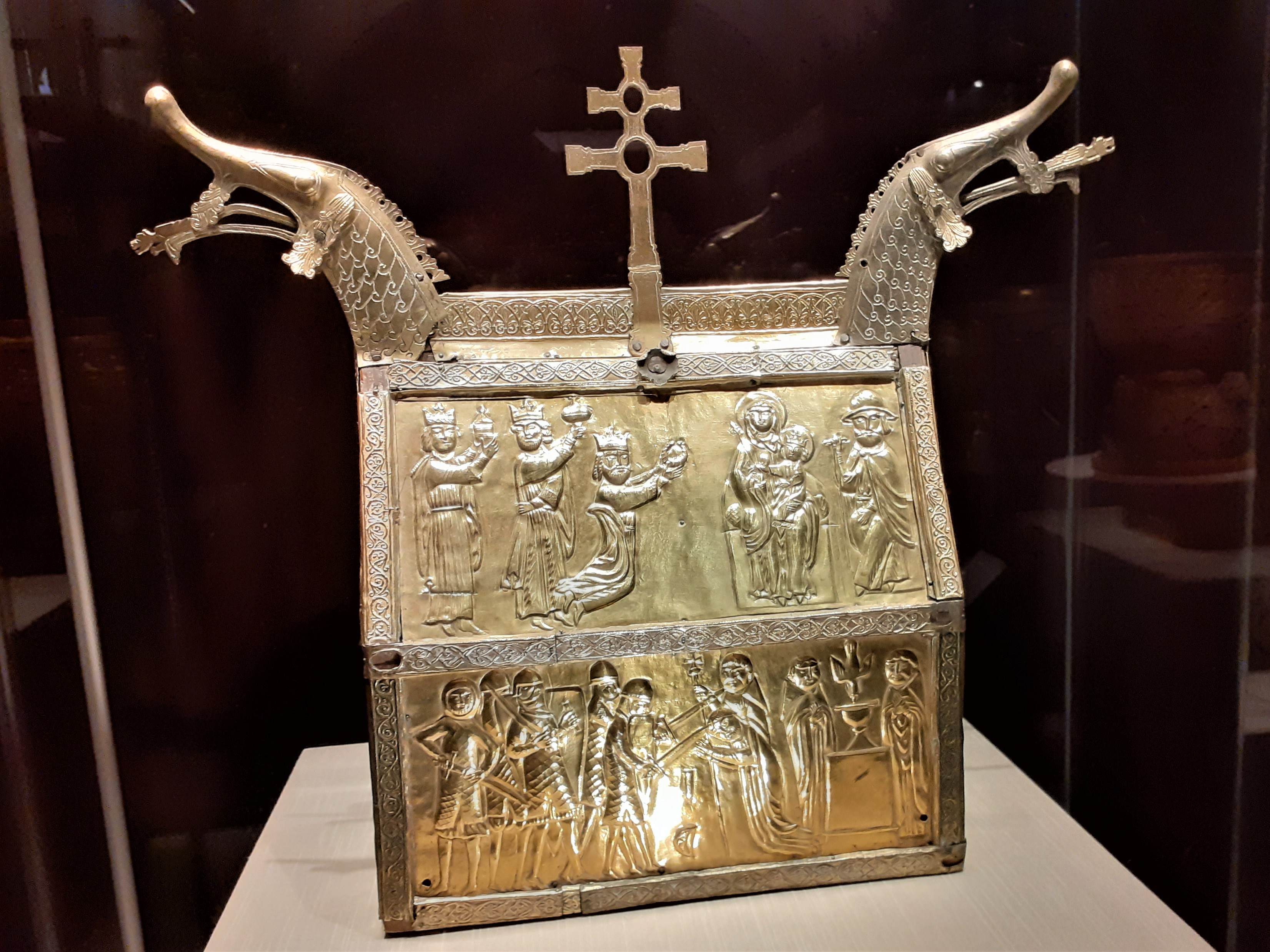 British Museum curators shouldn’t, in my view, be saying it is because, aside from anything else, it will then become a self-fulfilling prophecy. Three young people, unknown to me, but who went round the exhibition at approximately the same time as I did, clearly took away this ‘story’ without its context. Henry might not be a popular, or even a colourful, character, by all accounts he was a choleric and sometimes harsh individual, but he also inherited a cash-strapped and exhausted land, following the war between Stephen and Matilda ( Henry’s mother ). Just because he isn’t particularly likeable doesn’t mean his role in history should be limited to his role in a martyrdom. In my humble opinion, it’s bad history ( even if it is good story telling. ) The richness and complexity of life, even life in the past, is reduced in this way. Rant over.
 as the murder itself. I was intrigued to find out about the broken sword and the depiction which showed this, as well as a chunk of skull falling to the flagstones of the cathedral floor. It’s interesting that these small, if gory, details survived and thrived in later representations of the scene. I was surprised by the far-flung examples of the Becket cult – stone carving from Sweden, a reliquary from Norway, reference in a parchment from Italy. Maybe I shouldn’t have been, the Church stretched across Europe and its saints were promoted widely.
 As readers of Plague will know London hosts many a Roman remnant, from the baths beneath the West End to the Temple of Mithras underneath the Bank of England, but on Friday last I went to see those currently on show at the British Museum in the exhibition Nero: the man behind the myth.
  for nine days – but he wasn’t alone in doing so. He did commit murders, at least indirectly – first century Roman palace power plays were brutal and murderous. There is evidence, however, that he cared about the people of the city – he instigated relief efforts after the Great Fire, offering shelter in his own palaces and organising food supplies and he started a very large rebuilding programme soon after. It’s almost certain that he was innocent of initiating the fire. The plebs certainly thought better of him than their Senatorial ‘betters’, Nero’s is the imperial name most often found in positive ancient graffiti. He improved the road to Ostia, Rome’s harbour where the grain shipments arrived, so as to protect the city’s food supply and insisted that the rebuilt Rome had better standards of housing. So, not all bad then.
  look at the historical sources. That Nero was ruthless and brutal – well, which Emperor could have ruled Rome for fourteen tumultuous years if he hadn’t been? That he ‘fiddled while Rome burned’ or at least played a lyre, comes from Suetonius and Cassius Dio, historians writing during the age of later emperors and whose interests were served by making their masters look good in comparison. Tacitus, who was actually alive at the time of the fire, places Nero outside Rome when the fire happened. Given the title of the exhibition I was hoping there would be more exploration of how and why myths like those surrounding Nero were formed and how common ‘stories’ sometimes reveal a deeper truth, but that wasn’t where this was going.
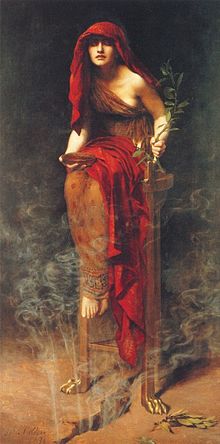 One story I’ve come across, though I’m not sure how true it is, is about his meeting with the Pythia of Delphi. Nero toured Greece in CE 66/67 when he granted the Greeks their ‘freedom’ ( largely from the steep taxes Rome imposed upon client peoples ) and took part in the Isthmian Games. Like anyone who was anyone in the ancient world, he went to Delphi. The Pythia forbade his entry to the Temple of Apollo, calling him a matricide and telling him that the number 73 would mark the hour of his downfall. He had her burned alive ( or so Dio Cassius says ) but took her words to mean that he would live until a ripe old age. In fact he was deposed only a year or so later, by the general, later Emperor, Galba, who happened to be 73 years old at the time ( or so the story goes ). What to take from this, other than not to cross a pythia, I’m not at all sure, but then, all stories about the Pythia tend to show how she was right in the end. Not much consolation when you’re killed horribly. It makes the murder in Oracle look tame in comparison.
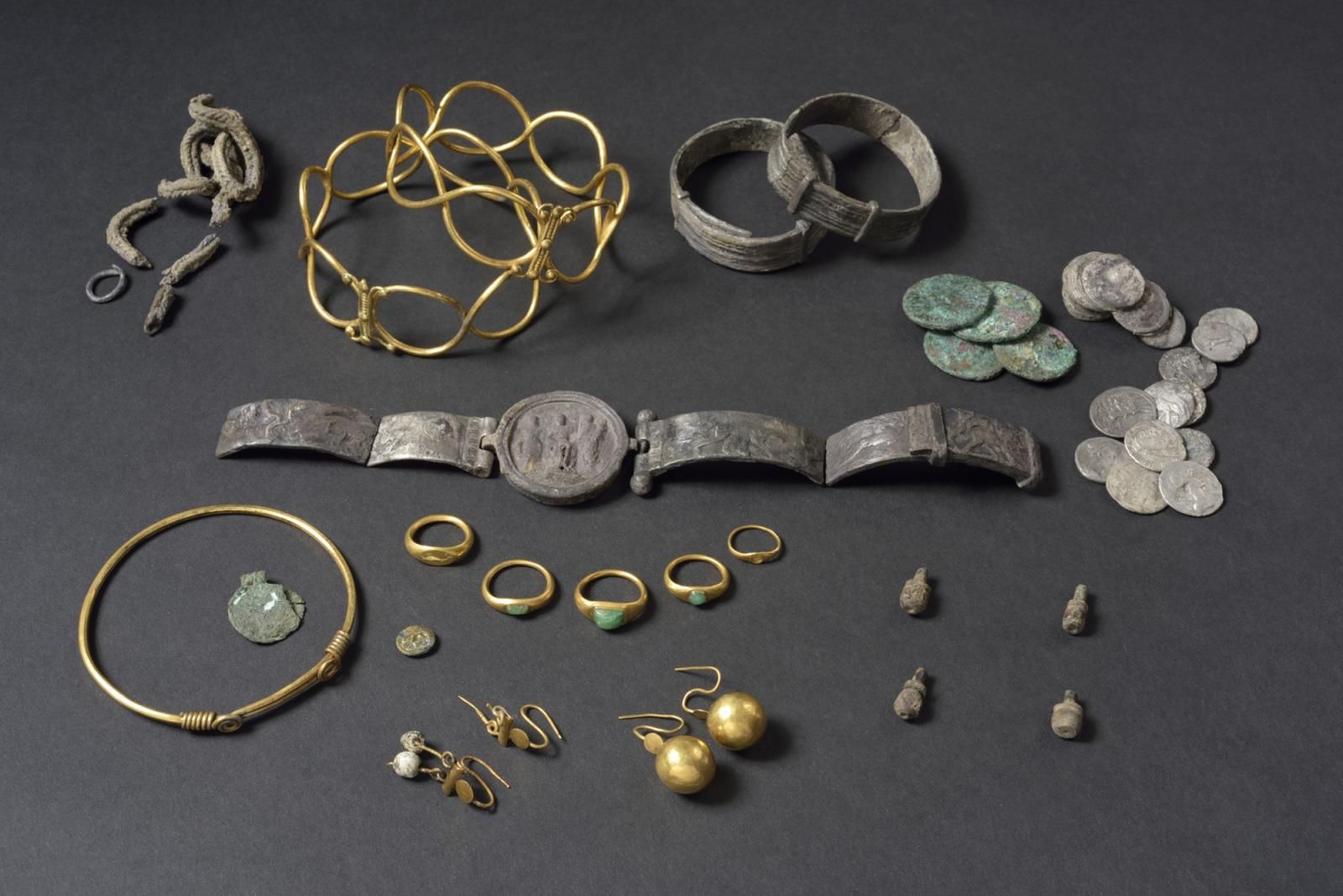 fascinating bunch, they still exert a celebrity-style, dark and seductive glamour even today, that it’s engaging. Some of the exhibits are exquisite – the jewellery, for example, or gruesome – the heavy slave chains, or the gladiator armour and the visitor forms a more rounded picture of the emperor, much more nuanced than the popular myth would have us believe. A good exhibition, worth visiting, that will make you reassess your understanding of Nero, but prepare to concentrate, there are a lot of coins.
 Julie Anderson