 In particular the language we use when we talk about singing.
On Thursday night in south London there was a singing Masterclass at St Paul’s Opera, given by David Butt Philip (Royal Opera House, ENO, New York Metropolitan, the Vienna Statsoper) to five young singers, the opera stars of tomorrow. Hector Bloggs (baritone), Alex Akhurst (tenor), Anna Marmion (soprano), Fiona Hymns (soprano) and Martins Smaukstelis (tenor) have all begun their performing careers, at St Paul’s Opera, among other places. They sang, respectively, Donizetti ( Come Paride Vezzoso from L’elisir d’amore ) Bizet (Je croix entendre encore from Les Pecheur de Perles), Mozart (the first Queen of the Night aria from Die Zauberflote) and Puccini (Mi chiamano Mimi from La Boheme – Fiona and Parigi e la citta from La Rondine – Martins ).
DBP apologised from the outset because he was suffering from laryngitis and would be singing less than was his usual practice, nonetheless he was able to demonstrate – in every register – how improvements could be made. They most certainly were, each singer adapting their original performance as DBP took them through each piece, sometimes line by line (and not letting them get away with anything). It was fascinating to watch and listen to.
He was equally interesting afterwards, talking about singing. During the Masterclass he had encouraged one singer to ‘almost forget the text’ and to ‘sing through the words’ – this singer had a history in choral music and had been taught to enunciate every word clearly, which wasn’t necessarily the right thing to do in opera. The next singer, of Bizet, he encouraged to ‘use the vowels’ to add resonance and drama – this was Bizet after all ‘it’s romantic music’. The next he encouraged to shorten the vowels and stress the consonants, using a more glottal sound to create slight breaks in emphasis, this was in the Mozart. On more than one occasion he added ‘Sing on the body.’
So how far does the language in which the singer was singing impacted upon the sung presentation – the glottal German, the liquid Italian and so on – and how far it was technique, regardless of language? DBP replied that it was a balance, of course the language impacted, but it was also about the degree of legato (singing in a smooth, even style, without any noticeable break between the notes) most suited to any particular piece or phrase within a piece. He defined ‘singing on the body’ as always having the sound produced supported by the diaphragm.
So this led to a brief discussion about how we describe singing. A teacher of the violin can suggest a student holds the bow differently, or places their hand higher up the neck of the violin. A teacher of guitar might ask her student to play higher up the frets. But a singing teacher can’t tell their student to ‘raise their larynx’, the human body isn’t quite the same sort of instrument. The beginner can be told about posture and learn how to control their breathing when singing, but, at this level that has already been mastered. So instead we use metaphor. More diminuendo on a long held high note, then returning to the crescendo, was described as the ‘luxury version’. ‘Don’t be polite, don’t apologise for the note’ signified not to sing it lightly, not giving it due sound, but to sing it loudly, the quality of loudness being needed in a theatre. Also, ‘complete the note’, indicated holding it for as long as necessary. Easily understood, though less easy to define.
It was such an interesting and enjoyable evening. David Butt Philip will be returning to St Paul’s in a Gala concert on 24th March raising funds for the Opera, to enable them to fund young artist’s bursaries and reach out to local schools. At £30 a ticket, to see four remarkable singers, it’s a snip.
For myself, I move onto a different type of performance next Monday, at the first Live Brixton Book Jam since COVID. It’s at the Hootananny, 95 Effra Road, Brixton, SW2 1DF and doors open at 7.30 pm on 7th March, where I’ll be appearing alongside William Ryan, Ashley Hickson-Lovence, Leo Moynihan, West Camel, Paul Bassett Davies and Paul Eccentric. It’s free to attend and there’s booze and books on sale. If you’re in south London why not come along?
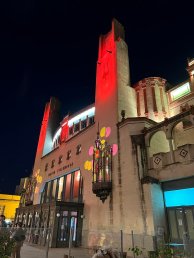 It will take a while for the complex rhythms of flamenco to leave my head. The interlacing of voice with the clapping of hands, the stamping of feet and various musical accompaniments, but especially the guitar, has been ubiquitous for me over the past nine days. From wonderful professional performances by masters of their art to the joyous dancing of the students of the schools of flamenco on Plaza Belen before an appreciative, local crowd, it has been a delight. This morning’s grey south London has nothing to compare with the vibrancy and colour of Jerez de la Frontera, where the scent of orange blossom is already in the air.
 Two amazing guitarists were the bookends to our festival this year. We began with Salvador Gutierrez in the converted 16th century church of the Sala Compania. He played a loose and fluid form of flamenco guitar, often varying completely from the melodic into atonality and jazz, only to return to the melody later with supreme artistry. Our festival was closed by Daniel Casares, (left) whose recordings I will seek out. His playing was more traditional in style but he too ranged widely, interweaving with the light and liquid flute of a flautist whose name I didn’t catch and who isn’t credited on the official programme. This was a very informal type of show, with people climbing up on to the stage from the audience to join in. I’ve attached a clip below (starts after five seconds).
 In between we were treated to some remarkable dancing. Manuel Linan, darling of the Festival, was back at Teatro Villamarta with a new show Pie de Hierro. Named for and dedicated to his father, who was injured in a road traffic accident which curtailed his career as a bull fighter, but who placed his own heavy expectations on his youngest son, Linan; this complex and difficult relationship is explored in terms of conformity and rebellion, tradition and personal expression. Linan likens this to his relationship with flamenco. There’s a full interview in Lavozdelsur
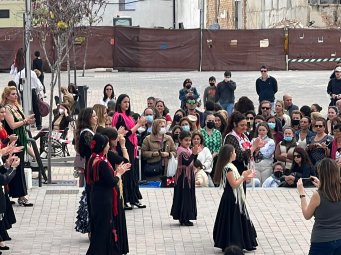 Much more laid back (though probably not for the participants) was our Andalucia Day morning in Plaza Belen watching the students of the various flamenco schools strutting their stuff. Everyone got their turn in the spotlight and everyone received applause from the predominantly local crowd sitting in the amphitheatre and standing near the stage (proud relatives included). Then we all went off to eat venison at an open air cinema. Perfect.
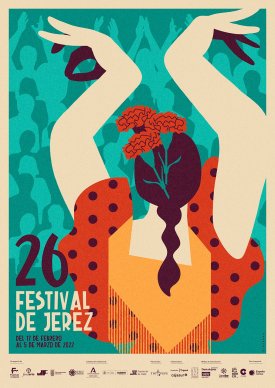 In 2020 I managed to get to the wonderful flamenco Festival de Jerez, two weeks before Spain locked down for the first time in the pandemic. Before vaccines, before masks, before all the mayhem and death. The UK locked down about three weeks later. In 2021 it was a low key, local affair, rescheduled to May and I missed it – the first time for over a decade – because travel was still difficult. Now Festival 2022 is up and running and I’m going.
 before heading off for gourmet tapas. Then to the Sala Compania, a 16th century church converted into a performance space, in the evening for Angel Rojas Dance Project, the Madrileno’s latest show. Sunday and it must be Miguel Linan, an old favourite, in the Teatro Villamarta with his latest show Pie de Hierro. Another of our favourites, Jerezano singer David Carpio, is appearing with Linan as an invited guest. I booked tickets in November, shortly after they were put on sale and the only ones available were up in the gods, which is where we are, but at least we got some. Linan is becoming a
  superstar of the Festival and of flamenco in general and he regularly collaborates with Carpio, good news for both. Then on Monday to the Sala Compania again for a more intimate performance and the Malagan guitarist Daniel Casares. It’s with the guitar that we begin, in the same venue on Wednesday with Salvador Gutierrez.
 makes sense to hold them when it’s hotter and the virus less pervasive, though it will be a strange experience, especially in Cadiz, where the Carnaval has been held in February for as long as I can remember. But that’s something else to look forward to later in the year.
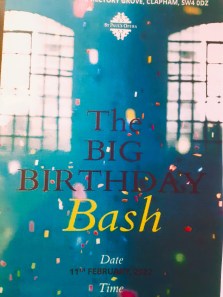 … but the singing of songs. St Paul’s Opera, Clapham, presented the Big Birthday Bash last Friday and great fun was had by all, as much on stage as in the audience.
 Opera and classical favourites, mostly ‘big tunes’, formed the first half of the evening’s entertainment, followed by cabaret and show tunes in the second. Two Australians, a Greek and a Latvian as well as those native to these British Isles formed the company for the evening, several prize-winners among them. The singers were current and former members of SPO, clad in their shiny best (and that was the baritone’s black satin suit). A theme reflected in the audience by SPO super-fan Teresa, in her sparkly rainbow biker jacket. Puccini and Rossini formed the backbone of the first half, spiced with Lehar, Bizet, Leoncavallo and Strauss with one Mozart piece to add a touch of the sublime. It ended with Brindisi, the famous drinking song from La Traviata. Post interval ( more wine, that song was prophetic, and meeting yet more friends and neighbours ) there was Offenbach, Britten and Bernstein, plus Cole Porter, Rogers & Hammerstein and Sondheim.
 Highlights? There were many. Lyric tenor Martins Smaukstelis singing ‘Maria’ from West Side Story – ‘knocked it out the park’ said my American neighbour; the aforementioned Mozart ‘Soave sia il vento’ from Cosi fan Tutti sung by Tanya Hurst, Alexandra Dinwiddie and Louis Hurst and birthday girl and SPO co-founder Patricia Ninian singing ‘Glitter and be Gay’ from Candide.
 Theatre on 21st February about establishing this favourite local opera company from scratch. Unfortunately I’m unable to attend, but I will be going to the the Masterclass at St Paul’s by David Butt Philip (Sydney Opera, the NY Met and Wiener Stadtsoper) on 3rd March – tickets £10. He will also be performing a Gala concert with some friends, Lauren Fagan, Stephanie Wake-Edwards and David Shipley, all alumni of the Royal Opera’s Young Artist Programme. This takes place on Thursday 24th March, tickets £30. I imagine that all these events will be very popular, so buy early.
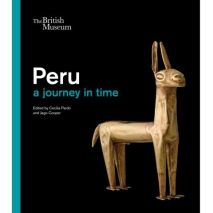 Yesterday I went to the British Museum to catch the Peru exhibition before it closes on 20th February. This relatively small but very interesting exhibition is in the Great Court Gallery (above the Reading Room) and is organised in conjunction with the Museo de Arte de Lima. It brings together artefacts from the BM’s own collection with those from Peru and elsewhere to reveal the history, beliefs and culture of a series of South American societies and peoples from BCE to the sixteenth century arrival of the conquistadors.
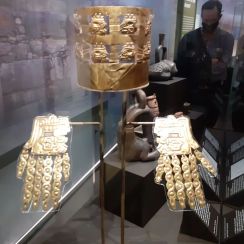 perhaps most personally, the
  In northern Peru the Moche people (100-800 CE), fabulous ceramicists (see figure of a Moche warrior, left), concentrated along the coasts and river valleys, while the Wari (600-900CE) developed in the Ayacucho region and expanded to cover the southern highlands and the northern coast. Then, between the 10th and 12th centuries the Kingdom of Chimu dominated, its capital Chan Chan having a population of up to 75,000 people. In the central Andes the Inca empire emerged in about 1400, expanding its territory throughout the region, via a system of roads and waterways between diverse cultures and communities. This included the creation of the mountain fastness which is Machu Pichu, or ‘ancient mountain’, including about 200 polished stone buildings, as well as terraces and pyramids. Though this was not the Inca capital, which was at Cusco.
 ways of life followed. It is Pizarro’s first encounter and subsequent relationship with the Inca Emperor Atahuallpa which features in the aforementioned play (and film). The exhibition included artefacts from the colonial period, though not many of them.
 They certainly had complex belief systems, centred on nature and the land, as shown by the exquisite ceramics in the form of felines and serpents (see left). It also included blood sacrifice (back to those childhood bloodthirsty yarns) with any prisoners captured during wars being slain as a sacrifice to the gods of the land. One funerary robe included no fewer than seventy four human figures in its border and central pattern, each of them carrying a severed human head. Ceramics and musical instruments were decorated with similarly gruesome patterns. The exhibition includes a number of sculptures of captured prisoners, roped and awaiting their fate.
 Boring, right?
 there, fronting a Tesco store and apartments. This has been extended to incorporate another ‘wing’ which was in the extension plans for the 1930s but never built, replacing one of the original old houses, Preston House, of which the hospital was comprised.
 Anderson Hospital, founded 1872) on the Euston Road, the first hospital in the UK to be staffed entirely by women. But by the early years of the century demand hugely outstripped the ability of this hospital to cope and so the South London was proposed. An astonishingly successful fund-raising campaign began and properties at Clapham South were purchased and converted. The hospital opened its doors in 1912.
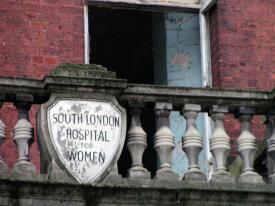 the inside of the buildings altered radically between 1912 and 1935 (when the Cooper building was built). The archivist provided me with an Ordnance Survey map and a large bundle of drainage plans, covering those for the original conversion of private houses to hospital, through various extensions, to the 1930s plans. I had to put them into some sort of order and understand how they fitted together. Fortunately for me they were dated (though what the plans showed, exactly, wasn’t always immediately clear).
 on how the water and waste drained away to the sewers. There was some of that, but there was a lot more as well. There is water throughout a building, especially a hospital and it has to drain away, so the plans covered all the floors, even the fourth, showing all the ‘water features’ sinks, baths, sluices etc.. I was pleased to see that even the servants rooms had hand washing basins, although they didn’t have en suite bathrooms. Those were communal at the end of the corridor.
 There was also a staff dining room or canteen and a School of Nursing. The grounds included gardens, a tennis court and, from the 30s again, a block providing nurses’ accommodation, including sitting rooms and a recreation area. I recall walking past the block along Hazelbourne Road on my way to and from the tube every morning when I first moved to London. How I wish that I had taken photographs, but camera phones weren’t invented then. Nonetheless, the plans gave me lots of information and I’ve begun to build a picture of what life there may have been like.
 I recently wrote a piece for Time and Leisure Magazine recommending the first books in a number of crime fiction series, each series running to between three and thirteen books at time of going to press. A good series is a fine thing in deep mid-winter, especially when one isn’t going out so much and I know crime fiction readers, in particular, are always on the look-out for ones they haven’t tried yet.
 fiction the puzzles must differ and the twists must be new, or at least fresh. The contexts and locations can change (at least I can send Cassie anywhere, she isn’t tied to a place or one type of job) but there’s a risk that, in trying to introduce new thrills, dangers and surprises a story can become too contrived, or unbelievable. There is also a delicate balance to be struck, readers want some more of the same, as well as something different.
 Some of the most addictive crime series are linked by an ongoing and developing relationship, often of a romantic nature. So, when, if ever, will Cormoran Strike and Robin Ellacott get together? The same goes for Dr Ruth Galloway and DCI Harry Nelson (I haven’t read all the books in this series yet). Readers are attracted by the crime puzzle and stay with the series to follow the relationships. Having killed off my potential romantic lead in my first book (and there are readers who still haven’t forgiven me for doing that) and made the central relationship of the next two books as being between two people who can only destroy each other, precludes that from happening to Cassandra.
 ‘Gird up your loins‘ is one of those recognisable phrases, but one can’t quite remember where from. In my mind it’s close to ‘Screw your courage to the sticking place‘, although I know that’s Lady Macbeth exhorting her husband to be bold and resolute. Both mean to prepare for the task ahead. In fact it’s from the Bible, where it’s used on a number of occasions, mostly in the Old Testament. In the New Testament we find ‘Wherefore gird up the loins of your mind, be sober, and hope to end for the grace that is to be brought unto you.‘ from 1, Peter, 1:13. So, it’s about getting ready, bracing oneself for the future.
 year ahead. Despite the COVID prompted cancellation of several events outside of London which I was to attend, I’ll still be busy on zoom, starting with a discussion on 17th January for Royal Borough of Kensington & Chelsea Libraries. ‘The Controlling Idea’ is a series of discussions sponsored by my publishers, Claret Press, about books which have been made into films and the first is about Le Carre’s Tinker, Tailor, Soldier, Spy. This is where I come in, as an expert guest, talking about Whitehall and the structure surrounding the security services, it’s where Opera is set, after all.
 In addition, I’ll soon be finalising Opera for the last time, for publication in September, going through the final proofs, the front and back matter and so on. There is a publicity schedule to be agreed with Claret Press too, including an online book tour and dispatching review copies, plus all the events around a book launch, including talks for libraries, book clubs and societies and, COVID permitting, an actual book tour of real bookshops. It’s exciting. Especially as Claret has a new distributor. We are already talking about flyers being handed out at Westminster and Vauxhall Cross Underground stations – an idea originally for the publication of Plague which got completely derailed by the initial outbreak of COVID. Of course, at the same time, I’ll be continuing to publicise Oracle and Plague.
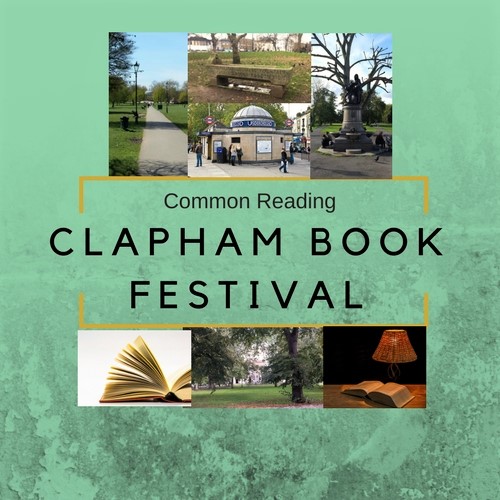 committee meeting is later this month when we hope to be able to discuss the potential programme for the event. A date for your diary is 15th October, our flagship Festival day, though we’ll be planning events around it, probably including another literary walk in Clapham and some events online with our media partners Time & Leisure magazine before and after the Festival Day.
 First, Hag-Seed by Margaret Attwood, one of the Hogarth Shakespeare series of retellings of Shakespeare plays and published back in 2016. I’d been keeping it in Spain to read there but, given that I’ve always been writing when in Spain I’d never got around to reading it. I have now and I’m very glad I did. Set in a Canadian Correctional Facility this is both utterly different to The Tempest and absolutely true to it. It manages to be a recreation as well as a commentary on the play via the means of a ‘play within a play’ something very Shakespearean in itself. It is criminally easy to read ( within a 24 hour period for me) and is also funny! An absolute must read.
 Papers of Tony Veitch and Strange Loyalties). Written in the 1970s and 80s and recognised as the precursor to that wave of amazing Scottish crime-writing talent which followed – think Ian Rankin, Val Macdermid, Denise Mina and many others – these show a many-sided Glasgow, from aspiring suburbs to crumbling tenements through the eyes of Jack Laidlaw, philosopher cop and almost as hard as nails. McIlvanney is a true heir of Raymond Chandler, the prose jumps out at you and slaps you round the face, before sliding slowly away, drawing you ever further in after it.
 women at the centre of the first village witch trials during the English Civil War in 1645. Focusing on Rebecca West, daughter of the fearsome and belligerent Beldam West and the arrival of young Matthew Hopkins, the man who will become the Witchfinder General, we are treated to a rich portrayal of the fault lines exposed in a rural village during a period of famine and war.
 a fiendish mystery to solve and, because it’s important to me, a strong sense of place. William’s Shaw’s Salt Lane (2018) the first of his Alex Cupidi series is set on Romney Marsh and the area around it. Aside from being a cracking crime novel it tackles difficult issues, like immigration, refugees and rural poverty. These crimes are grounded in modern reality with immediacy and authenticity, I will certainly read more.
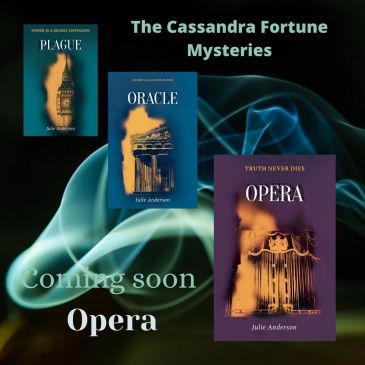
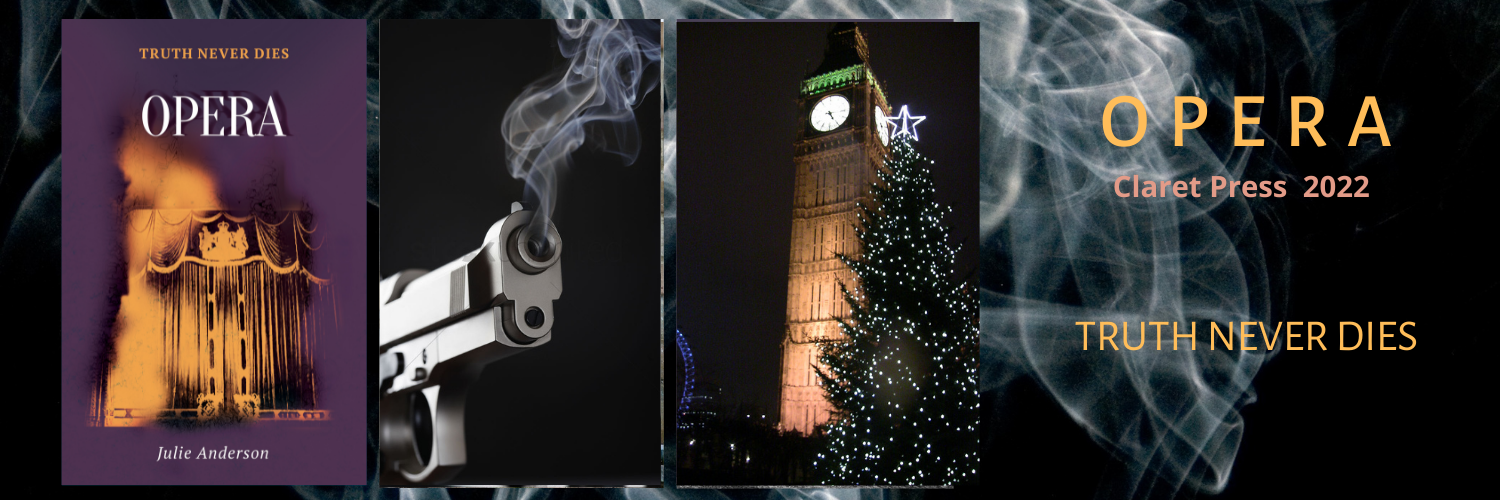 two other images set against an atmospheric background and with the tag-line in bold. This was the tenth version! Others were rejected as ‘too feminine’ and ‘insufficiently threatening’ (see the images below). I had to choose between the Downing Street sign and Big Ben too, because both weren’t needed, so I went for night and the Christmas tree, with the addition of a smoking gun! Readers of Plague and Oracle will know that each book takes places over a fixed period of time and they follow one after another, with about a month in between. Opera
 does the same, so its events happen during the fortnight before the Christmas holiday. It was only when we were playing around with the designs that the tag-line ‘Truth Never Dies’ finally emerged, though it seems particularly appropriate at the moment. GIFs will be my next challenge, but a couple of mini-MP4 videos have already been produced, building on the ‘smoking gun’ imagery (these are being kept under wraps, but see below for my Instagram post). All part of the package pre-release of the book and for distribution to the book bloggers who will review it and post reviews on social media. Animated pictures, whether on Instagram or other SM have been
 shown to have greater impact and attract more attention than non-animated content – including the attention of the algorithms which determine which posts get shown first when a hashtag is used. Good news therefore for publicists.
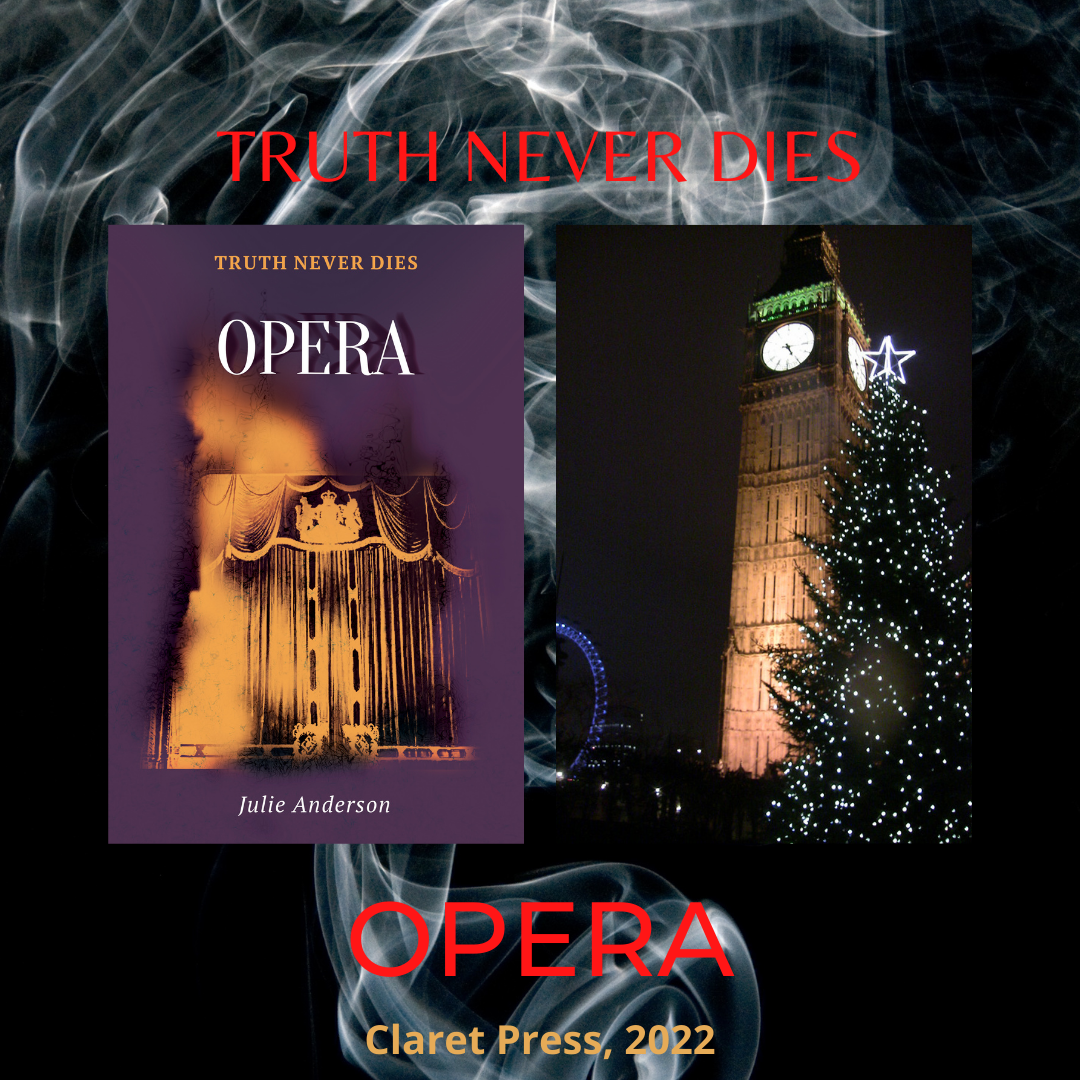 Claret and I will sit down in the New Year and agree a full publicity strategy, including pre-release publicity, whether or not to use NetGalley again (probably not), whether or not to have an online book tour (probably) and, COVID permitting, a schedule of actual bookshop signings. Publication date has been agreed as 5th September and both ebook and paperback versions will be available for pre-order in Spring. The author events with libraries, online and in person, are already being arranged. And, with Claret Press about to sign with a new distributor, this time my book will be launched into bookshops across the UK. All good news. So here is the design for my Instagram feed. Maybe next week I’ll be back to editing.
 Julie Anderson