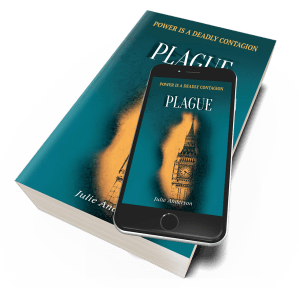
 Since Plague was published in September I have been working hard to promote it and it is only now, two months later, that I think I begin to realise that I am actually now considered to be a ‘crime writer’. Although I knew that crime was the most popular genre in the UK ( in the States it’s romance, apparently ) I was unprepared for the number of websites, festivals, clubs, societies and sub-sets of same devoted to crime fiction. I am just beginning to appreciate how many fans of crime writing there are ( for whom I am most grateful ) and just how knowledgeable and how much fun they are.
There are any number of crime fiction book clubs and I’ve joined several. I regularly engage with and post items on the Facebook page of one of the largest, the UK Crime Book Club, which has fourteen thousand members!

Next week I will be running a giveaway of a dozen signed, pre-publication copies of Plague exclusively for UKCFBC members in conjunction with an Author Chat, one of the regular features on that Facebook page in which crime fiction authors are interviewed and take live questions from members. ( You can find a link on the Events page of this website. )
Last Tuesday I was intrigued by the technology ( something called Be.Live ) when I recorded a short promo for that event and got familiar with how everything worked in preparation for my Chat. Past UKCFBC events include interviews with Ian Rankin, William Shaw and Elly Griffiths, so I’m in elevated company. I’m also 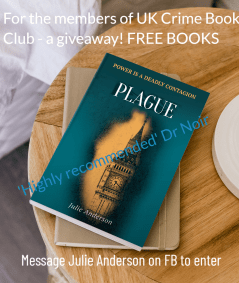 looking forward to participating in the UKCFBC Pub Quiz ( Just Not In A Pub ).
UKCBC has also furnished me with a number of volunteers to test out the leaflet of the Book Walk for Plague, starting at Bond Street Tube Station and ending at the River Thames. Once its been tested I will make it available on this website for anyone who wants it. Unfortunately because of COVID any book walking is delayed.
I’ve also learned all sorts of interesting things. There is a current debate about the length of crime books, or example, many UKCBC members saying that they wouldn’t consider buying a book of less than 300 pages, which was a bit of a surprise, especially as Plague is only 288 pages! The good news, however, is that crime fiction lovers adore a series and Cassandra is scheduled to appear in at least two more books ( and possibly more ). I am pleased to say that readers are already asking me when the second is due out (  which keeps my publisher happy ).
I was also very surprised and extremely pleased to find Plague featured in this month’s edition of the Literary Review Crime Round-Up, even the literary establishment has to recognise the popularity of the genre. It has also been reviewed in The Yorkshire Times, Time & Leisure magazine and a number of other regional newspapers and regional radio stations ( you can find links to interviews and reviews on the Events page of this web-site ). No nationals so far, but I’m not complaining.
For more on Plague take a look at my earlier blogs, or follow the events coming up, which you can find on the Events page.
 It’s November – remember, remember – and the next lockdown has started in England. Not that it’s too draconian a lockdown, with schools and colleges continuing to function, as well as manufacturing industry and construction. Restaurants and other shops are allowed to open for takeaway only. This includes book shops and my local independent, Clapham Books (logo left), remains open for collection of orders, though not for browsing ( additional copies of Plague were delivered to them this morning, to replenish stocks ).
 people to buy books via their local book shop rather than through the corporate giants.
 Another excellent authorial initiative, one which I missed, is the Children in Need
  Oracle, the next book in the series following the adventures of Cassandra Fortune, is set in Delphi, Greece near the Temple of Apollo. When revising it recently I revisited some old favourites, the gods and goddesses of ancient Greece.
 dominant.
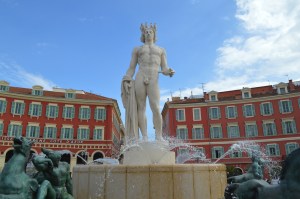 primordial mother, have been found in Delphi, in the Corycian Cave above the Temple to Apollo from the Neolithic period (about 12,000 years ago). Gaia and her daughter, Themis, ruled at Delphi and there was a chapel to her there, though it was long ago absorbed into the larger Temple complex. As Nico, the museum employee in the novel, explains, in legend, the god Apollo arrived at Delphi to wrestle with the Python, the giant snake belonging to Gaia, and won; so he became the ruler of Delphi. It is thought that this represents a change of dominant culture as migrants, whom we now know as the Hellenes, came into Greece from the north. They eventually settled all of Greece and their gods were the Olympians.
  Nonetheless the older gods continued to exist along side the new, as did their off-spring (unless they were thrown into the pit of Tartarus). These included some groups, or sets, of minor deities, like the Fates and the Furies. The latter trio, called the Erinye, were three women, often, especially in more modern times, portrayed with snakes for hair and flashing eyes, their hands dripping blood. The image, right, is of Clytemnestra attempting to wake the slumbering Furies to chase down Orestes in the Orestaia on a vase dating c.350 BCE. Delphi, it was believed, was the centre of the world and it is to the Temple of Apollo there that Orestes flees, calling upon the god to save him from the Furies.
  I don’t know if the books which I read are still read today, I hope so, even as new games and films bring the ancient heroes and deities to life for another generation. This Pantheon is firmly anchored within western sensibilities. So much so that we even replicate the old jokes in new ways ( see image left ).
  There are so many ways in which place is important to writers – we explored the subject in the first Clapham Book Festival back in 2016 ( see
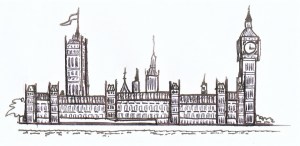
  Elephant & Castle tower block. The Victorian streets of Clapham are home to my protagonist, while homeless character, Spikey Fullman haunts Shepherd’s Market, but bemoans the recent changes there as not conducive to a good night’s sleep. The venerable Palace of Westminster is a focal point, as are the streets close by – the Georgian terraces as well as the concrete civil service buildings. There are vistas from and of towers and high rises as well as the scenes beneath the earth and the main players walk all the major Westminster thoroughfares between Whitehall, the Embankment and St James, Bond Street and Pimlico.
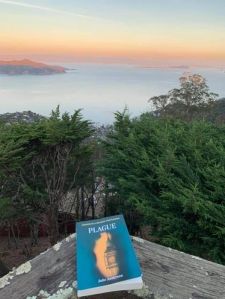
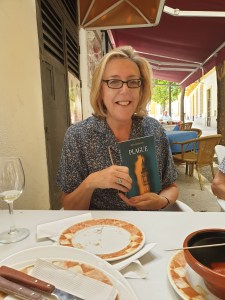
 One point to make about Plague is how far it has travelled, only six weeks into its published life. I have received snapshots of it on the Isle of Skye, in deepest Dorset, in the flatlands of East Anglia and in various parts of the north of England. I have yet to see it in Wales, Scotland or Northern Ireland (though I know it has been read there, because I have seen reviews on Goodreads and Amazon from readers who live there). Plague has also travelled internationally, from the lawn of a Normandy chateau (left) to a Californian balcony over-looking San Francisco Bay (above), from an American Naval Base to a tapas bar in Jerez (admittedly, that one, below, was with me).
 entered the novel for the Ondaatje Prize. This award from the Royal Society of Literature is for a work of fiction, non-fiction or poetry, evoking the spirit of a place. The 2019 winner,
  I, meanwhile, am busy writing the sequel (earlier this week while awaiting a late flight at Sevilla airport, see left, which prompted the thoughts for this article ). Oracle takes place in a very different location to London, at an isolated cultural centre half-way up Mount Parnassus in Greece, close to the ancient site of the Temple of Apollo at Delphi. It is a place both very dramatic and beautiful and is timeless. Its location is central to the novel, not just to the plot, but that’s because place is very important to me as a writer.
 One area which features in Plague but which was not covered by our recent bookwalk is SW4, or Clapham, where I happen to live. It is here that the heroine, Cassandra Fortune, has her flat, where she lives with her cat, Spiggott. Like so much of Clapham this would have been built by Victorian and Edwardian pattern builders, so named because they used a template, or several, when constructing street after street during the nineteenth century and into the twentieth. I have placed the flat in a fictitious road within the little maze of roads off Clapham Common South Side, where the buildings are often elegant purpose built maisonettes.
 Another of the aforementioned good things is Clapham Common, which sits in the middle of the Clapham area. It is a photograph of the Common and the ferris wheel of a travelling circus encamped there which alerts Cassie to a newspaper photographer having been snooping around. The photograph left was taken on 1st October 2020.
 South and Clapham North (and we have the Junction too, we’re well connected – this is beginning to sound like an advert for Clapham). At each of them are circular, pillbox style structures which mark the presence of the deep shelters, constructed during the second World War to house civilians during air raids. There were originally ten of these planned across London, though only eight were ever sunk, three of them in Clapham close to the Northern line. Cassie notes the one next to Clapham Common tube station as Daljit, Sergeant Patel, drives her to the Golden Square crime scene. The image above is of the deep shelter at Clapham South, which was used, in the 1950s, to house those migrants arriving from Empire on the HMS Windrush and other similar, later, ships.
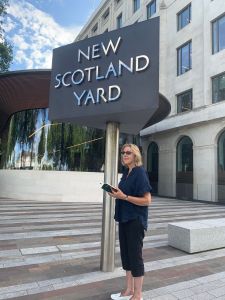 First a Book Walk for Plague, now a Book Tour!
 specialist
 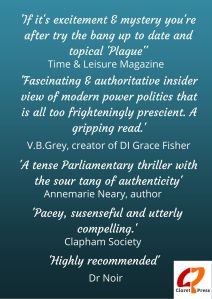 Yes, they are mostly female, but I have had some amazing reviews from male readers already (check out Amazon or Goodreads), as well as some wonderful endorsements from fellow crime and thriller writers, like V.B.Grey, and crime specialists like Jacky Collins, aka ‘Dr Noir’. People like the book!
 COVID ( ironic for a book entitled ‘Plague’ ). As my previous post,
  First, they decide that no book should be stored in these over-crowded warehouse for more than 48 hours, so only the quick sellers will find house room ( a tough, if logical, commercial decision ). Second, Amazon turn to their tried and trusted method of making decisions about products – an algorithm. The algorithm is predictive and it determines which books are likely to sell quickly i.e. for which there is greatest demand.
 publisher, Claret Press, is a small indie, which doesn’t have the budget for a massive sales pitch and stormtrooper publicists and this counts against Plague too. The clever algorithm is never going to choose to stock Plague over many of those other books. So ‘Temporarily Out of Stock’ appears, even though the book is available.
 however hard I, and Claret Press, work, it’s unlikely to impress that algorithm.
 Yes, it’s happening today, 15th September! And I’m getting some excellent feedback and reviews! So pleased, after all the hard work.
 taking place now I would have to do a major rewrite to incorporate COVID and some, at least, of the events of the novel almost certainly wouldn’t take place. Given that the editing phase of the book was concluded in April, when we had just entered lock down and no one knew what was going to happen, this wasn’t an option. Hence the removal of the year.
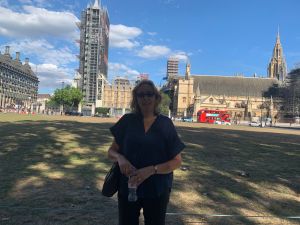
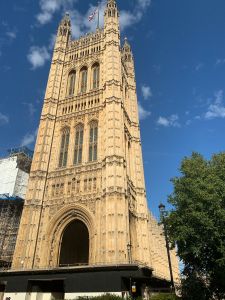
 This year they returned on 1st September but will not close as usual. Like all physical gatherings, even relatively small ones (the ‘rule of six’) the conferences have been cancelled and activity will take place online. Given the imminent shenanigans in the Palace of Westminster in regard to the UK Internal Markets Bill, they may not take place at all. The current Parliamentary schedule currently shows PMQs and Private Members Bills proceeding throughout October, but little else.
 (and major works) which sets the time limit for solving the case. The first arrest is made for a crime committed on 10th September and the day – and night – of 15th has a particular significance (early readers of the book will know this). Hence the publication date of 15th September.
 First up – bricks. The Victorians were great decorators in brick, something I’ve had several conversations about recently because we’ve just had a face lift for our Victorian house. I now know more about bricks than I ever thought was possible, largely courtesy of David Fairbrother, who oversaw the work, a man who truly loves bricks. On our walk we encountered some excellent examples of Victorian brickwork, like that announcing Grosvenor Works or the decoration on the buildings at the top of Great Smith Street, or, see left, the brickwork on the Marlborough Head public house, North Audley Street (readers of the novel will recognise that street name). The young woman working there was surprised and, I think, rather charmed, by our fruitless search
  for any indicator that there were Roman baths nearby.
 broadly, around the subject matter of the book. So, a Stop Works sign propped in a doorway of the Norman Shaw buildings on the Embankment ( a former home of the Metropolitan Police and work place of one of the victims in the novel, where he is helping to refurbish the building ). Colourful chains at the construction site on Davies Street by Bond Street Underground Station, site of the first discovered crime, against said victim. The vaulted roof of the arches through which one passes from Horseguards Parade into Whitehall (which appears to be numbered, something I’ve not noticed before) and the receding arches within the arches, through which the protesters pass before harassing my heroine.
 houses in London. Not, perhaps the smallest that, I believe, is The Dove in Hammersmith, but pretty small nonetheless. We found the four-storey Coach and Horses on the edge of Mayfair, it is still a working pub ( though we didn’t enter, either this or the Marlborough Head, just in case you’re wondering, we were committed book walkers ). Besides, the No Entry sign outside could have put us off. Other unusual architecture spotted includes Sothebys’ warehouse, found down a back street and what looked like a closed up market hall in Davies Mews.
 There is the recent, real, discovery of hundreds of bodies, skeletons, in a lost medieval sacristy belonging to Westminster Abbey as reported in
  be what I can only call the procurement scandals. In the novel large government contracts, worth several billion pounds, are being tendered and, as one of the characters says ‘…the contracts aren’t being awarded in the usual way.’ It’s corruption – the contracts are being given to companies run by associates and accomplices of the villains, who also make money on the stock exchange as the shares of those companies rise in value. At least in the book the companies in question have the relevant expertise and a track record in providing the types of services being tendered for.
 three companies, one specialising in pest control, one a confectionery wholesaler and one an opaque private fund owned via a tax haven. The PPE – face masks – sold by the last of these companies, Ayanda Capital, under a contract worth £252m, was found to be unsuitable for use in the NHS (and untested). Yet at least this contract was publicly tendered. The contracts granted to Public First, a company with close ties to Michael Gove and Dominic Cummings, seem not to have been tendered at all and The Good Law Project and a number of non-Tory MPs are seeking judicial review of the awarding of them. They have also begun proceedings against Michael Gove in regard to one of these contracts. Contrary to government regulations, the contracts themselves have not been published (once granted, contracts are required to be published within thirty days).
 money involved.’ My main character Cassie is, of course, working on minor procurement contracts at the start of the novel, but she has no enthusiasm for the work. As a former senior civil servant I sympathise with those who are having to deal with the situation now, knowing that the correct procedures aren’t being followed. It seems that Ministers are hiding behind COVID and emergency powers to hand large sums of money to preferred bidders, regardless of said bidders ability to deliver the contracts.
 Julie Anderson