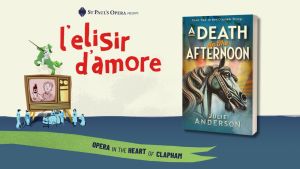
 This year saw a unique collaboration for me, with St Paul’s Opera Company, on their production of Donizetti’s L’Elisir d’Amore (The Elixir of Love). The Director, Eloise Lally, wanted to set her version of the opera in a hospital immediately post-World War two and Patricia Ninian, SPO founder and Director had read my books The Midnight Man and A Death in the Afternoon, which are set in the South London Hospital for Women and Children. So Tricia approached me to see if using that setting might work. I was sure it would.
Thus I found myself working with Eloise and Ted Blackburn the producer/designer on the concept and the design. I had gathered a huge amount of material – photographs, documents, news clippings – when doing my research into the Hospital, which I was happy to share to inform Ted’s design for costumes and the staging. I also spoke, at length, with Eloise about the period and the South London. 1948 was a point in time when men were returning home from the war to take up the jobs and roles they had left behind, which had, in their absence, been done by women. Not all the women, especially the younger ones, wanted to return to a purely domestic sphere, but they had little choice. At the South London, however, the opposite was happening. Male medics and staff were leaving, to be replaced by women and male patients were also being excluded. This unique point of tension informed my books and would inform the opera.
Adina, the heroine, was to be the Matron (sung by Fiona Hymns, soprano, above in rehearsal with Martins Smaukstelis, tenor, as the hero Nemorino) and Nemorino would be a lowly hospital staff member. Dr  Dulcamara, the quack doctor who regularly sells his ‘elixir’ for a one-time-only, knock-down price, has also returned from the war, hoping to wheedle his way in to the SLH, but Adina sends him on his way. Belcore, the Sergeant, (sung by Ted Day, see left, in rehearsal) is a long term patient, who believes the war is ongoing and marshalls his ‘troops’ of other patients, many of them wounded servicemen.
We also collaborated on an event at the end of May which would be both book launch for A Death in the Afternoon and an Insight event to attract more people to the opera. This proved an enormous success, with an audience of over one hundred people, you can see photographs below and there’s a link to a video on X here https://x.com/stpaulsopera/status/1929521928898801784. We also mounted a small exhibition about the South London, using documents and memorabilia lent to us by Dr Juliet Boyd, former anaesthetist at the hospital and its unofficial archivist. This included everything from an annual report from 1917, showing the medical officers in post (all female – the only male name is that of a chaplain) to protest badges against the closure of the hospital almost seventy years later. The banners (right, with SPO Director, Patricia Ninian) produced by the opera company would be used as information at each of the performances.
In addition, I was to attend rehearsals. So I began a Rehearsal Diary, which would eventually find its way, in shortened form, into the opera Programme and on to the SPO website. I will be posting from that Diary here, later.
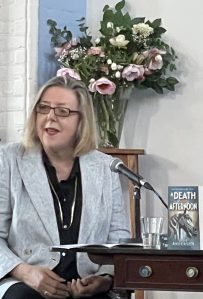
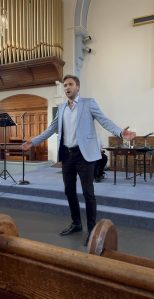

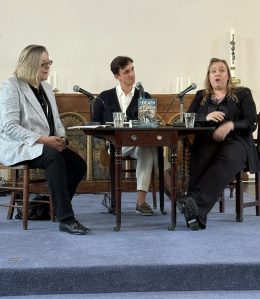
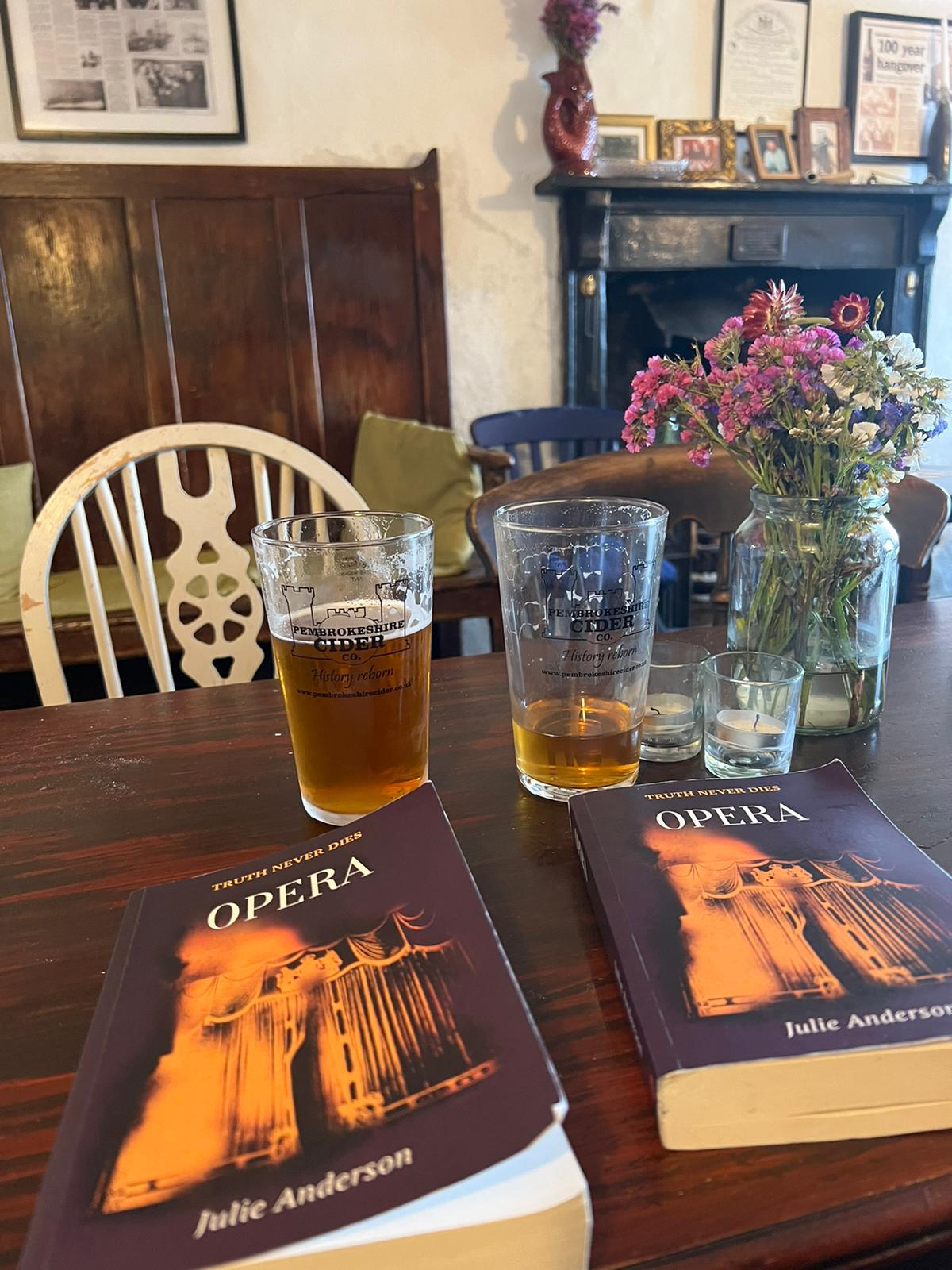 Now ‘Opera’, having been well and truly launched, seems to be off on tour. In part with me, visiting real and virtual locations to promote it, but also with new owners to all parts of the globe.
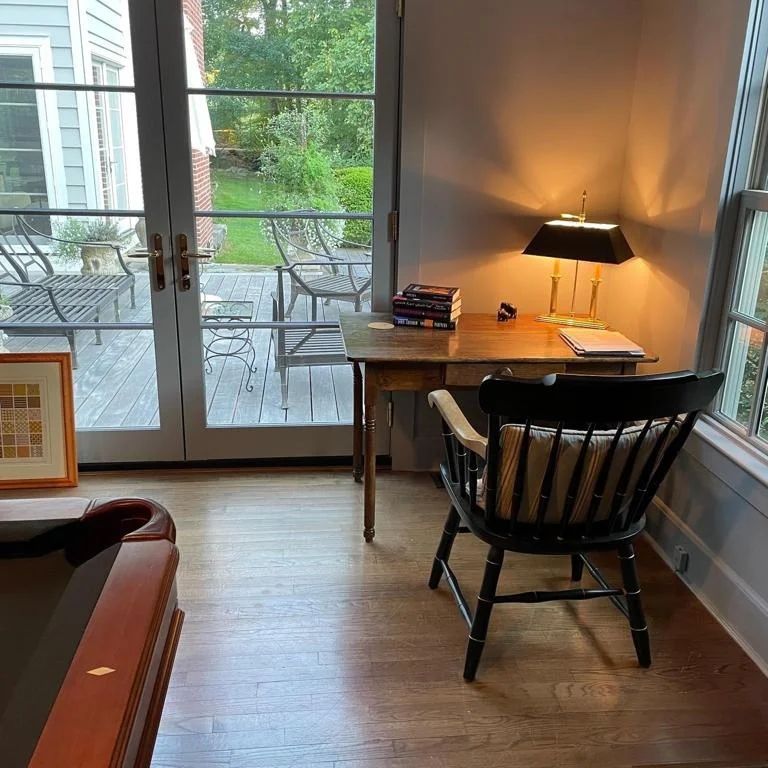 the pile of books on the lamplit table. I confess, I did not see it and (forgive me, Steve) I tuned out when the entries began discussing Robertson Screws. (No, me neither.) Then he confessed and I saw it. So did all the people who had tried to guess. But this was not the furthest flown ‘Oracle’. That must, at time of writing, be the copy in California, pictured by another friend, as it perched, with its siblings, on a rock above the blue sea of the bay. Not so autumnal there, as yet.
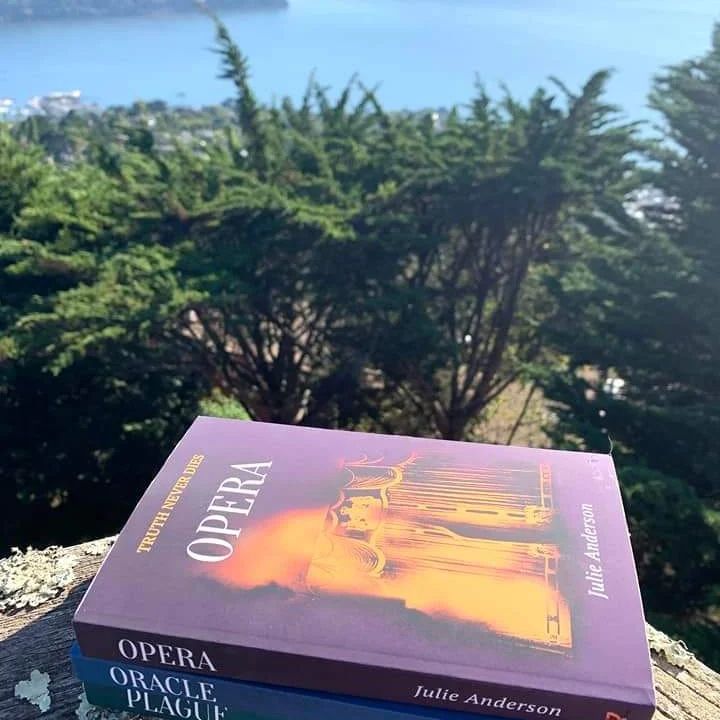 I am promised pictures from Mexico and Australia, when their owners get there and I will certainly be posting some pics of ‘Opera’ in Spain. In the UK I have taken it, virtually, to Exeter (my talk for Devon Libraries) and Tamworth (Tamworth Book Club) and it will be going, live, to various parts of south London in the near future and, it is planned, eventually to Newcastle too. It has already been pictured on an LNER express, hurtling through the countryside.
 be appearing. I can’t, in all conscience, mention it on the Literary Walks I’ll be leading, alongside luminaries like Graham Greene, Angela Carter and Kazuo Ishiguro, but it may get a mention during my interview with Abir Mukherjee, award-winning author of the Wyndham and Bannerjee crime fiction series, set in 1920s India. The walks take place on the afternoon of 9th October and morning of 15th. Abir is the first interviewee in an afternoon and evening of live author events. There are still tickets available for all three and much else besides, including Dame Jenni Murray talking with Elizabeth Buchan and Sir Anthony Beevor speaking about Russia with Dr Piers Brendon. So maybe I, and ‘Opera’ will see you there.
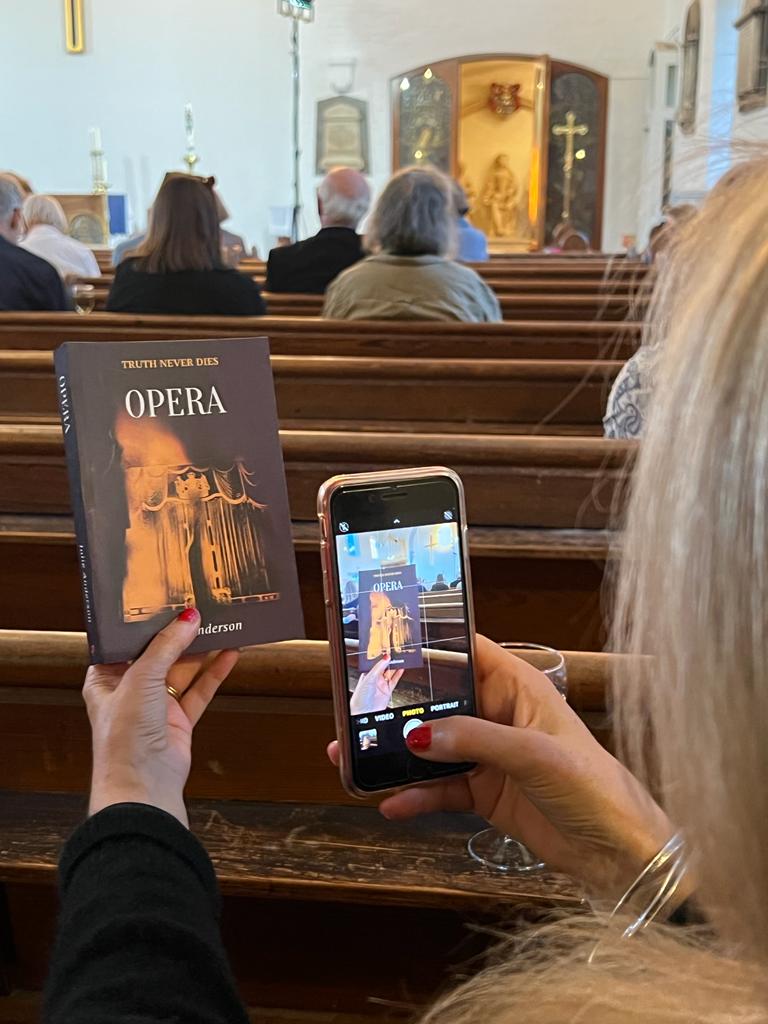 The low, autumnal sunlight slanted across the churchyard of St Paul’s Church in Clapham on a beautiful September evening one week ago. Cars drew up to the church’s railings, people walked down the winding path to the heavy church doors and inside there was a buzz of anticipation of good entertainment to come. They were there to celebrate the launch of ‘Opera‘ the third in the Cassandra Fortune series of murder mysteries, together with the music of Puccini and Tosca in particular (the opera in ‘Opera‘). I was at the door to greet them.
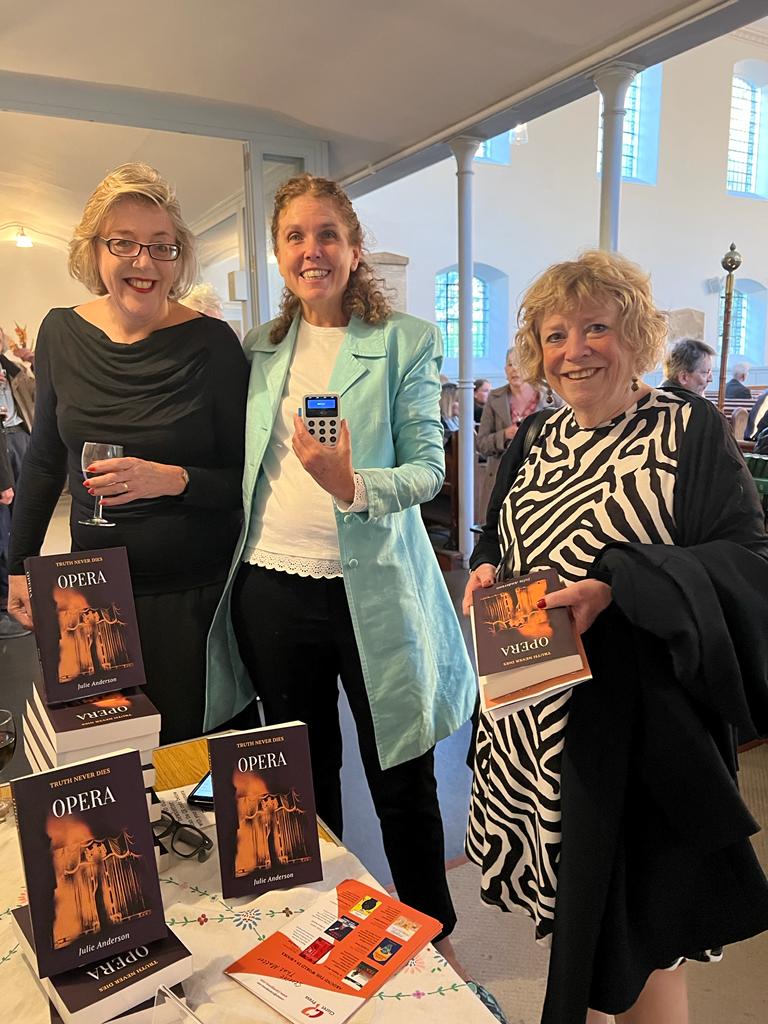 evening’s entertainment), the sound system was set up, the bar was stocked, staffed and ready to dispense and the Claret Press table was ready with signed books for sale. Programmes were handed out at the door. The church filled, gradually, with local friends, of the author or of the opera company, and with those from farther afield who had come to help celebrate. About a third of the crowd were probably also writers, many of them writers of crime fiction (see Anne Coates, author of the Hannah Weybridge mysteries, with Katie Isbester of Claret Press and myself, right). Other Claret authors, Steve Sheppard and Sylvia Vetta were there as well as reknown Clapham authors like Elizabeth Buchan. Clapham Book Festival friends were out in force, as were the members of the Clapham Writers Circle. In total there were between seventy and eight people in the beautiful church.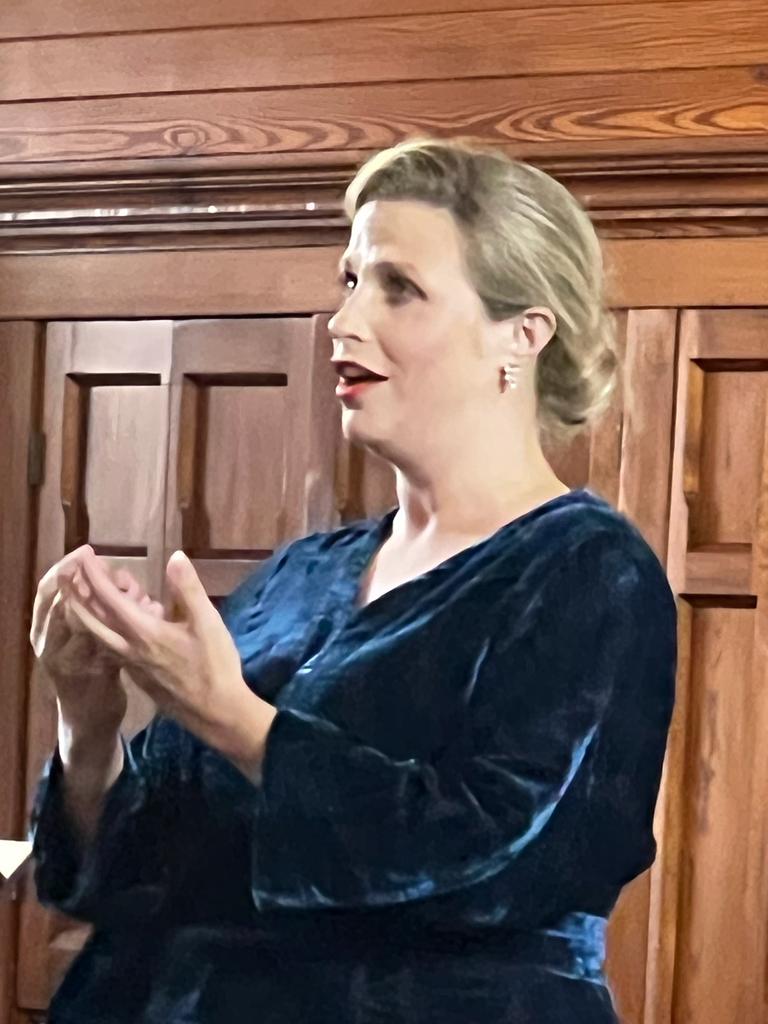


 Grand opera is always intense and these two arias especially so, so a lightening of the mood was required before the interval. This was provided by an ‘interruption’ by a police constable, PC Willis, who had just arrived from the Houses of Parliament (although dressed in pink). Bass baritone Masimba Ushe delivered the sentry’s song from Gilbert & Sullivan’s Iolanthe ‘When all night long, a chap remains…’ in sonorous and amusing fashion. Laughter heralded the interval, when everyone headed to the bar (where the barkeepers were kept very busy).
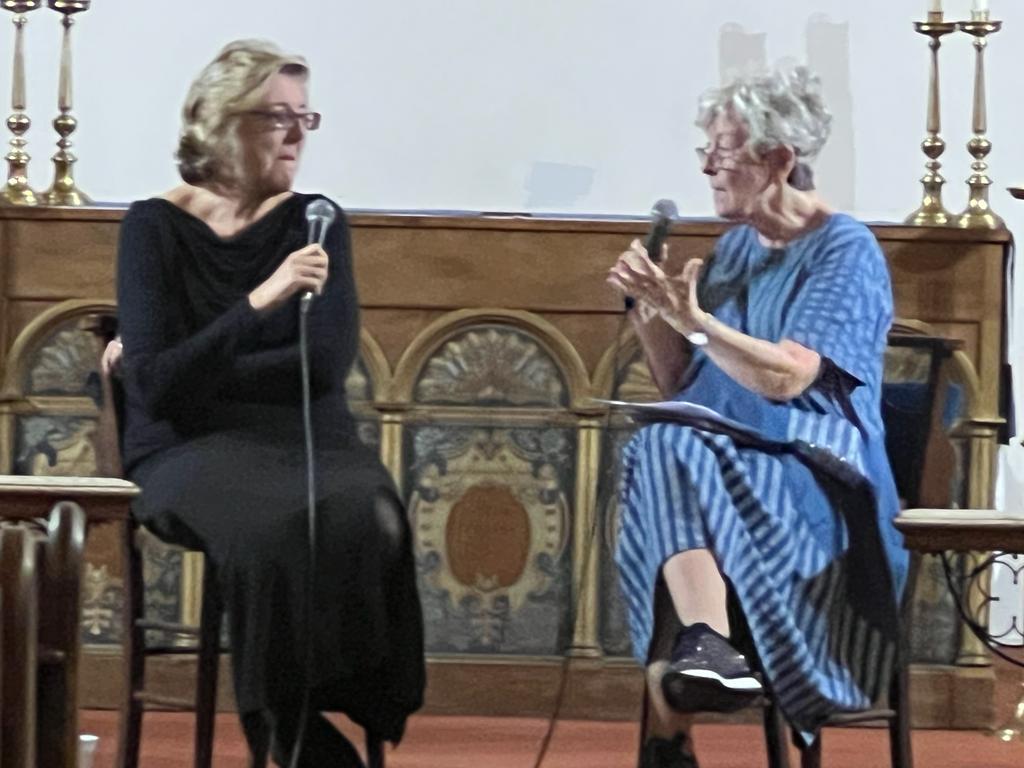 beforehand and I kept my answers short (as she had told me to, I tend to ramble). People seemed to enjoy it and, after questions from the floor, we ended to loud applause.
 bunting made of the posters and other images of Tosca which I had been collecting for months before the book was published.
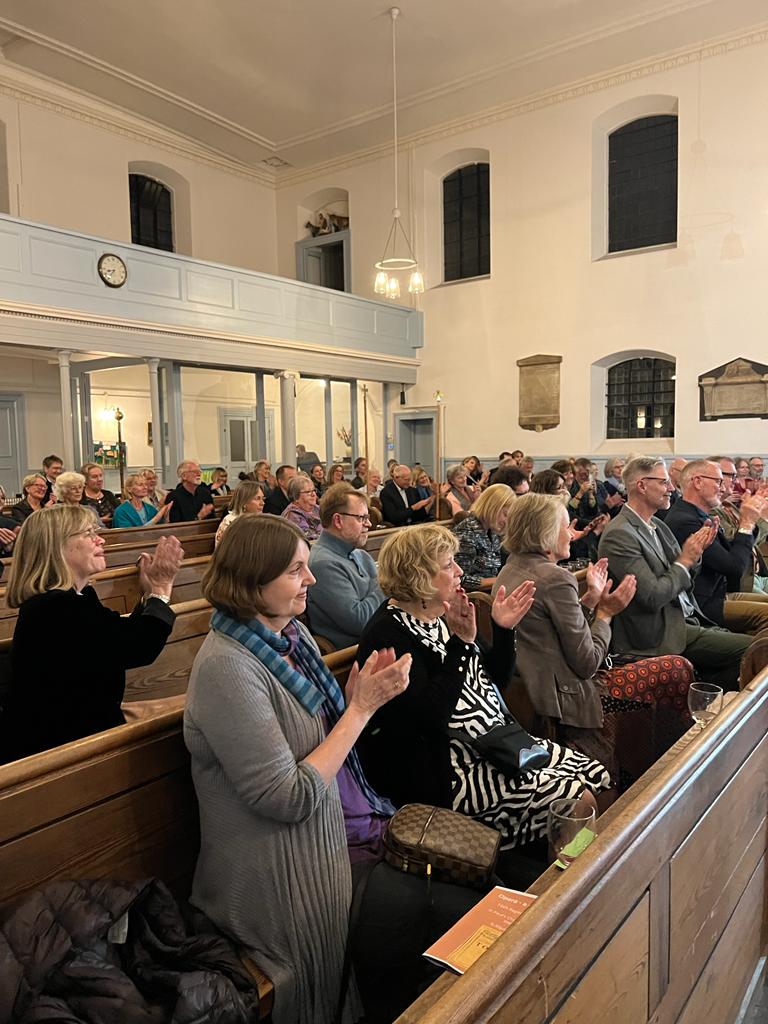 Ninian and the singers of St Paul’s Opera, which made it unique. Many of those who attended spoke or wrote to me, telling me how much they enjoyed it. Plus, my publisher sold lots of my books. It was a spectacular way to launch a title and a very special occasion.
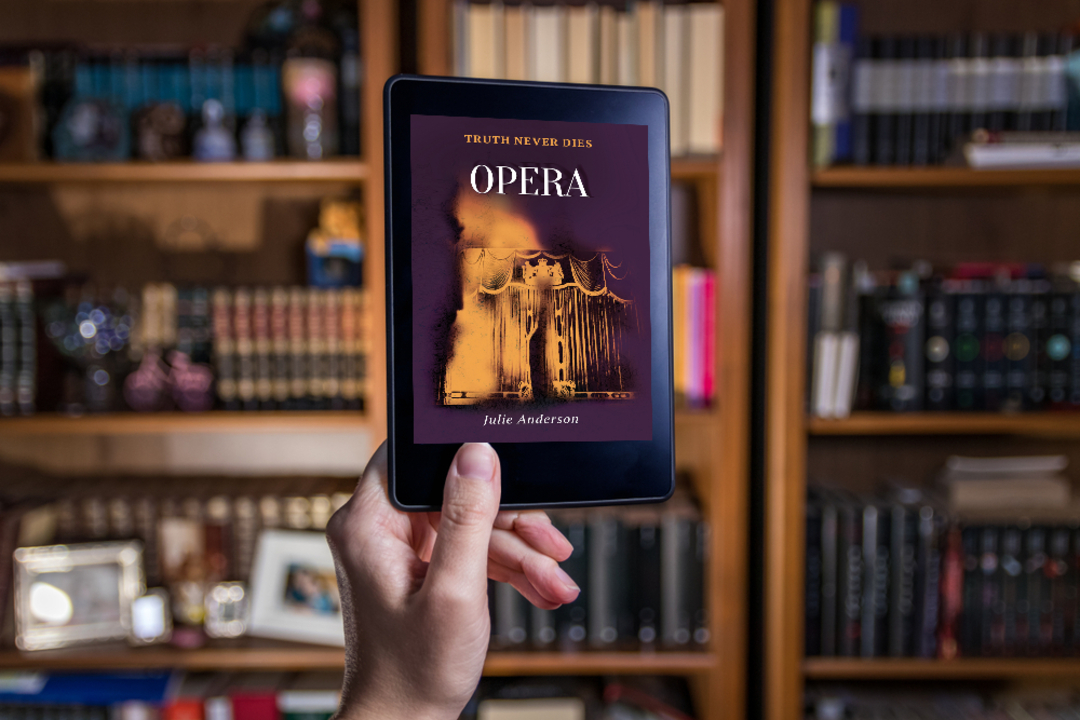 Today’s the day and ‘Opera’ is let loose upon the world. There are, already, plenty of posts on social media – Twitter mainly, but Insta and old favourite, Facebook, too – I haven’t ventured into the unknown territory of Book-Tok or the dragon-lands of Twitch and Discord ( no, me neither ). Kelly Lacey at
 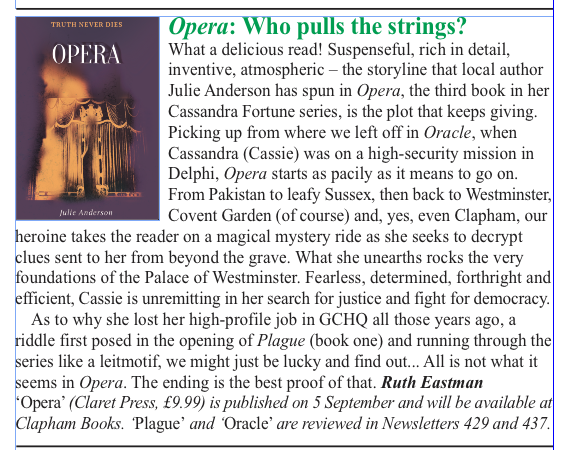 Clapham Society Newsletter (circulation about 1,400) though I know there are a number of print critics who will be reviewing the book. These are in the regional press, or in literary publications, no national dailies ( without a prize listing or a shed load of publisher’s support, i.e. money, that is unlikely ). There are regional and local broadcast interviews lined up too, starting with Radio Tamworth ( Tamworth Books ) on Wednesday and following up with local radio here in south London.
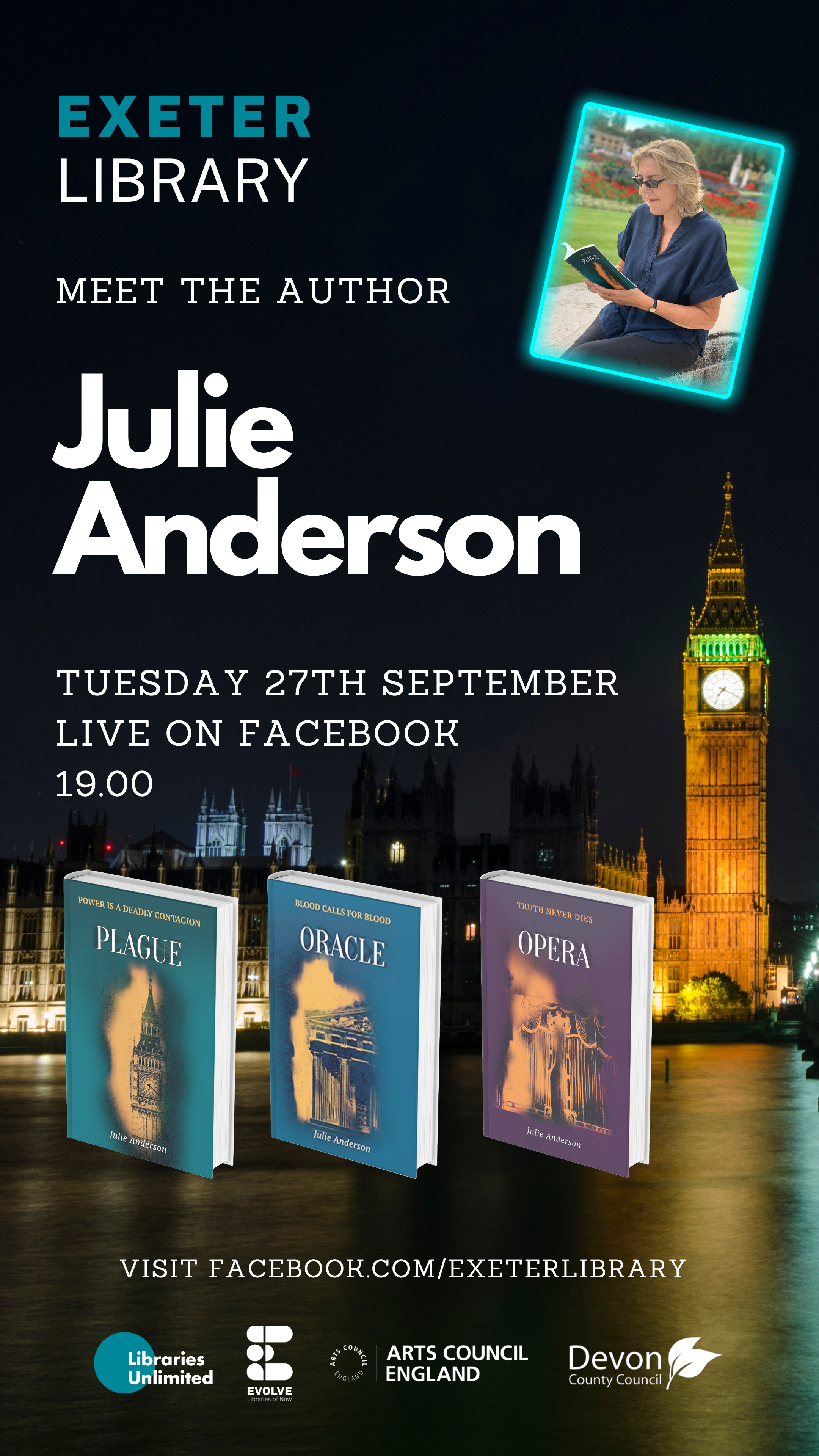 There are plenty of online events arranged and ‘Opera’ and I should be reaching audiences from Devon to the north of England, through regional library networks, like Devon or Staffordshire Libraries. I’ll also be doing some Festivals, live as well as virtual, not just the Clapham Book Fest, which takes place in October, but also Newcastle Noir ( 9th – 11th December ) as well, as, potentially, a number next year. Indeed my diary for 2023 is already being filled with online talks and discussions and live events, some of them for societies and clubs which I have visited before with ‘Plague’ or ‘Oracle’. I never imagined I would be doing quite so much.
 Helen and Sue ( they know who they are ). Also to my fellow authors who have been kind enough to wish me well on this Publication Day and to the bloggers and supporters, who, unpaid, contribute so much to the life of books. Finally thank you to my longsuffering husband, who cooks the meals and makes the tea while I am away in my head concocting yet another mystery.
 In April of this year I posted a piece about images of Tosca ( see ‘
 The artist most associated with Tosca, partly because he designed many posters for the Comedie Francais, where Bernhardt performed, and partly because his style is such a good example of Art Nouveau is probably Alphonse Mucha. Even the Hohenstein poster for the opera’s premiere in Rome in 1900 owed much to Mucha’s style. But his is not the only style which was copied and often other artist’s works were rifled for use on the posters. See the use of the Gustav Klimt’s ‘Judith’ in the poster for Middlebury Opera’s production (right) .
 I found a very striking poster from Poland, probably for a production by the opera company of the city of Bydgoszcz which was very reminiscent of the style of Frieda Kahlo (see left). It drew many comments on social media and divided people, they either loved or hated it.
 colour in the poster. I’m not sure if this was a sneaky subliminal message, but it is certainly surreal and I do not pretend to understand it, though it seems to be trying for an analysis of the opera at a subconscious level – Tosca pulling Cavaradossi’s strings.
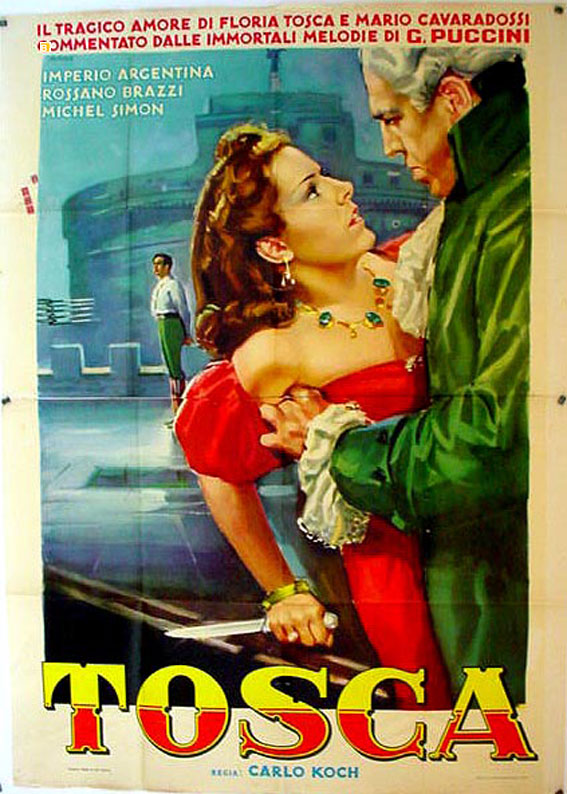 life, so there are plenty of leering Scarpias and retreating, suffering Toscas, though often clutching a dagger. The Italian ones are even more lurid than the Hollywood ones ( I suspect because Hollywood treated it as ‘high art’ ), but here is a more restrained offering – ‘The tragic love of Floria Tosca and Mario Cavaradossi commemorated in the immortal melodies of G. Puccini’. The director, ‘Carlo Koch’ is actually the noted German art historian and film director, Karl Koch, who undertook the film in 1939, jointly with Jean Renoir, at Mussolini’s invitation. Koch was Renoir’s assistant on Le Regle de Jeu
 and Renoir was instrumental in getting Koch out of Germany in 1936. Renoir eventually withdrew from the film, but Koch completed it, together with his assistant, one Luchino Visconti. Incidentally Koch and his wife settled in Barnet, north London once the war ended.
 preparation I’ve been collecting and sharing images relating to Tosca for some months and I plan to use them at the launch event. These range from copies of the original posters for the premieres of both the play by Victorien Sardou, in Paris in 1887 and Puccini’s opera in Rome in 1900, through to film posters of the 1970s and modern posters for productions of the opera. In the course of searching for these images, however, I have discovered that ‘Tosca’ is also the name given, presumably in honour of the diva and Puccini, to a number of other items, including several types of perfume, at least two cars and a cocktail.
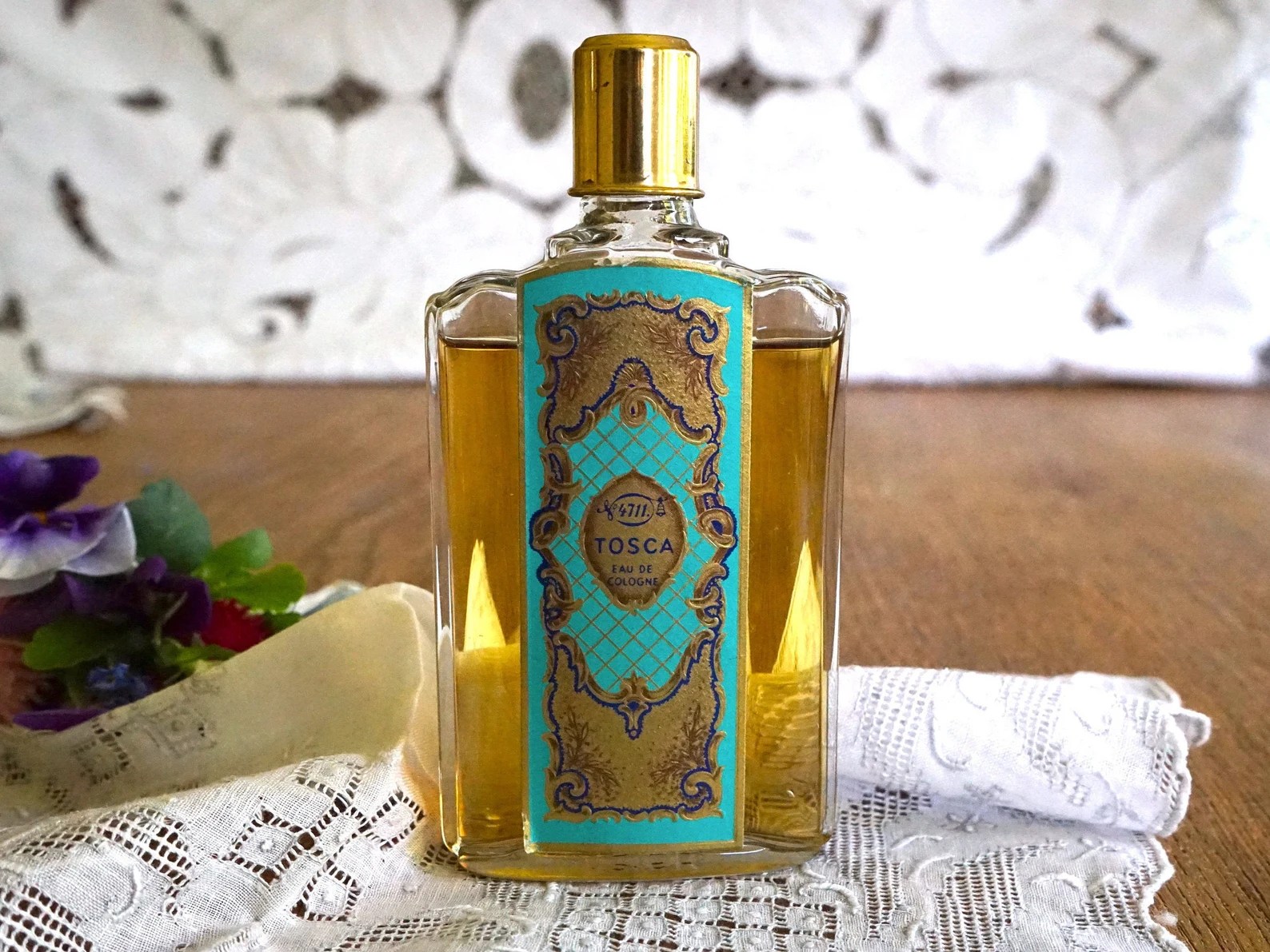 The Tosca Eau de Parfum can still be bought today for £16.74 and accompanied by shower gel, deodorant and moisturiser in the same fragrance. There is also an extremely expensive version by Xerjoff Casamorati, available from Harrods – a snip at £81.95 for 30ml (see above). It seems that the original perfume was created by Farina 4711 and vintage bottles are now traded on ebay and etsy (see left). The very expensive, bright pink/purple bottle of the Xerjoff is much less attractive, to my eye, but it is certainly distinctive. I have yet to discover why it was designed as it was.
 fast ( and, in most of the images I could find, red, which continues a colour theme found in the Tosca opera posters. More of a surprise is that it is a hybrid with a traditional V10 engine, as well as electric batteries. Even Italian super cars are going green these days. Just as surprising is the La Tosca, a 1955 concept car from Ford. It was designed to be remote controlled, so is driverless and in that is very modern, but it has the sort of design which owes much to aircraft and was thought to
 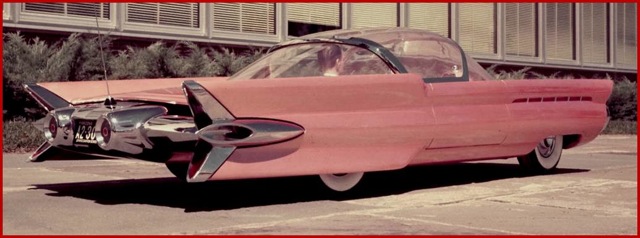 be ‘space age’ at the time. The pictures of it that I have seen show a car which seems to float above the ground with huge wing fins, a plexi-glass bubble over the passenger compartment and an exhaust which looks like a jet engine. The car is often a bubblegum pink, which makes me think of a sort of very sporty version of Lady Penelope’s Rolls Royce from Thunderbirds. This was the Ford La Tosca, an actual car, though it was never put into production.
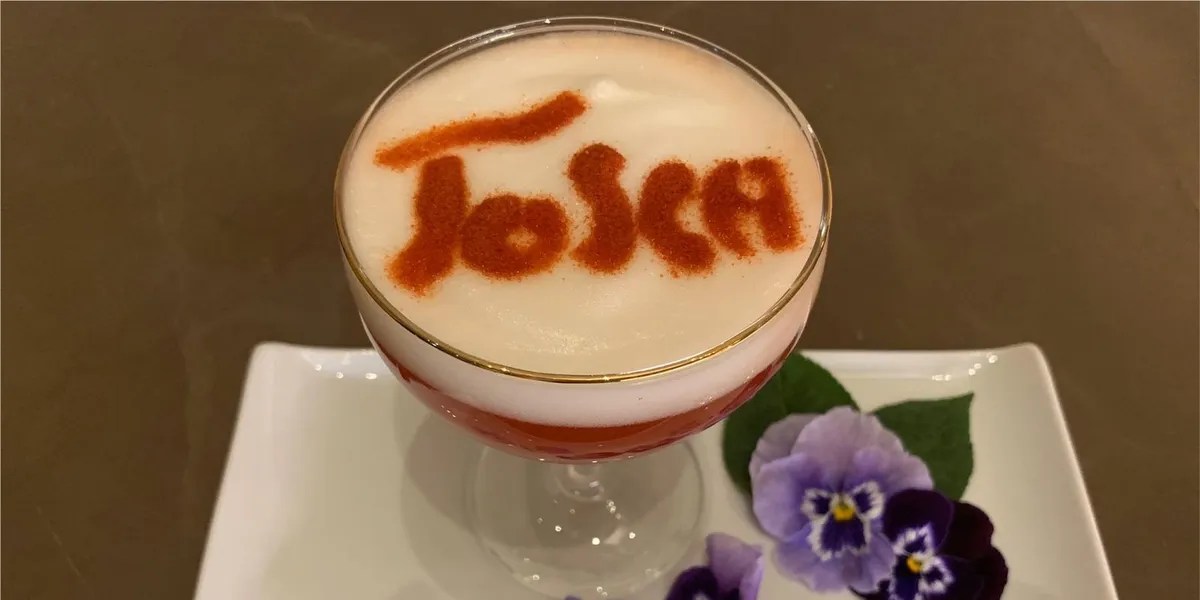 2019 production of Tosca at La Scala, Milan and was served in Il Foyer bar there. It is made with the south American spirit, Mezcal, two types of Martini (we are in Italy after all) elderflower foam and, to dress, tomato powder and chilli pepper. If it appeals you can find the recipe
 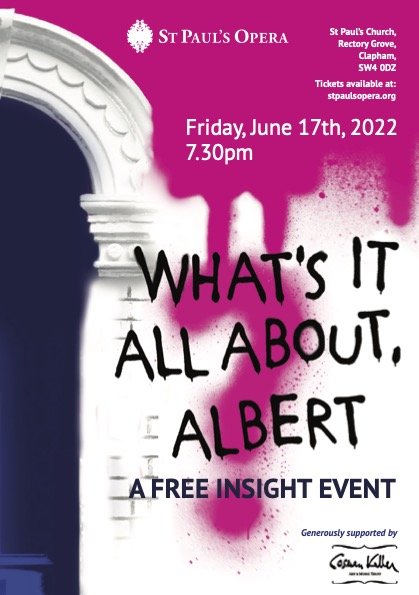 … but rather Albert Herring, by Benjamin Britten. This year’s Summer Opera from St Paul’s Opera Company, Clapham. Last night was the ‘Insight’ evening, designed to introduce the opera to those who may not know it and to stimulate discussion among those who did. I learned a lot.
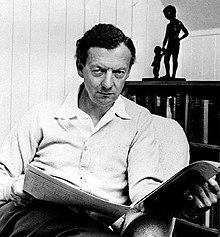
 serious piece The Rape of Lucretia. Albert Herring a chamber opera in three acts, was the result.
 The following morning, with Albert missing, the villagers discover his May crown in the well and everyone is thrown into mourning. In its midst Albert turns up, rather the worse for wear and thanks the village committee for funding his night of pleasure. All are, needless to say, outraged, but Albert carries it off, standing up to his mother in the process. The opera was an immediate success, receiving performances in the U.S., Copenhagen, Oslo and Moscow. It has since been performed all over the world.
 Wintle, Panaretos Kyriatzidis (musical director of St Paul’s Opera) and Annemiek van Elst (Director of Albert Herring) facilitated by Jonathan Boardman. The evening closed with questions from the audience (which could have gone on for far longer ). Sadly, dusk had well and truly fallen and the evening drew to a close.
 connected with it.
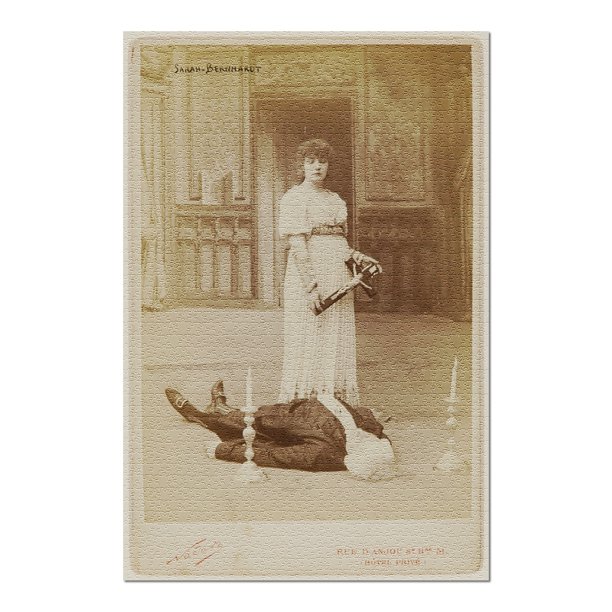
 Puccini’s opera was based. The first performance of the opera was in 1900 in Rome and the poster was by Adolfo Hohenstein who also designed the stage sets. It is very much in the Art Noveau style of Mucha and features the same scene as the Bernhardt postcard, a scene which was to feature again and again in images of the opera. The pious Tosca sets candles at the head of the Baron, whom she has just killed ( in self-defence, as he has just tried to rape her ) and places a crucifix on his chest.
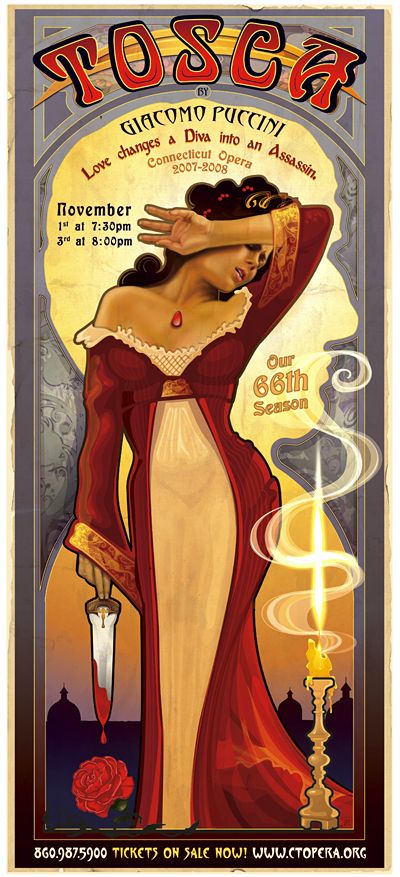
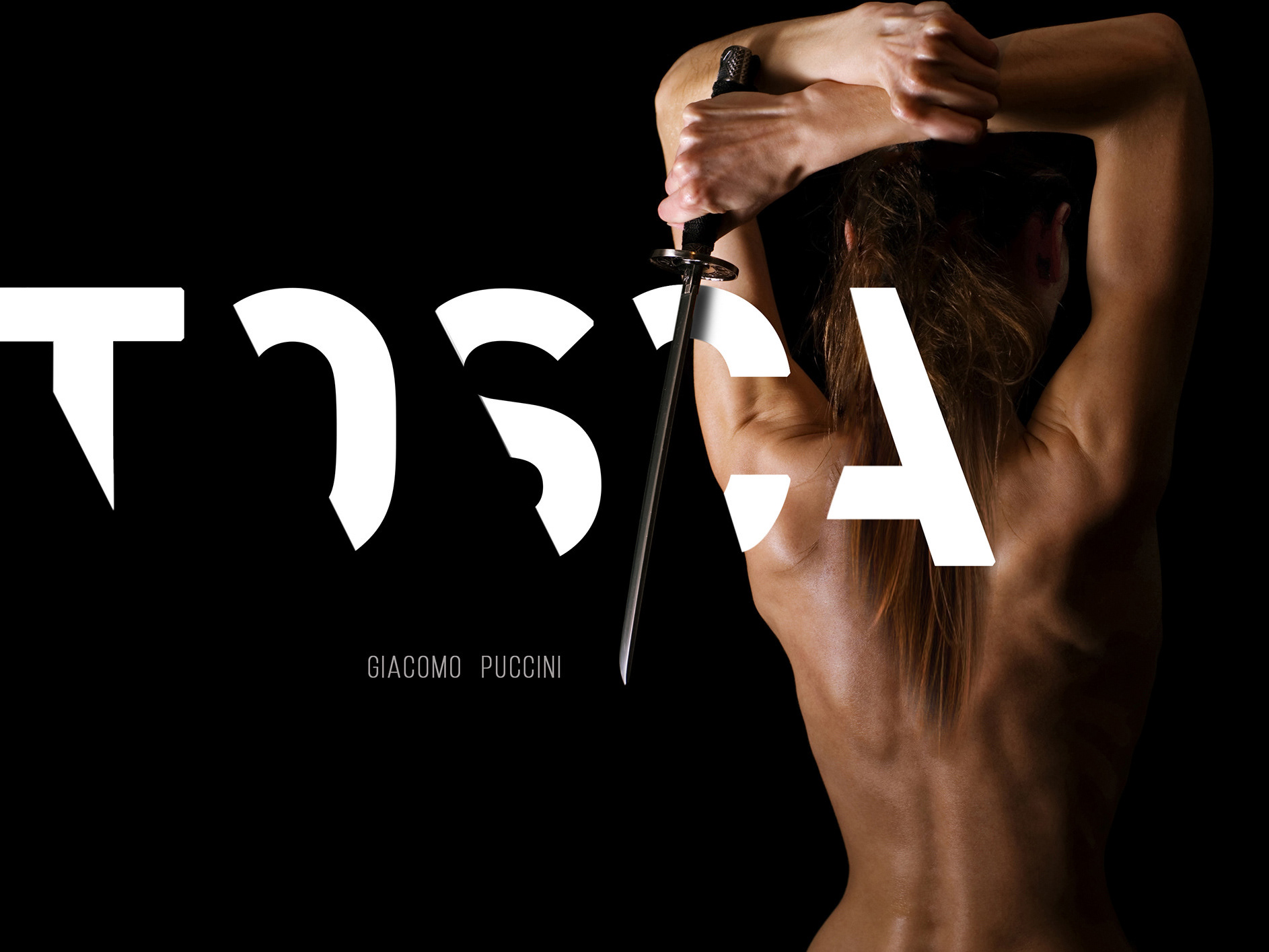 Many of the more modern images are explicit about the subject matter and the link the opera makes between sex and death (see left). The dagger is a recurring motif, as is blood – red is the most popular colour. The Castel Sant’Angelo appears too. Tosca herself, as in Bernhardt’s time, is often the the central image, although other posters prefer to concentrate on Scarpia, like that for Florida State Opera (right). Only a few depict Cavaradossi, the hero. Ordinarily one might say that this is an example of
 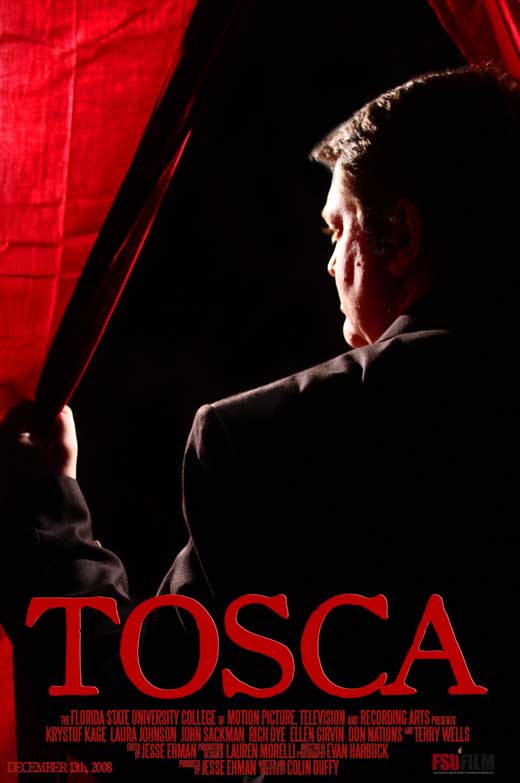 ‘the devil has all the best tunes’, except that in the opera itself, it is the tenor arias, belonging to Cavaradossi, which are most memorable.
 In particular the language we use when we talk about singing.
 to the crescendo, was described as the ‘luxury version’. ‘Don’t be polite, don’t apologise for the note’ signified not to sing it lightly, not giving it due sound, but to sing it loudly, the quality of loudness being needed in a theatre. Also, ‘complete the note’, indicated holding it for as long as necessary. Easily understood, though less easy to define.
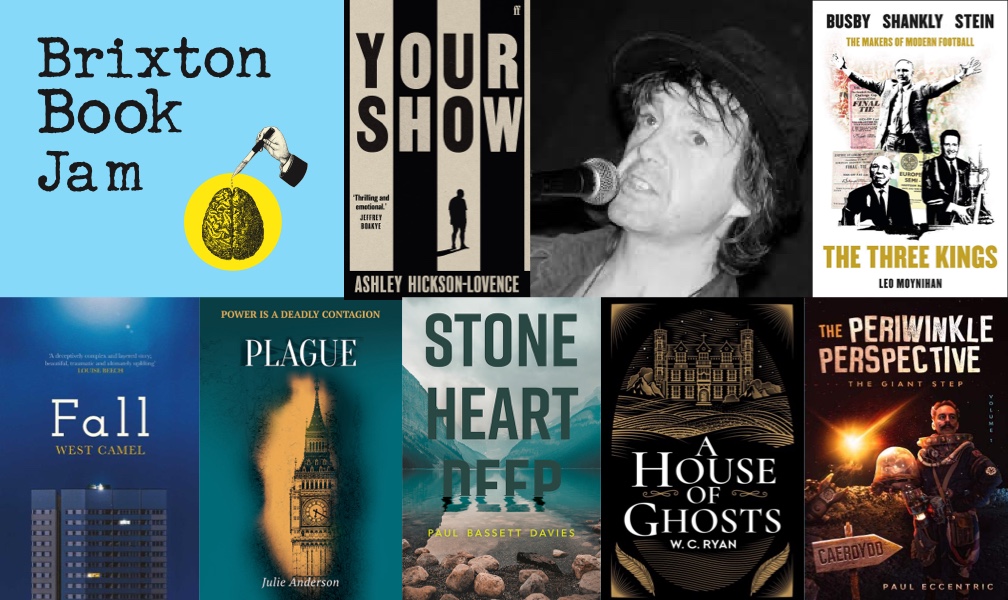 It’s at the Hootananny, 95 Effra Road, Brixton, SW2 1DF and doors open at 7.30 pm on 7th March, where I’ll be appearing alongside William Ryan, Ashley Hickson-Lovence, Leo Moynihan, West Camel, Paul Bassett Davies and Paul Eccentric. It’s free to attend and there’s booze and books on sale. If you’re in south London why not come along?
 … but the singing of songs. St Paul’s Opera, Clapham, presented the Big Birthday Bash last Friday and great fun was had by all, as much on stage as in the audience.
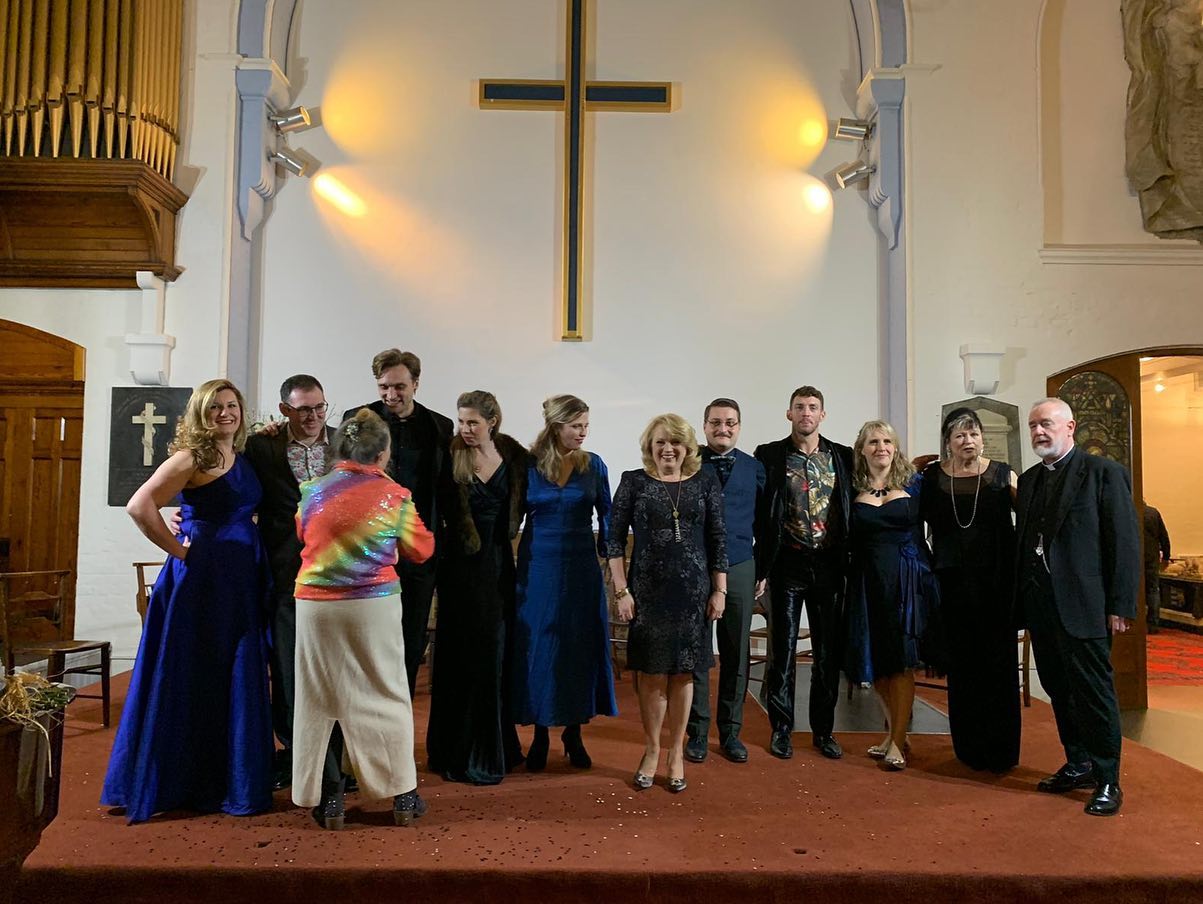 Opera and classical favourites, mostly ‘big tunes’, formed the first half of the evening’s entertainment, followed by cabaret and show tunes in the second. Two Australians, a Greek and a Latvian as well as those native to these British Isles formed the company for the evening, several prize-winners among them. The singers were current and former members of SPO, clad in their shiny best (and that was the baritone’s black satin suit). A theme reflected in the audience by SPO super-fan Teresa, in her sparkly rainbow biker jacket. Puccini and Rossini formed the backbone of the first half, spiced with Lehar, Bizet, Leoncavallo and Strauss with one Mozart piece to add a touch of the sublime. It ended with Brindisi, the famous drinking song from La Traviata. Post interval ( more wine, that song was prophetic, and meeting yet more friends and neighbours ) there was Offenbach, Britten and Bernstein, plus Cole Porter, Rogers & Hammerstein and Sondheim.
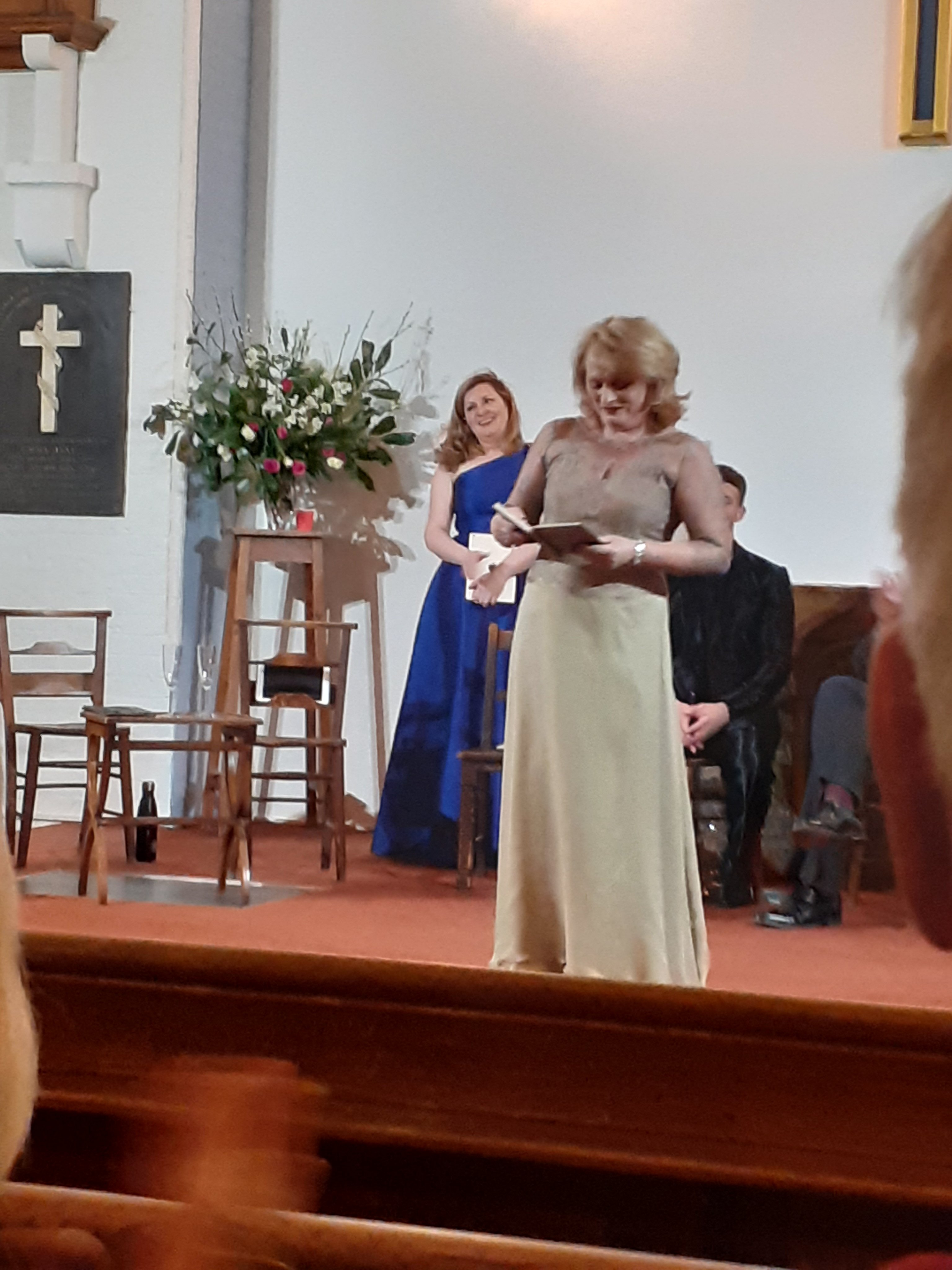 Highlights? There were many. Lyric tenor Martins Smaukstelis singing ‘Maria’ from West Side Story – ‘knocked it out the park’ said my American neighbour; the aforementioned Mozart ‘Soave sia il vento’ from Cosi fan Tutti sung by Tanya Hurst, Alexandra Dinwiddie and Louis Hurst and birthday girl and SPO co-founder Patricia Ninian singing ‘Glitter and be Gay’ from Candide.
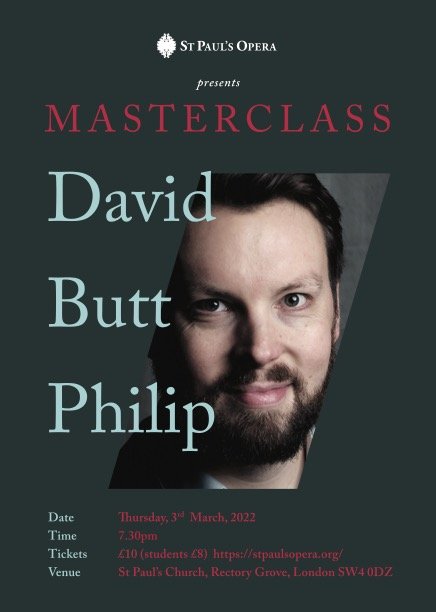
 Theatre on 21st February about establishing this favourite local opera company from scratch. Unfortunately I’m unable to attend, but I will be going to the the Masterclass at St Paul’s by David Butt Philip (Sydney Opera, the NY Met and Wiener Stadtsoper) on 3rd March – tickets £10. He will also be performing a Gala concert with some friends, Lauren Fagan, Stephanie Wake-Edwards and David Shipley, all alumni of the Royal Opera’s Young Artist Programme. This takes place on Thursday 24th March, tickets £30. I imagine that all these events will be very popular, so buy early.
 Julie Anderson