Amid all the Brexit turmoil ( though it’s gone suspiciously quiet recently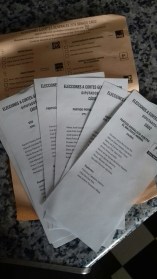 – could it suit the two main party leaders to drift towards the Euro Elections I wonder ) we might forget that the polarisation of politics is going on in plenty of places other than the UK.
A ray of hope therefore from Spain. On Sunday Spain went to the polls for the third time in four years after Pedro Sanchez’ minority government of only 84 deputies ( out of 350 seats in the Congress of Deputies ) failed to secure enough support for its budget. This followed a period in which, since 2015, Spain has had no single strong ruling party, voters having returned the equivalent of a UK hung Parliament. This also coincided with the rise of the first extreme right-wing party – Vox – since Franco’s death in 1975 ( see Vox ).
The turnout was up, at 75%+, despite a degree of election fatigue. There was speculation, at least among my Spanish friends, that this was in reaction to the apparent voter apathy which allowed Vox to take its first seats at regional level – in Andalucia and Extramadura – and a determination that this should not be repeated at the national level.
The result – an increased number of seats, up to 123, for Sanchez’ Socialists  (PSOE) a left of centre social democratic party. PSOE is now the largest block in the Cortes. In second place, just, the Partido Popular with only 67 seats, followed closely in third by Ciudadanos with 57. The last of these, though tacking to the right, went nowhere near as far as the PP, which tried to steal Vox’s thunder. Alberto Rivera, Ciudadanos leader says he wants to lead the opposition, but already media ( and many Spaniards I spoke with ) like the look of a PSOE Ciudadanos coalition. A coalition of the centre.
 I enjoyed watching the TV coverage in the run up and on election night. My TV aerial was not functioning well so I watched the results come in on a channel I wouldn’t normally watch politics on, which made it even more interesting. Think Peter Snow, but in faded jeans, and speaking even more quickly, as coloured columns rise and fall around him.
I also went to check out the local polling station, in the large Post Office building near to us. I went along at lunchtime on Sunday and there was a long queue of voters snaking round the large room. The Spanish system uses  the D’Hondt method of proportional representation ( the same to be used in the forthcoming European Parliament elections ) with parties having lists of candidates. I gathered up the listings, as well as a ballot paper (see photo above). One of my neighbours then went to register and cast her vote in a temporary voting booth ( which looked suspiciously like a temporary shower ).
On Sunday there was the leisurely perusal of the results in papers local and national. The right-wing vote had fragmented, the centre had held. On-line and to the BBC and one could be forgiven for not noticing that the centrist socialists had won at all, so focused was the story on the rise of Vox. That party did become the fifth largest, but did not do as well as many predicted and had itself proclaimed it would. It’s sad to see the BBC so in thrall to what one can only describe as ‘click-bait’ news reporting.
Now it’s back to London, where the skies are less blue. For more on Spanish politics and the remarkable trajectory of Pedro Sanchez see All Change in Spain Democracy III
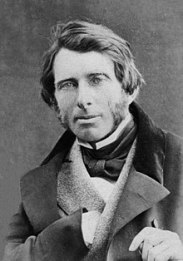 This year’s Spring exhibition at 2, Temple Place is a collaboration with Museums Sheffield and the Guild of St George to bring together a range of paintings, drawings, metal works and plaster casts to celebrate the work and legacy of John Ruskin (1819 – 1900).
 J.M.W.Turner and redefined art criticism of the day. It brought him to the notice of luminaries such as Elizabeth Gaskell and Charlotte Bronte. This was followed by Modern Painters II (1846) written while on the Grand Tour with his parents. He married Effie Gray, the young daughter of a family friend in 1847. Together they journeyed to Venice where Ruskin worked on perhaps his most famous three-volume work The Stones of Venice (1851-1853). It was in The Nature of Gothic chapter in Vol II that he set out his belief in artisanal integrity and attacked industrial capitalism which had such an impact on socialists like William Morris and the Arts and Crafts movement.
 The marriage was, apparently, unconsummated ( though Ruskin contested this ) and was subsequently annulled in 1854, though not before major scandal when Effie left Ruskin for John Everett Millais. Ruskin had championed the Pre-Raphealites and continued to do so, even providing a stipend for Elizabeth Siddal, Rosetti’s wife, to encourage her art. He also became a firm friend of William Morris and Edward Burne-Jones. These friendships are documented in the exhibition, as is his late crossing of swords with James McNeill Whistler. While the case bankrupted Whistler, it also tarnished Ruskin’s reputation and may have contributed to his mental decline. I have never understood how a devotee of Turner’s art could have denigrated Whistler’s and that isn’t something which is tackled here.
 Turner paintings and Durer engravings ( loved the cat ) as well as many of his own drawings and paintings. In addition there are newly commissioned pieces exploring the legacy of Ruskin, from Timorous Beasties, Grizedale Arts, Hannah Dowling and Emilie Taylor. I very much enjoyed
  country house and showcase for architect and collector Sir John Soane, with its attached art gallery. In the sunshine Ealing looked leafy indeed, with its Common and Green ( who knew, not me, certainly ). Still there, set back from the Uxbridge Road, the original Ealing Studios where so many classic films were made. We even found a handsome Georgian/early Victorian hostelry named The Sir Micheal Balcon, after the legendary producer and head of the studios in its heyday.
 frontage and garden now behind a formal war memorial. Entrance gates are to the right hand side of the formal gardens. Inside it is less chaotic – less mad – than his house and museum on Lincoln’s Inn Fields, but it still demonstrates his distinct architectural style and idiosyncratic and impressive design. The interior has been meticulously restored to a very high standard, including the hand-painted and beautiful ‘chinese’ wallpaper in the gloriously light drawing room, the exquisite ceilings and ‘marbled’ walls.
 employer George Dance and which Soane retained, demolishing the rest of the mansion and rebuilding it, including a colonnade of ‘ruins’, which now links the main house and the modern gallery.
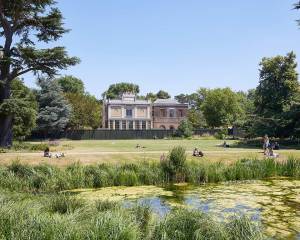 I loved the long glass gallery which runs across the rear of the house and overlooks what would have been the private gardens, including a lake with rusticated bridge. These have now been merged with Walpole Park (1901) a public park which includes another lake, formal gardens and a sporting pavilion. I also loved the two huge rooms in George Dance’s wing, the dining room on the ground floor and salon or drawing room on the first. I’m not surprised that Soane couldn’t bring himself to demolish this even if it means that the whole Manor has a rather lop-sided look.
 the old kitchen buildings into Pitzhanger Gallery. The current exhibition is by Anish Kapoor and it complements Soane perfectly. Kapoor’s mirrored and sculpted discs and boxes play with light, vision and sound just as Soane’s interiors do, tricking the eye. The pieces are interactive and huge fun. A gallery employee told us that he saw something new in each of the pieces every day he turned up for work and took great pleasure in watching visitors play with the distortions. We certainly enjoyed doing so, taking photographs into the sculpted mirrors which captured one of us upside down in the middle ground while the other was the right way up nearer to the piece.
 At Tate Modern’s big Spring exhibition yesterday I (and a lot of other people) enjoyed some vibrant Pierre Bonnard paintings. I confess that I hadn’t seen many before, indeed, I knew little about this contemporary of Matisse.
 of France and his companion and wife, Marthe de Meligny, by Henri Cartier-Bresson and Andre Ostier.
 He is fond of unusual perspectives, choosing to paint views, interior and exterior, through doors and windows, or through tunnels of greenery. He painted landscapes, many around his house in Normandy and subsequently in the south of France where he bought a house. The red tiled roofs of Le Cannet and small towns around it feature prominently in the rooms covering his later life.
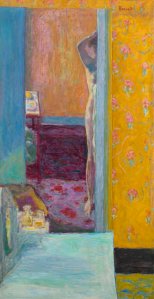 reflected light, in the water, in the bathroom tiles and on the walls, They are also so full of pattern – the carpet, the bath robe – that I began to think of post Impressionists like Gauguin and Van Gogh. One can also see the influence of the Japanese prints which Bonnard had admired so much in his formative years.
 the dark-brown paint of doors and wood panelling, the distinctive blue-green of the shutters,the red-brown and sometimes black of the terracotta floor tiles. I recognise these from visits to stay in the south of France.
 despite the crowds. If, however, you asked me where Bonnard stood in my personal pantheon of twentieth century European artists he wouldn’t be at the top of my list. That’s not to say that he wasn’t taking forward the ideas of the Impressionists and Post-Impressionists ( though he preferred to paint from memory in the studio, not in the open air ), it’s just that more interesting developments were, by that time, taking place elsewhere.
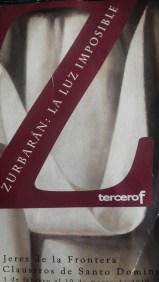 …is the name of an excellent, fascinating exhibition in Jerez de la Frontera (until 10th March) and Cadiz, from 21st March until 28th April 2019. I saw it at the Claustros de Santo Domingo, the 13th century monastery which is now an exhibition and performance space in Jerez. It is, in Jerez, FREE to enter and I recommend, if you are in the vicinity, that you go and see it.
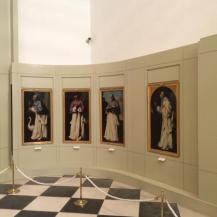 attempt to recreate the stunning light and shade of the originals, the chiaroscuro which earned Zurbaran the nickname ‘the Spanish Caravaggio’. The paintings are astonishingly clear and precise, with knife sharp edges to the drapery and the photographs capture this amazingly well. They also recreate the human portraits, often to great effect ( the modern faces taking on a timeless quality ). As the accompanying leaflet says, however, Zurbaran had only the ‘trickeries’ of paint and light to help him with his creations.
 For us another fabulous Festival de Jerez is over. We have all gone our separate ways, though performances at the 2019 Festival continue until next weekend. Yet again we have been astounded and amazed by the quality, as well as the variety, on offer.
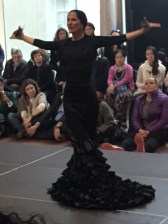 Sanlucar, re-interpreted by Santiago Lara as music director ( see
 remarkable Coy acting as muse, creative idea and, possibly creation. I do not pretend to have understood it all, but I enjoyed it a lot and look forward to see what this talented dancer does next.
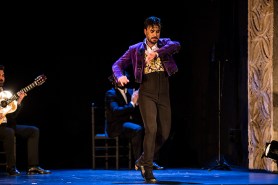 performance and out on the town. A terrific end to our sojourn at the 2019 Festival.
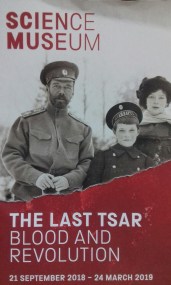 The Last Tsar; Blood and Revolution is the name of an interesting and FREE exhibition currently to be found at the Science Museum, Exhibition Road SW7. We visited on Monday.
 diagnosed in women who behaved ‘unsuitably’ or ‘hysterically’ ). It shows how the ruling family kept the illness of the Tsaravitch, Alexei, hidden from all but an immediate circle of trusted intimates and medical men, thereby fuelling discontent among the aristocracy over the perceived remoteness of the Romanov family and influence of ‘advisers’ like Rasputin. An autocratic and fundamentally unjust system could not survive without an involved and supportive aristocracy and the myth of a benign and progressive monarchy couldn’t be sustained by a monarch invisible to his people. Not so long after the outbreak of WWI a system of government which was creaking finally broke and the Tsar abdicated.
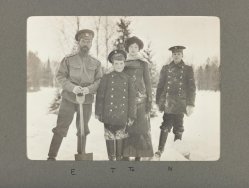 Ekaterinberg. The initial investigation was headed by Nikolai, Sokolov, a Russian investigating magistrate, when that city fell out of Bolshevik control, and its findings were, for a long while, the only real evidence-informed information about their deaths. Later, after the Soviet state admitted executing the family and the eventual fall of the Soviet Union in 1991, scientists were able to piece together those earlier findings with later discoveries made during the 1970s but not made public at the time, to find skeletons which could then be tested using the latest techniques.
 Alexei and one of his sisters were discovered and also tested. Facial reconstruction and modelling techniques were then used to recreate the faces from the skulls, resulting in sculptures which closely resembled the photographs of the individuals taken while they were alive. So all eleven victims were identified and the fate of the Romanovs finally resolved.
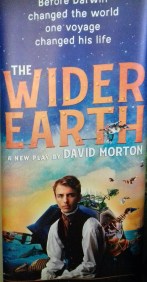 In this case that part of it found in SW7. Specifically, the Flett Theatre (formerly the Jerwood Gallery) in the Darwin Centre at the Natural History Museum, to see David Morton’s new play about the young Charles Darwin, The Wider Earth.
 The drama catches the intellectual climate of the time, with Lyell’s geological theories already challenging Christian orthodoxy. Debate rages aboard the Beagle, stimulated by the presence of a clergyman, travelling to Tierra del Fuego to take God to the natives, as well as a native Fuegan, Jeremy Button, taken by Fitzroy from the south Atlantic to be ‘educated’ in Britain. It shows the experiences – of volcanic eruption, of earthquakes and mountain making, of the differences in species from the various Galapagos islands – which inform Darwin’s thinking.
 encounter with The Gentle Author – writer, blogger and publisher – of
 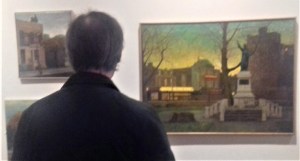 Bow Road and we went along. We arrived at six when the doors opened, but by a quarter to seven it was impossible to move. The show had featured in BBC Online and The Guardian and was ‘exhibition of the week’ in The New Statesman so a lot of interest had been generated. Tremendous for the artist, who is finally getting the recognition she deserves, but less so for the viewer. Nonetheless I was able to catch a quick word with The Gentle Author, though not with Doreen herself.
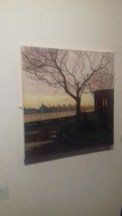 two viewing rooms and a bar and the paintings were in all of them, though it grew increasingly difficult to move from one to another and we finally gave up. We will go back, because the paintings deserve greater concentration and contemplation than we were able to give them yesterday.
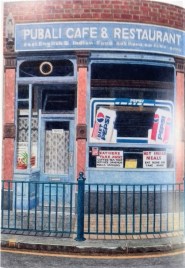 horizontals ( I never realised just how many East End streets had pavement railings until seeing Fletcher’s paintings ). She shows the pattern and colour within these flat frontages – Pubali Cafe, Limehouse (1996) with its pinks and blues and Pepsi signs; VIP Garage, Commercial Road (2001) with that green which is rarely found in nature but is often a feature of urban, painted environments; the Launderette, Ben Jonson Road (2003) with its grid of metal shutters and metallic signs. These are depictions of real places and are perfectly realised paintings.
 maisonettes passed the one brick building and its bill-boards and smoking chimney.
 I, like many, am gripped by the drama that is unfolding at Westminster . As someone who watches the Parliamentary Channel every so often, it’s good to know that I am no longer alone, others are tuning in too. Yet I suspect that many more are not, they just want it over.
 dissonance at my core. I think that is where the answer lies . I am having trouble accepting what is happening because it runs counter to everything I have been brought up to believe.
 childcare. There are many who are much worse off than me and who could, rightly, consider that they, personally, had been treated unfairly (the claimants of disability allowance who are denied because the operatives of the privatised system are told they must discourage claims, for instance, or the Universal Credit claimant told she has to wait six weeks for payment of money due to her, so she cannot feed her children).
 gain more by not applying basic laws and rules than by applying them ( and I include disaster socialists here as well as disaster capitalists ). The Referendum was advisory, so its result is not binding. Electoral law was broken (a 10% overspend and funding from unknown sources), which would, were this a properly binding election, mean that the result would be set aside. People like Gina Miller and Jolyon Maugham try, but the powerful continue regardless.
 Julie Anderson