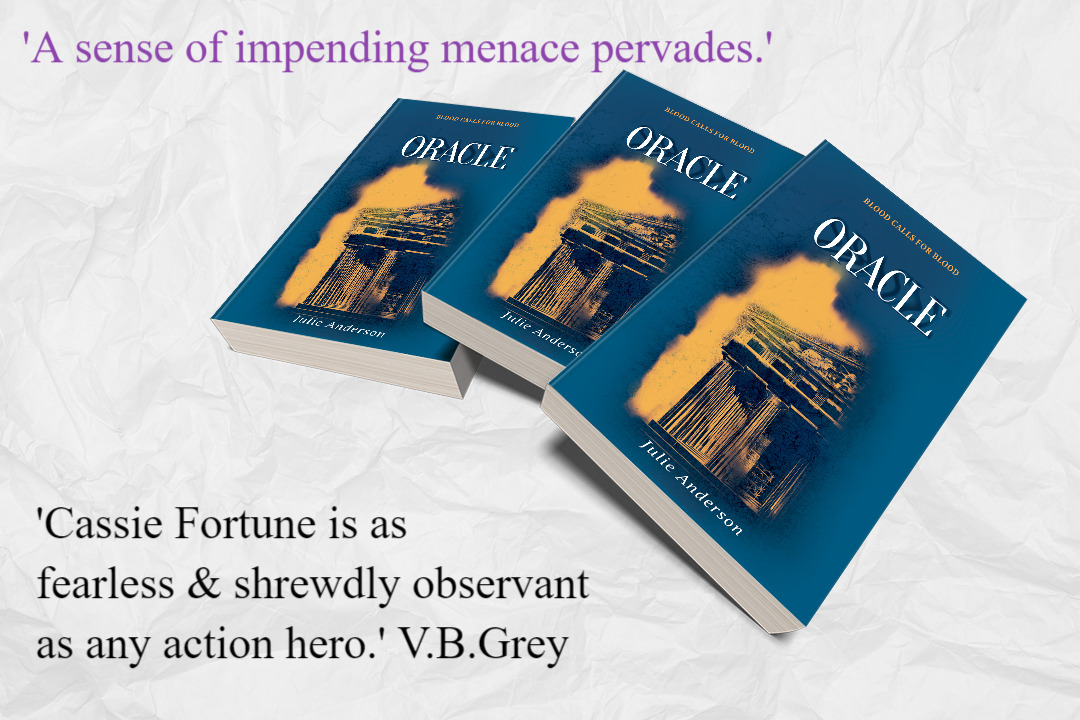
 All the published writers I know (except one) accept the need to promote their books, whether they are contractually obliged to do so, as a traditionally published author, or understand that they must get themselves and their book out there as a self-published author. Only those established enough to command a hefty advertising and promotion budget within their publishing house can sit back and even they can’t relax. Sir Michael Morpurgo, who is as established as they get, was on the road promoting his latest book at the Clapham Book Festival in October.
There are a plethora of ‘Black Friday’ deals being unleashed upon the general public this week and it’s no exception, with Christmas around the corner, in the book world. The ebook of Plague has been reduced to 99p online across stores (and on the Claret Press website) and I am publicising that at the same time as organising ‘giveaway’ competitions for free copies of Oracle within online book groups, like The Motherload. It happens also to be six months since Oracle came out, so there is a bona fide reason to do the giveaway, aside from Black Friday.
 For a small publisher like Claret this is a neat way to get free advertising. For example in this ‘giveaway’ via Facebook of three books ( at cost and with postage of approximately £3 per book ) Oracle’s cover and blurb, as well as some quoted reviews, has reached 174,000 people in the last twenty four hours. Mostly these are via Twitter but the Club itself has 12,000 members. At time of writing over eighty people have ‘entered’.
When the three winners’ names have been drawn out of the hat I will send each of them a signed copy, complete with Oracle postcard and message congratulating them, hoping that they enjoy reading the book and asking, if they do enjoy it, if they would pass the word on, by way of a review or a post in the Facebook Book Group and/or on Goodreads. If they do so this will generate more publicity. Oracle is, of course, readable as a standalone novel, but it may also encourage some folk to buy Plague, especially given its reduced price.
To that end I am appearing as a writer guest tomorrow night in the UK Crime Book Club’s Pub Quiz (Only not in a Pub). I don’t know what sort of audience there’ll be – the Club has over twenty thousand members – though I know there’s a Noir at the Bar tomorrow night so there’s quite a lot of competition. It’s the ‘Thank Andrew’ edition, because November includes both Thanksgiving and St Andrew’s Day, with the focus on U.S. and Scottish crime fiction. I have been madly mugging up on both and realising just how much good crime fiction there is out there that I know nothing about. Wish me luck with the Quiz, I hope I don’t make a complete fool of myself ( preparing for a Select Committee hearing was never as nerve-wracking ).
Once I get the latest version of the manuscript of Opera off to Claret ( which is imminent ) I will be taking advantage of some Black Friday deals myself.
 week I returned there for a second exhibition of Hokusai work, this time focusing on his drawings for The Great Picture Book of Everything.
 As an example of the production process there is a section on the print known as The Great Wave, for which Hokusai is probably most famous. There are many thousands of versions of this picture, called Under the Wave off Kanagawa ( first published 1831 ). Woodblock prints were inexpensive in nineteenth century Japan, costing approximately the same as two dishes of noodles and the blocks would be used to produce thousands of images. They frequently wore down, creating different versions of the same image and when new blocks were created, these too could differ from the original.
 their subjects. They are also remarkable for their subject matter. Between 1639 and 1859 Japan was ruled by the Tokugawa shoguns who forbade the Japanese people from travelling abroad. Yet in producing the drawings, between 1820 and 1860, Hokusai depicted peoples from foreign lands as well as characters from Indian and Chinese mythology ( see right, figures of India, China and Korea ).
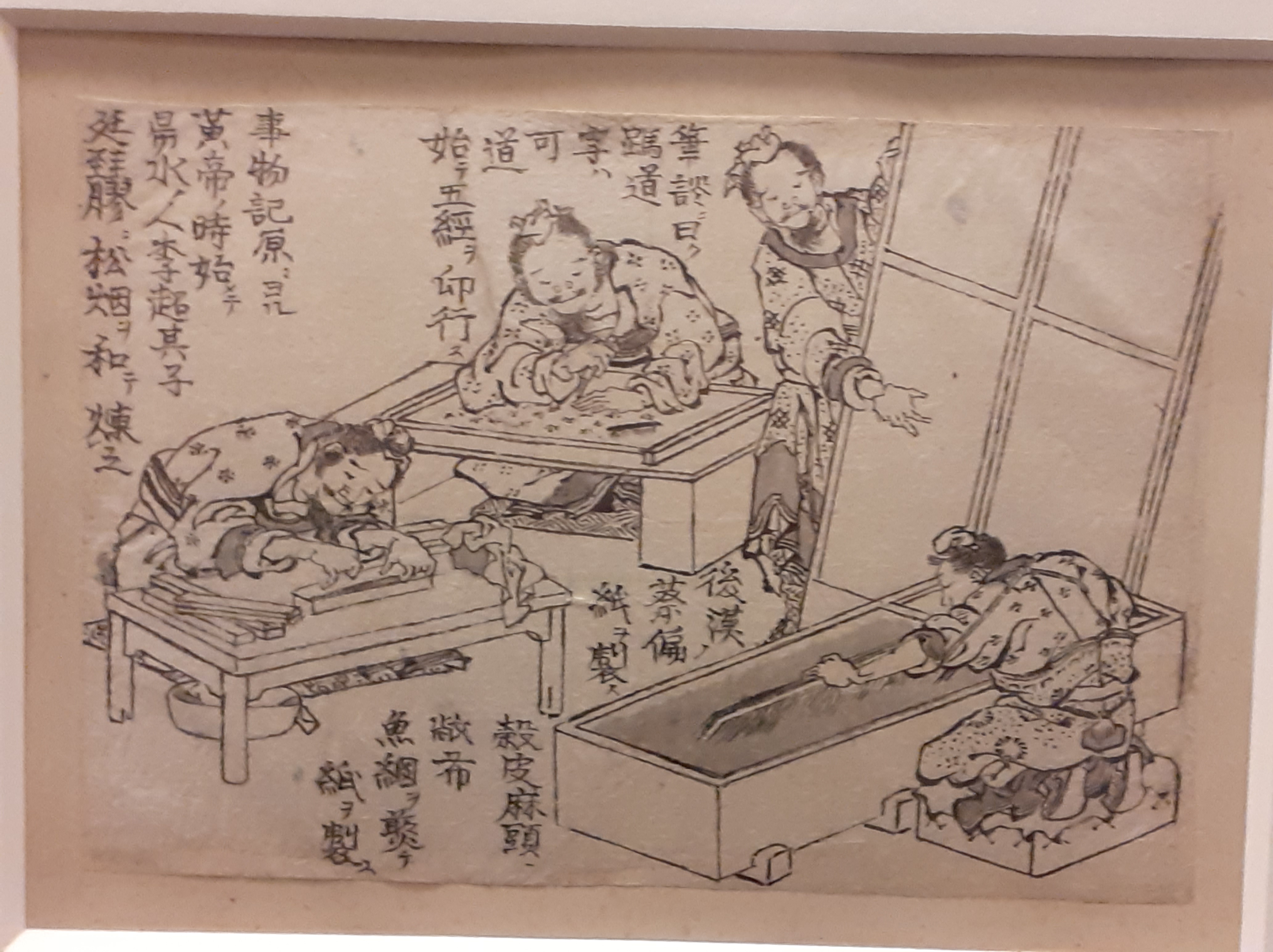 That said, I realised early in my visit that I would have to buy the catalogue, because it simply isn’t possible to stand for long enough in front of these small pictures to really enjoy all their detail and subtlety – too many other people are trying to do the same. Besides, it’s a book and I can’t resist book buying. The exhibition is in Room 90, one of the rooms used for small exhibitions of prints and drawings at the rear of the Museum ( beyond Mesopotamia and Ancient Egypt and up the stairs ). Entry is only £9 for adults and, even with timed tickets, it was getting crowded when I visited.
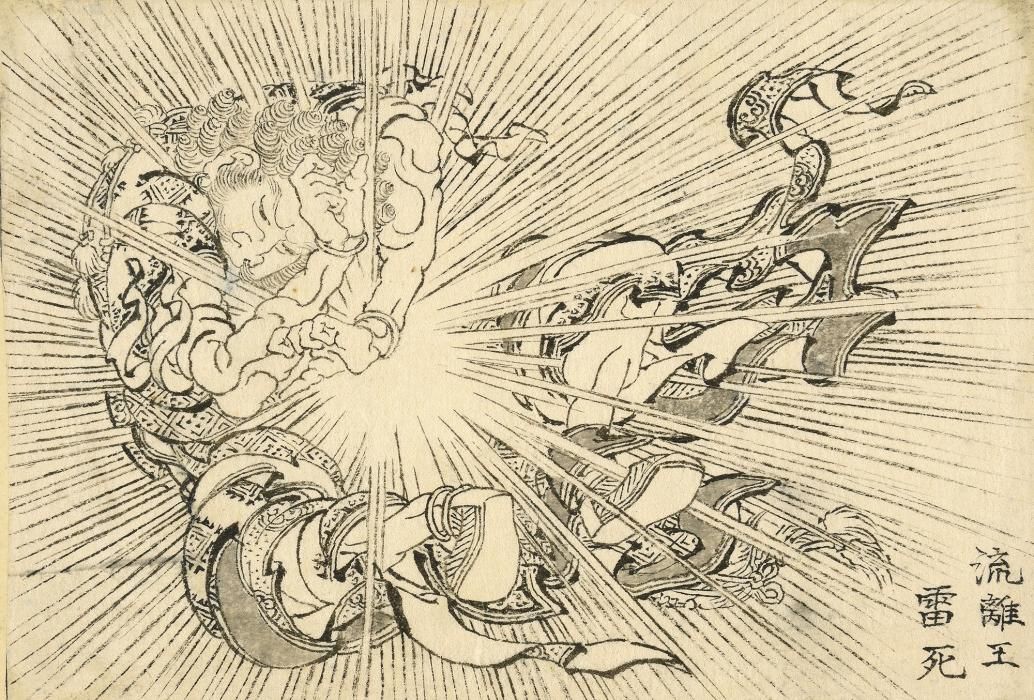 have come from the pages of a modern comic/graphic novel or a Roy Lichtenstein work ( Kerpow! ). All they would need would be primary colours. Others depict interior scenes or verandas in a way which reminded me of Degas, with an asymmetrical picture construction. I look forward to many happy hours with my catalogue, really appreciating these drawings in full detail, but, as an enticing taster, this exhibition was wonderful. It runs until 30th January 2022 and the book costs £20.
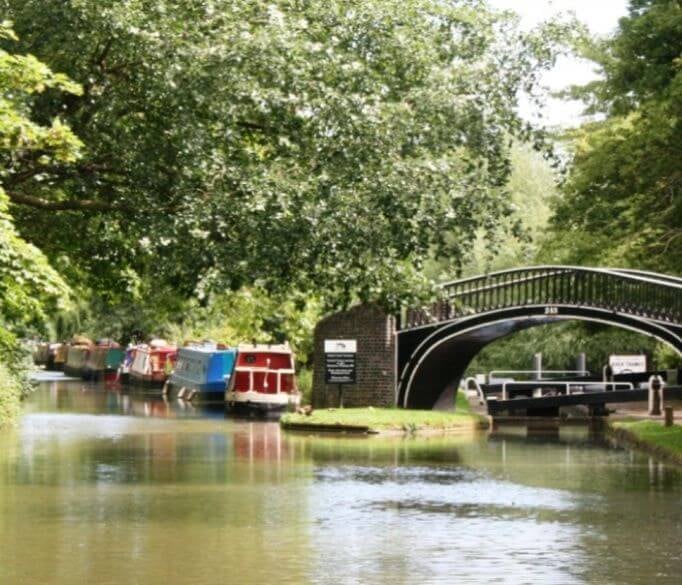 Readers of Phillip Pullman’s His Dark Materials trilogy will already be familiar with the alternative reality Jericho, the canal basin where the Gyptians live in Northern Lights. In real life Pullman has been an advocate in support of the residential boaters fight to save the Castlemill Boatyard in the actual Jericho from property developers. It’s that bohemian, formerly working class quarter of Oxford, bounded by the Oxford Canal, Worcester College, Walton Street and Walton Well Road. On Sunday it was host to the Jericho Book Fair, the very first post-lockdown book fair in the country, the organisers claimed. I went along.
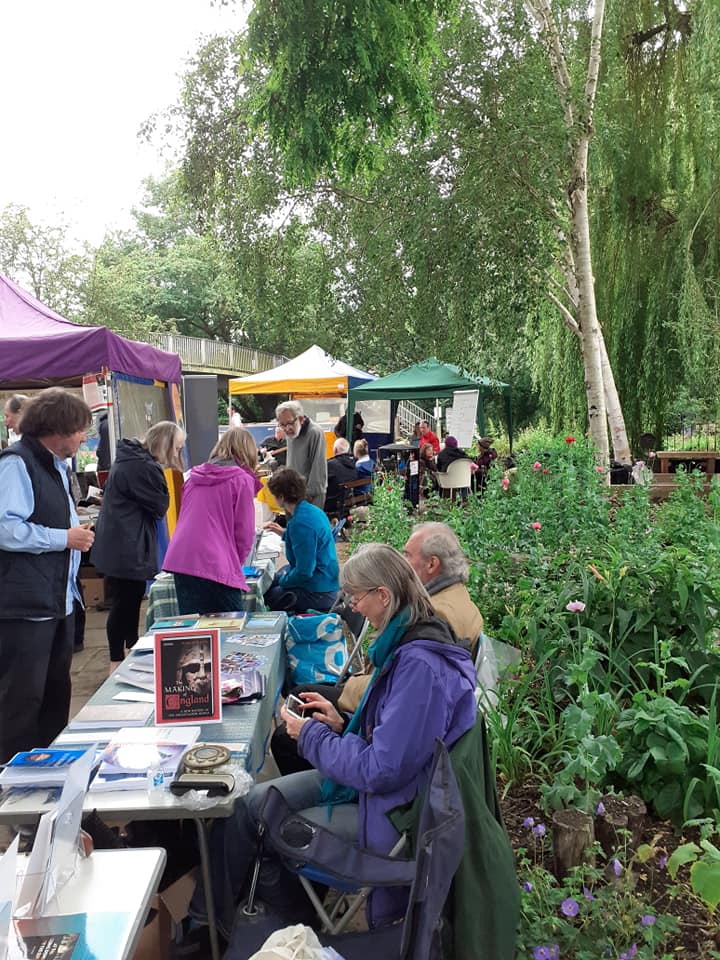
 itself was dry and plenty of people came out. There were lots of interesting stalls (I managed to buy as many books as I sold, including a 1956 Penguin Classics original edition of The Kraken Wakes by John Wyndham and a more recent volume of Euripides). Oxford University Press were there, Blackwell’s Books and several other presses, as well as the Oxford Indie Book Fair.
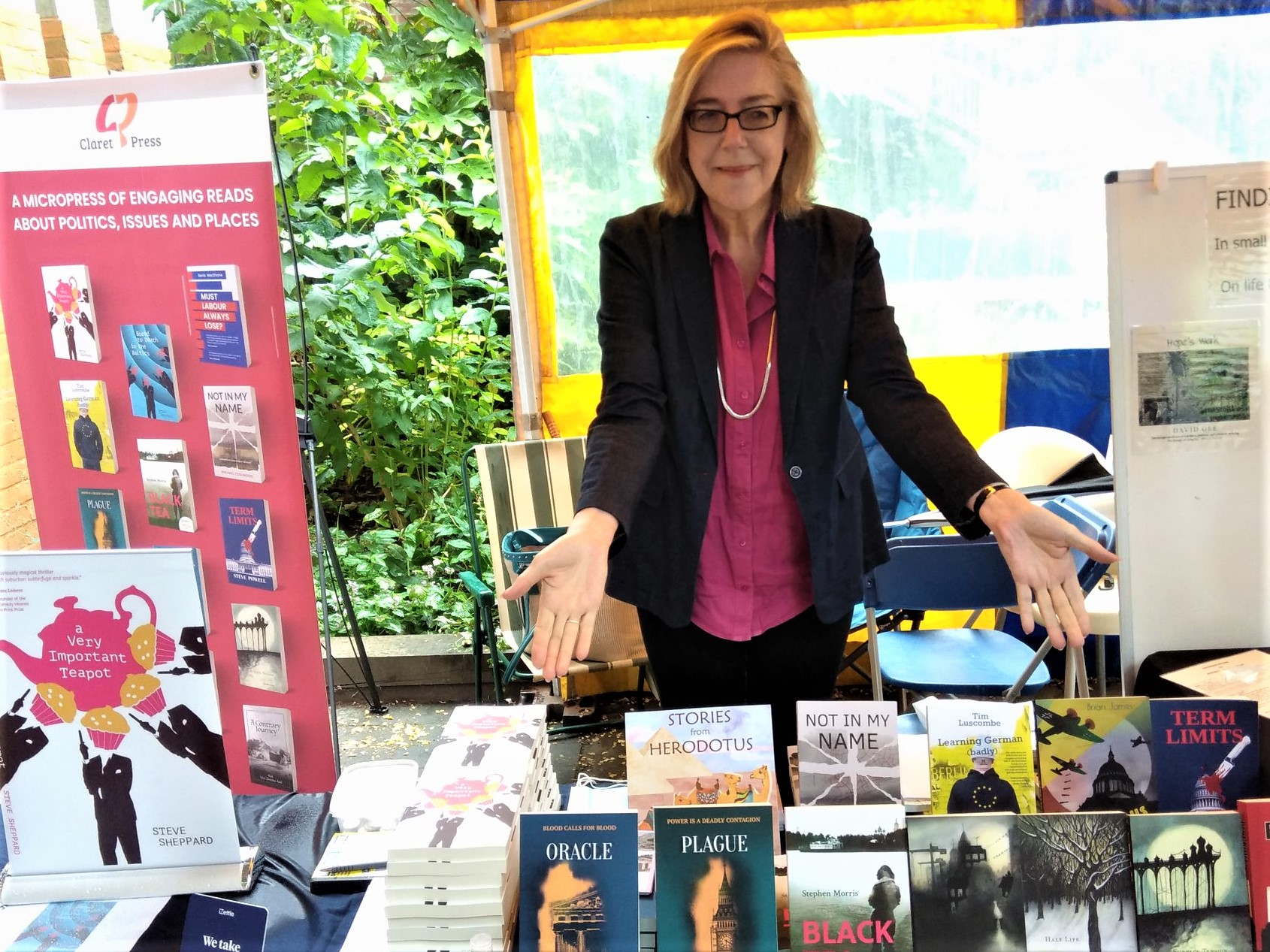
 (below) writer of one of my favourite comedy spy novels A Very Important Teapot. Steve lives in nearby Bampton and has just finished writing the sequel, Bored to Death in the Baltics, which involves herring, apparently and will be published in September. He had foregone the pleasure of umpiring for his local cricket team to come along and talk about books. Sylvia Vetta, another Claret author, was on the Oxford Indie Book Festival stand (she is one of its organisers) but we had time for a chat. Sylvia’s most recent novel Sculpting the Elephant is set, in part, in Jericho where one of the main characters has an antiques business.
 approached, various purveyors of food arrived. We, on the other hand, headed off along the canal towpath to walk to Wolvercote and The Plough Inn, a walk of about an hour. We had worked up quite an appetite before we came upon a sign to our destination thoughtfully provided for folk doing just as we were. The Plough is an unusual pub in that it has its own library, which seemed very appropriate, (as well as providing good pub grub at modest prices and real ale). We sat outside, eating, drinking and watching the muntjac playing before returning to the Fair, where things were in full swing.
 Karen, the young lady from Ghana doing work experience with Claret Press, looked like she was enjoying herself and sales were being made as people were swaying along to a set by a quartet playing guitar, banjo, mouth organ and drums. There was much chat about books, what people liked to read, what they were reading at the moment and what could be found on the other book stalls at the Fair. I did a final swing around the other stalls (spending even more money. but buying only useful things, of course) before it was time to start packing everything away and heading off to the little village of Kennington for an early supper.
 of dreaming spires behind, to return to the Great Wen. It was on the outskirts of north London that we encountered a torrential storm, with cars aquaplaning across the traffic lanes and drivers electing to drive in single file around roundabouts. Anyone familiar with London drivers will realise just how severe the weather conditions must have been to prompt such behaviour. Nonetheless, I arrived home, tired but happy, as they say, and only a little wet from my dash to the front door. I look forward to repeating the experience next year, when I want to go inside St Barnabas Church and explore the area rather more.
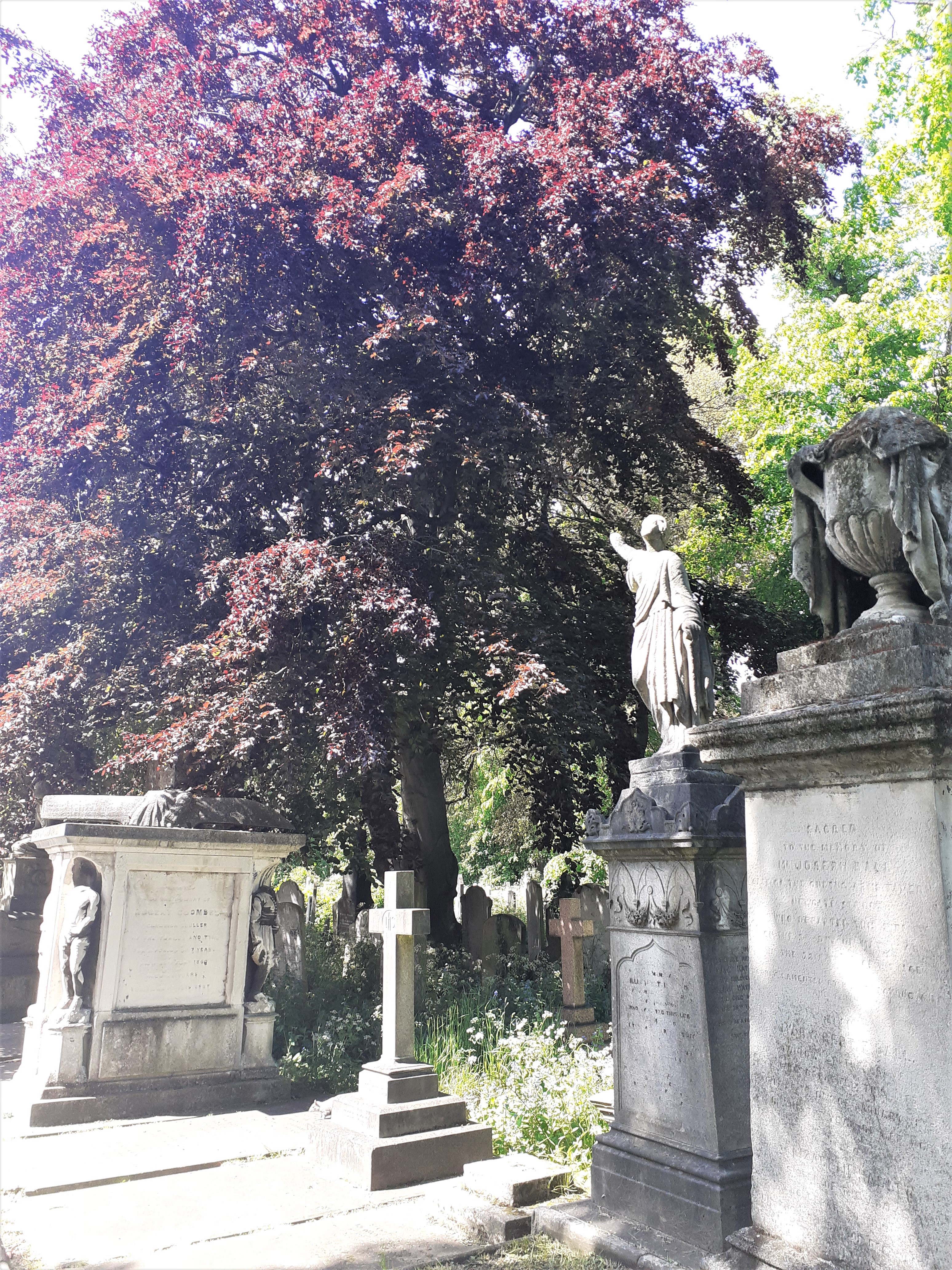 I’ve recently been out and about looking at the places in London where the third book in the Cassandra Fortune series, entitled ‘Opera‘, is set. The obvious one, the Royal Opera House, Covent Garden, is not yet open to anyone but ticket holders to socially distanced performances ( though I have a contact there for when it opens more widely ), but there are others, less obvious and, to non-Londoners, perhaps something of a revelation. If ‘Plague‘ was set in places that we all know, even if it took you to parts of those places which are usually closed to view, or hidden, ‘Opera’ will introduce some settings which are less well-known, but, I hope, people may then visit.
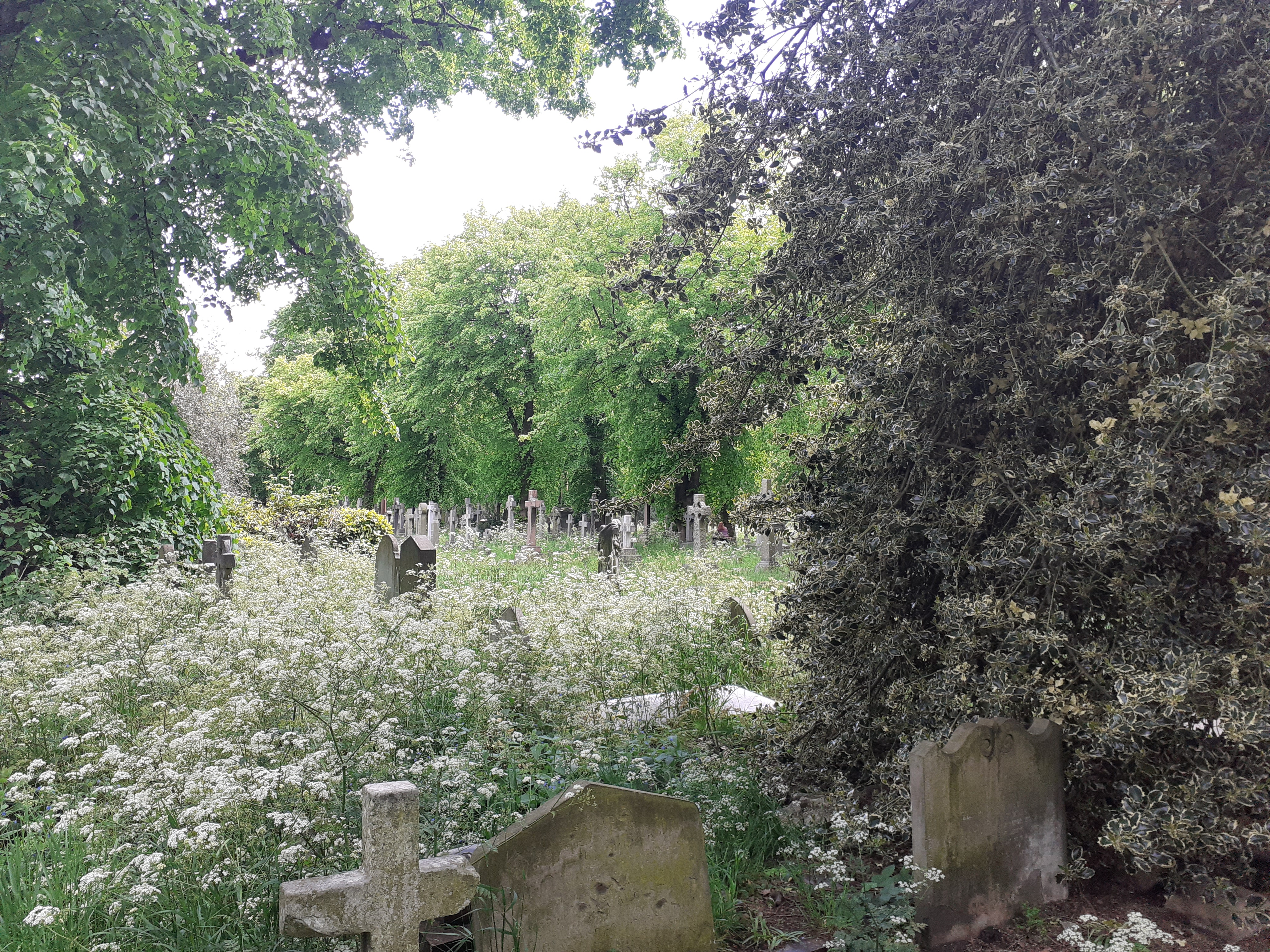 Brompton is one of the ‘Magnificent Seven’ Victorian cemeteries, which includes Highgate, with its graves of Karl Marx, George Eliot and other very famous people and Kelsall Green with its oft-filmed catacombs. While well known to locals – and a godsend during lockdowns – it is less widely known than these others. Both Kelsall Green and Tower Hamlets ( another Magnificent Seven cemetery ) featured in ‘Plague’. Brompton is owned by the Crown and run by The Royal Parks and includes many military graves, including of Commonwealth service personnel maintained by the Commonwealth War Graves Commission and many Czechoslovak, Polish and Russian military burials. It is also evidence of the diversity of Victorian London, housing as it did and does, the remains of individuals ranging from Chief Long Wolf of the Ogulala Sioux nation to Johannes Zukertorte, Jewish-Polish chess grandmaster and the Keeley and Vokes families, music hall artistes and actors. Other individuals buried here include a Mr Nutkin, Mr Brock, Mr Tod, Jeremiah Fisher and Peter Rabbett – Beatrix Potter lived nearby and was known to walk in the cemetery often, did these names inspire her?
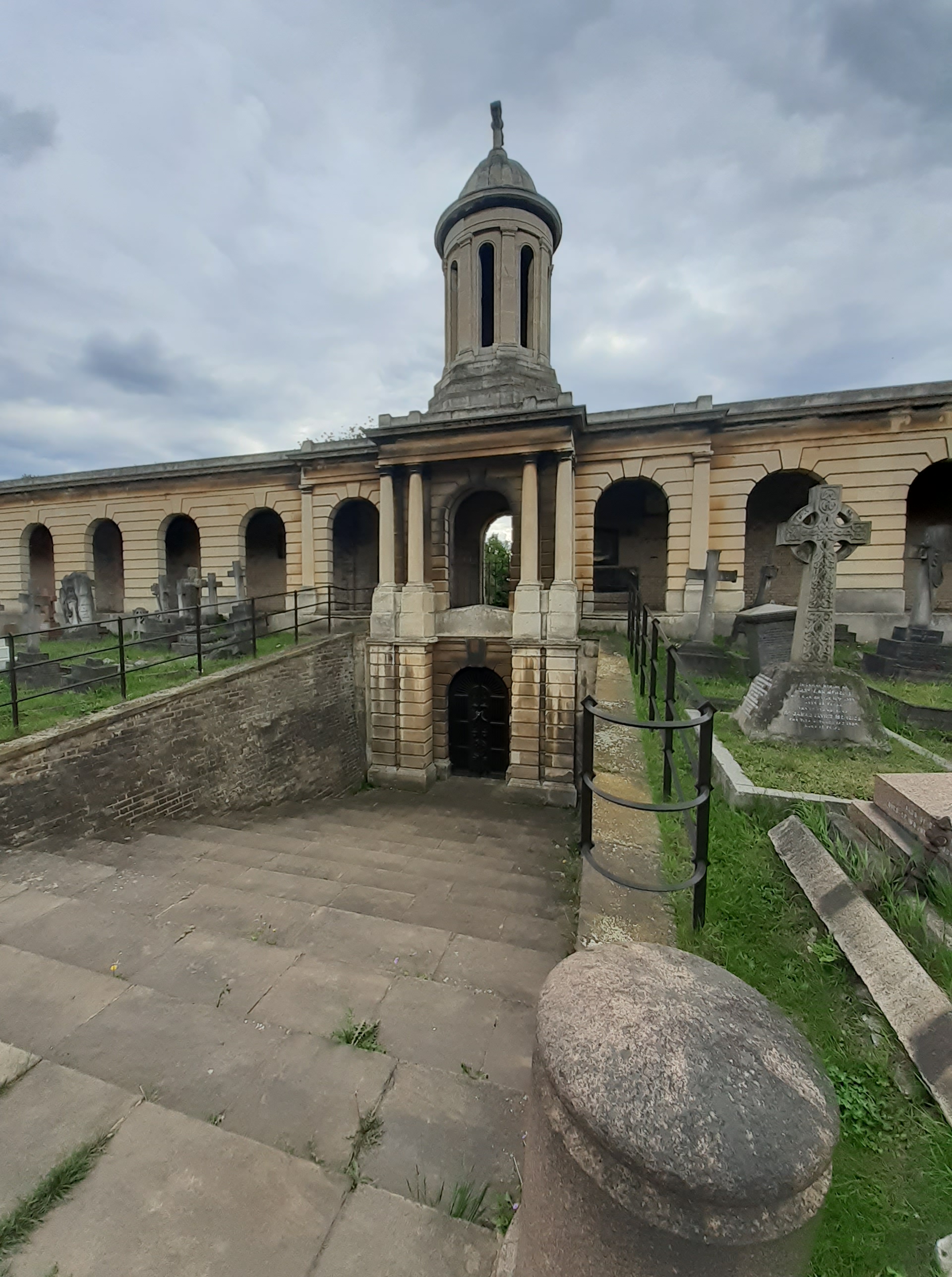 The Chapel at the cemetery’s southern end wasn’t open last week, but the grand colonnade is open all year round. Built in a style aping that of St Peter’s Square in Rome, the Colonnade runs above catacombs, which were fashionable for a brief time in Victorian London ( all too brief, additional catacombs built along the west side of the cemetery were never fully occupied ). The steps down to them are very wide and shallow, mainly because the lead-lined coffins deemed necessary for catacomb interment were extremely heavy and therefore difficult for pallbearers to carry and manoeuvre. The catacombs themselves are not open to the public except on special tours and open days and the locked metal doors, with their sculpted serpentine bas reliefs offer tantalising glimpses within.
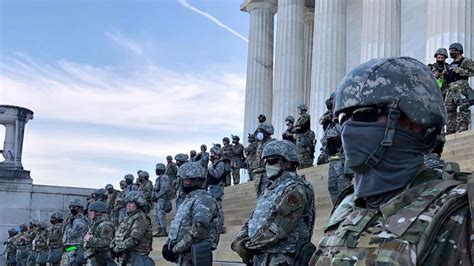 My contemporary crime fiction is set in the world of high politics ( and low sleaze ), of ministers, conferences, lobbyists and business interests. Activists of various kind also feature, particularly in Oracle. In that book a contemporary political issue also impacts upon the plot; the politicisation of the police. This is specifically regarding the Greek criminal organisation Golden Dawn, which formerly styled itself a political party and to which many police belonged in the real world. There are other examples of politics intruding on police work, most notably in the U.S., where former President Trump deployed ‘private’ police forces funded with federal money in cities where demonstrations were taking place ( see pic left ). A ‘defund the police’ movement began as a result of this and of the repeated deaths in custody of black people. So far, so scary.
 tarnished. In the US the Vietnam War, in the UK the three-day week and ‘the sick man of Europe’ made for a more sceptical and hard boiled sensibility. The Day of the Jackal, The Andromeda Strain, Six Days of the Condor are three crime/conspiracy novels, turned into major films, which spring to mind. Then there was police corruption, found in crime fiction like Lawrence Block’s NYPD stories, Leonardo Sciascia in Sicily ( long before Montalbano ) or countless Hollywood films, the Dirty Harry movies, Serpico, The French Connection. Is the politicisation of the police going to be something similar?
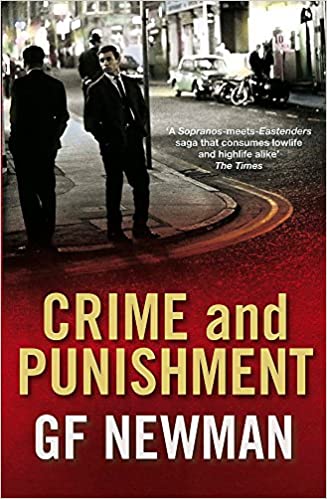 having the politics of policing threaded though it (as it happens these also arose during a discussion I had on Sunday ). Then a series I had never heard of but will definitely try – Ausma Zehanat Khan’s duo detectives Esa Khattak and Rachel Getty. Khan is a British born Canadian and now lives in the U.S. and her pair are Community Police Officers in Toronto, but the books range across the world. One series I remembered as soon as it was suggested was the Law & Order TV series based on four plays by G F Newman, which were also published as books A Detective’s Tale, A Villain’s Tale and A Prisoner’s Tale. HarperCollins reprinted them in an omnibus edition in 1984. These were controversial at the time, as they depicted a corrupt UK policing and legal system and shouldn’t be confused with the US TV series of that name. The UK series was altogether harder and grittier and caused ructions. As did Newman’s later Crime and Punishment, which involved a criminal bankrolling the Conservative party ( where have I heard that before )?
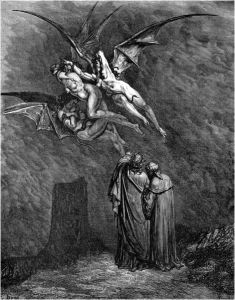 Given the antiquity of the Temple of Apollo at Delphi and the cultural influence it has had over the millennia it’s not surprising that large numbers of visual artists have been inspired by it. Followers of my twitter feed will know I have been collecting and sharing images of Delphi, the Temple of Apollo and the various historical or mythical beings who came there, drawn or painted by famous artists. So, we’ve had Gustave Dore’s Dante and Virgil encountering the Erinyes or Furies (left), Edward Lear’s water colour of the Phaedriades, the massive cliffs which loom over the Temple site and William Blake’s illustration for ‘On the Morning of Christ’s Nativity’ showing ‘The Overthrow of Apollo and the Pagan Gods’.
 events or characters from Greek drama set at Delphi. On Greek redware (right) for example, showing the sleeping Erinyes being roused from their Apollo-induced slumber by the vengeful spirit of Clytemnestra, urging them to hunt down her son, and murderer, Orestes ( from Eumenides by Aeschylus ). Later paintings include Orestes being pursued by the same furies by, among others, John Singer Sergeant, William-Adolphe Bouguereau, John Flaxman and Franz Stuck, until we’re up to date with John Wilson (after Bouguereau).
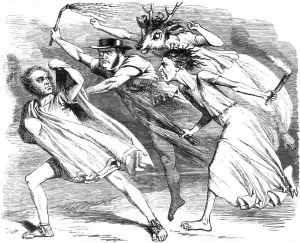 own versions, like that in Puck magazine (1877) or in Punch (left). In this instance it is the Rt. Hon. John Bright MP who is in the Orestes role, being pursued by the vested interests which he opposed through the Anti-Corn Law League. It was Bright, famous for his oratorical skills among other things, who coined the phrase ‘Mother of Parliaments’. He is also credited with first using the phrase ‘flogging a dead horse’ to illustrate the pointlessness of certain activities (in Bright’s case this meant getting the House of Commons to consider Parliamentary reform – ’twas ever thus).
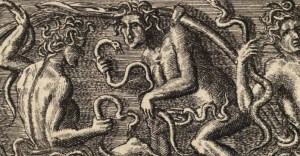 Wenceslas Holler etched them in the seventeenth century (right) and they have re-emerged in modern day gaming ( though with a rather different, sexy, look which speaks to who it is who plays those games rather than any mythological authenticity ). Naked the furies may have, traditionally, been, but not looking like a set of pouting, come-hither dominatrices.
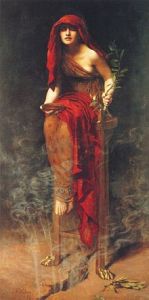 The Pythia, or priestess of Apollo who spoke, as the Oracle, with Apollo’s voice is also a favourite subject in paint and in sculpture. Eugene Delacroix showed Lycurgus consulting her, John Collier made her a hooded, pre-raphaelite religious perched high on her tripod or three-legged stool (left). Note the gases swirling upwards from the crack in the floor of her underground room, the inhalation of which led to her madness and prophecies. No such crevice has been found at the Temple site, but, as a character explains in the book “geologists have found that two geological fault lines cross beneath Delphi, with fissures under the Temple itself which allow small amounts of naturally occurring gas to rise to the surface. Rock testing showed ethane, methane and ethylene − formerly used as an anaesthetic − to be present. These would create a calm, trancelike state and, if a lot was consumed, a form of wild mania.”
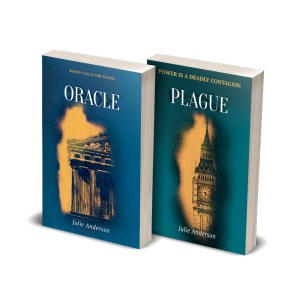 That’s my heroine, Cassandra Fortune, according to Claret Press, my publishers. They are referring to my her as ‘the world’s most intrepid civil servant’.
 the Department for Old Age Pensions, who first appeared in Festering Lilies in the 1990s. Agatha Christie, no less, wrote a series of short stories featuring a retired civil servant named Parker Pyne in Parker Pyne Investigates (1934). I’m sure there must be others and there are probably real civil servants who are more intrepid, though they may not meet with murders and villains with such regularity as Cassandra does.
 e.g. like Kate, in Sarah Vaughn’s best-selling Anatomy of a Scandal (2018)
 these days such images come in various forms – Facebook banners, Instagram posts and Twitter headers – and some come with animation. The one on the right is an Instagram post, which uses a photograph of the Treasury of the Athenians at the Temple of Apollo, Delphi, as well as a copy of the cover and its tagline – ‘Blood calls for blood’ on a background of a full moon rising above a hillside. There is an animated version of this too.
 dramatic. I think it’s eye-catching. I just hope that the book isn’t mIstaken for a vampire novel (because of that tag-line). A number of early readers of Plague thought, from the blurb, that it was about a pandemic. No fear of misunderstanding the title this time, the blurb makes reference to the ancient oracle, but who knows what else people with think of.
 There are some differences too, in part because I’ve learned from experience. So, for example, there’s an Oracle postcard to send out with review copies (last time I exhausted my personal stock of notelets). Claret is having the ARCs printed at the moment and I’ll be looking to take receipt of boxes of books in the next week or so. The other, more exciting thing is that readers are telling me that they’re waiting for the book to come out ( the virtue of having a series ). Also, it seems, there are a lot more media events – interviews, talks, blogs, podcasts – than last time. In part, I suspect because I have more media contacts now (and I’m good value i.e. or the most part, free), but also because I’m no longer an unknown. That Oracle is ‘the further adventures of…’ helps.
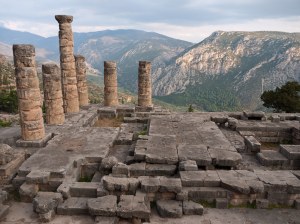 Sad as I am to leave beautiful Delphi (though it’s under deep snow at the moment I am told) I have, at least temporarily, waved goodbye to Oracle, which is now in the hands of the publishers and their book and cover designers. The manuscript has been proofed, the front cover tag-line and back cover blurb have been agreed and the internal design created, again by Petya Tsankova, so it’s consistent with that of Plague, which Petya also designed.
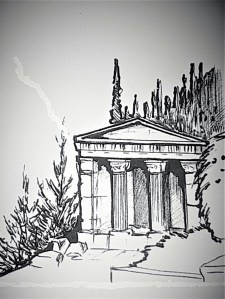 see below ) is featured on the named ‘day’ pages as the sketch of the Palace of Westminster was in Plague. It looks good. This time, however, the book has a ‘Praise for’ section at the front, ( squirm – it’s what is done ). At the moment this contains endorsements and complimentary review remarks about Plague. As we approach publication day these will be augmented by what I hope will be complimentary reviews and endorsements of Oracle. I also get an ‘About the Author’ at the back, so Claret Press must be pleased with me.
 NetGalley during March, for a limited period only, to attract reviews and test reader reaction. Any revisions will follow and Advanced Review Copies will be produced and despatched to various ‘experts’ and to reviewers for newspapers, magazines and blogs. Quite a lot of the publications which reviewed Plague are anxious to follow up with a review of Oracle and, I’m pleased to say, there are plenty of readers out there who tell me that they re anxious to read it too. Publication day will be 5th May.
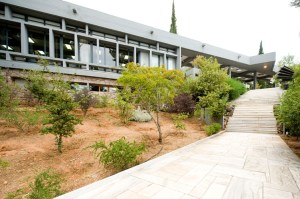 changes at the Centre since I visited it back at the turn of the millenium and to the changes in the town. This is so important given that the trip to Delphi I had planned for last year had to be abandoned because of COVID. I’ll be writing about the amazing Centre and its conferences and performances later. Sharon has introduced me to the new discipline of zemiology and Oracle is probably the first time it has featured in a novel (see earlier post
 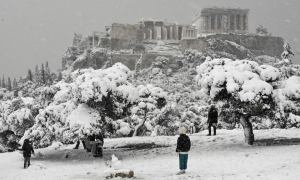 So, a break from the actual writing then, until I begin on Opera, but not a break from work, with lots of activity around getting Oracle absolutely ready for publication and for its promotion and still doing lots of events for Plague. I’ll be writing more about Oracle in the coming weeks, but here’s a photo of what Athens looked like earlier this week.
 Last Monday evening listeners to my talk ‘Politics & Prose’, for the Royal Borough of Kensington & Chelsea and Westminster Libraries, seemed to enjoy it, especially the Q & A afterwards. There were some excellent questions. But barely have my feet touched the ground and I’m involved in another event.
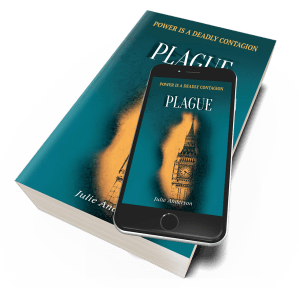 institutions of democracy including Parliament. He says ‘Democracy is so easy to pervert, why replace it? Money can buy anything. If a government gets difficult another can be sponsored. Sometimes it takes time, sometimes it’s easier, but there are always people willing to take over. When national or global institutions fail to serve the purpose they are destroyed, distorted or hollowed out from the inside.‘ (P236). Money, the media, the connivance of powerful individuals, inside and out of those institutions, enable him to do this, together with leverage over others who are hungry for power.
 In real life, the Good Law Project, the Runnymede Trust and a non-partisan collection of MPs from various parties have sought judicial review of the Department of Health and Social Care’s awarding of billions of pounds worth of contracts since April 2020 to private companies e.g. for Personal Protective Equipment. That is, they’ve asked the judiciary to adjudicate on the legality of the contract awarding process. Of these contracts, many millions remain unstated and have not been made public as regulations require. The Labour Party has raised this issue in Parliament and via the media ( see
  exercise in disclosure, not required by the courts. The GLP, funded by small donations, will be unable to accept such a financial risk and has sought a cap on costs from the court. If this isn’t granted the litigation will have to be abandoned. Perhaps the villain was right and ‘Money can buy anything.’ even the law. I hope not.
 Julie Anderson