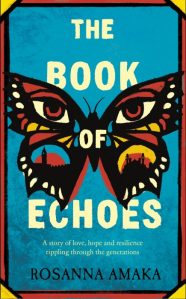
 London is celebrated as one of the most diverse cities in the world and south London, and Clapham and Brixton, in particular, has an important place in the history of that diversity. The desire to understand the impact of this history, and what went before it, on present day lives, was motivation for Rosanna Amaka to write The Book of Echoes (Doubleday, 2020). Growing up in Brixton in the late twentieth century she saw her community fast disappearing and set out to give it a voice. Her debut novel, twenty years in the writing, has already garnered high praise from many sources.
Julie Anderson (JA): Memory, including individual memories of childhood and of healing of various kinds, plays an enormously important role in your book, giving elasticity to its chronology and, sometimes, an elegiac tone. Were you conscious of this when writing it?
Rosanna Amaka (RA): Yes. The Book of Echoes examines the effect of subconscious memory, not only those of our own childhood, which we pack away in order to survive, but also the impact of the memory of others, those we love, who have the greatest impact on us, and those of society, and therefore the impact on the next generation, and next generation, echoing down the line.
JA: The book shows how damage is perpetuated and renewed down the ages and yet redemption is still possible and achievable. How does this chime with your own early experiences and observations of the world you grew up in?
RA: It was important for me to tell this story, first, as a way of recording the 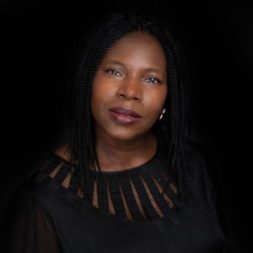 presence of the older generation within my community that where disappearing due to gentrification, or simply due to the passing of time, but also to tell of the love, support and hope that that they instilled and passed on.
JA: But the novel doesn’t avoid hard issues, like slavery and death in custody, particularly relevant today.
RA: Despite knowing this happens, I still feel traumatised by accidentally witnessing the death of a man on video and the subsequent attempt, yet again, by the authorities to cover this up. The death of George Floyd has been a catalyst for change so I hope that it will not have been in vain, that we can all play our part in creating a better world. May he rest in peace.
JA: In The Book of Echoes you have written a series of love stories. It is romantic lovers who frame the story, but you include other types of love as well. Is this important to you?
RA: Yes. Love is always important, whether it be between parents and their children, between siblings, friends, or neighbours. I calibrate it by trying to do what is the most loving thing to do in the long run, whether it be by telling the truth in the most loving way I can, or doing the best in the various challenges I face day to day. I often fall short by sundown, but each morning I rise hoping I might make it that day. That’s why I love writing it gives space for me to try to forgive and correct myself.
JA: The story includes a myriad of different voices. One way in which you represent their difference is through the language they use, the varieties of English as spoken in Nigeria, in the Caribbean and, by several generations, of different cultural heritage, in London. How difficult was it to ensure that you caught these accurately?
RA: This was particularly challenging for me because I don’t speak in most of those voices/ accents, although I had a good base to work from as I grew up hearing those different voices all around me. I worked very hard at listening to the way people around me spoke, and tried to capture a sense of this on the page. I kept working on it because this is the story I felt was important to tell, these were the voices I heard the characters speak in when writing the story, and I thought it was important to capture a sense of who they were through their voice on the page.
JA: Although The Book of Echoes ranges across continents and oceans it is very firmly anchored in specific places, most obviously, Brixton. The important of place, of ‘home’ and displacement echoes through the book. Is it important to you as a writer?
RA: Home is extremely important, because usually it is where you find warmth, protection and shelter, not always for some but fortunately the latter was the case for me, supported by my community in Brixton and Clapham.
The Book of Echoes is available online and at bookshops on request at £12.99.
 This conversation was commissioned by the Clapham Society Newsletter. It can be found on the Society web-site and a shortened version of it is in its July edition.
 Only connect… famous words by E.M.Forster, who was baptised at Holy Trinity, Clapham and who explored, in fiction, the relationship between British imperialism and India. Clapham has its share of real imperial connections, some reaching further eastwards, to south-east Asia and China in particular. Andrew Hillier’s Mediating Empire: An English Family in China, 1817 – 1927 (Renaissance Books, 2020) examines Britain’s presence in China through the lens of one family, his own.
 going as a barrister and my wife, Geraldine, & I were living with a couple of small children in a flat in Abbeville Road. What really sparked my interest was when, in 1976, Jim Hoare & Susan Pares moved into the flat below us and soon became close friends. They both worked in the Far East section of the research department of the Foreign Office, and Jim began telling me how valuable this family archive was and that I should do something with it. A few years later, they were posted to the embassy in South Korea and, one day, Jim phoned me to say he was standing in front of the foundation stone of the embassy, laid by the wife of the British Consul, ‘Mrs Walter C. Hillier, on 19 July 1890’. He went on to use some of our photographs in his book, Embassies in The East (Curzon, 1999).
  account of how this family both shaped and was shaped by empire.
 more historical sources to inform your next book?
 In mid-March, when lockdown started, I was approached by the Editor of the Clapham Society Newsletter and commissioned to carry out a series of virtual interviews with local, debutante authors. The Newsletter, which goes out to people in south London, is usually inundated with requests for publicity for any local events, but, thanks to COVID-19, most of these events ( including the Clapham Book Festival, unfortunately ) were being cancelled. So copy was needed and this seemed a good way to support local authors – whose books might otherwise sink without trace without the oxygen of publicity – as well as to entertain and inform the readers and fill the Newsletter.
 Books, 2020). This novel evokes the tranquil, timeless and sometimes petty-seeming world of rural southern England and its response to war; from the pilots of the RAF and ATA, the Special Operations Executive agents and the spy masters at the famous ‘finishing school for spies’ at SOE Beaulieu, renamed SOE Somerville in the novel. Beginning at a sailing club on the Somer (Beaulieu) River in the Hampshire countryside, the novel takes the reader to war-time London and thence to occupied France, as a large and varied cast of characters, crossing generational, class and national divides, contribute to the war, often for very different reasons.
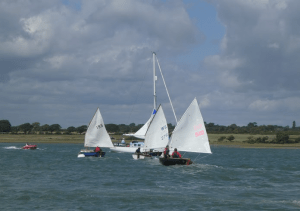 Also, I felt that there was a vacant slot for a ‘Beaulieu’ novel; not just that, but that the place itself could be a character in the novel in its own right – as London is in Dickens – but, heaven forbid, I am not comparing myself with him.
 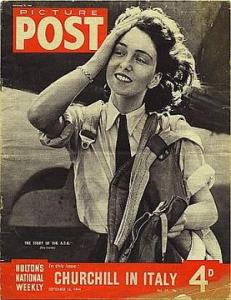 became commonplace seemed to me of special interest to modern women – and men. It puts feminism in perspective. Partly because I know the territory: my mother was one of those ATA women and, although it was very hard to get her to talk, I did come to understand what the experience was like for her and consequently I felt I had the insight to write about it. Leo is partly based on my Mum but only the foundations. What you see of Leo when she’s in the air is different to my mother, more like other females I have known.
 For that authentic feel, yes I tried to recreate the attitudes, morés and speech of the 1940s. But as you suggest it goes a bit further than that. At the heart of the story is the Brigadier or ‘Brig’, a man who is really a Victorian. The whole story is in the Brig’s mind, though told by others. So it seemed right to have a traditional story structure – patrician story telling as the Brig might have done it had he actually written the story. This is partly why the sex and action climaxes are underplayed: for Maxwell and his contemporaries, saying less was their way of saying more.
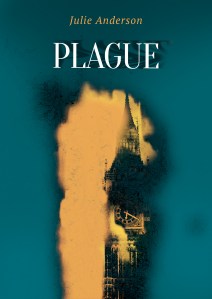 Since my last post
 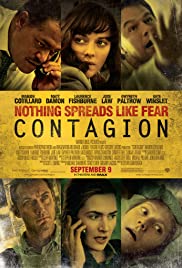 readers are not deterred from reading (and buying) it. When I expressed my concerns about this on twitter recently a fellow crime/mystery writer pointed out to me that ‘Contagion’ the 2011 film about a killer pandemic is currently the most viewed film on Netflix. So, you never know.
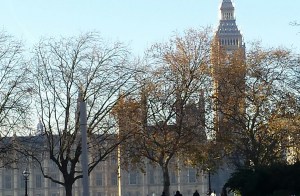 It’s a murder mystery, with some serious points to make about power and democracy, and a lot of edge-of-the-seat thrills along the way. There is romance too and one or two plot twists which, I am told, one can’t see coming! I hope readers find its insights into the functioning of Parliament interesting and there is also quite a foray into the little known history of a particular part of London. I won’t say which. Here is the blurb –
 signal your wish to get the book. I’ll respond within twenty four hours. If you’re a media professional contact me at this site, or via twitter, for interviews, podcast and other information. If you run a book club try using the items in the Press Kit, Author Q & A, book club discussion questions and links.
 As COVID-19 dominates all news and social media resounds with Italians singing on balconies, people applauding the NHS and other support workers and lots of speculation ( and condemnation ) and ranting of so-called commentators, I find myself in an unusual situation – and it isn’t self-isolation. Or no more than is usual for a writer, anyway.
 In medicine, Anti-Vaxxer groups illustrate how people make potentially life-changing decisions based on belief rather than on fact. It has also shown how individuals can exploit this for their own benefit. Former doctor Andrew Wakefield, barred from practising in the UK and described as fraudulent by the
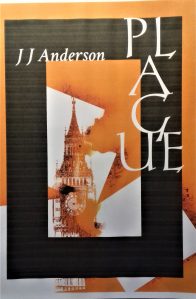
 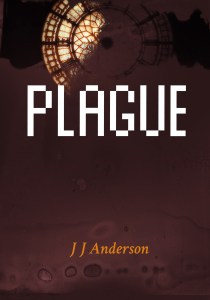 … that’s the time a potential reader gives to the cover of each book when scanning a bookshop display or online screen. So say the publishers. In that time the individual takes in the design, the title and whatever is written – tag-line or glowing review – on the front cover. If it doesn’t get their attention, their eye moves on to the next. So the pressure to make the cover arresting and appealing is intense.
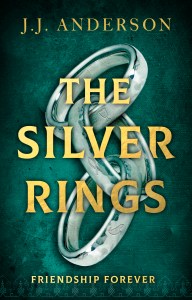 Incidentally, both books in the Al Andalus series can be had half-price, for less than the price of a cup of coffee, at the Smashwords Christmas Sale which runs from Christmas Day until the New Year.
 2022! )
 Calling all lovers of books and reading! The countdown to the annual south London celebration of both has begun.
  were, by and large, pristine copies at knock-down prices and some of them signed by the authors as well. One woman was delighted to find the signature in the book she had just purchased. We had a superb hand-made chocolate cake to raffle off as well (congratulations John, I hope it tasted as good as it looked).
 the events ( and having fun talking about books and writers ). Clapham Writers has at least three new members, who we hope to see at the Meet & Greet event after this year’s Fest.
 voucher for an overnight stay for two in that boutique hotel as a prize in our Festival day raffle. Last year’s winner was a Clapham resident who, as the occupant of a one-bedroom flat, was able to have his parents to stay by using the voucher. Thank you The Windmill and Young’s Brewery.
 the Society of Authors, in the Sunday Times On-line and in a veritable cornucopia of local media of various kinds. There’s also a podcast coming out on 1st October. Henry Hemming – Our Man in New York – had a double page spread in the Sunday Mail and Elizabeth Buchan – The Museum of Broken Promises – an excellent review in The Times. Aida Edemariam and Ursula Buchan won the plaudits when their books, The Wife’s Tale and Beyond the Thirty-Nine Steps, respectively, were first published. That’s not forgetting our opener – Professor Kate Williams on the relationship between the Rival Queens, Elizabeth I and Mary Queen of Scots – and Frank Gardner OBE, BBC Security Correspondent to close the Festival.
 about, then reading from, his latest book Our Man in New York.
 World War II espionage finally has its expert chronicler.”
  Julie Anderson